


Listen to the article
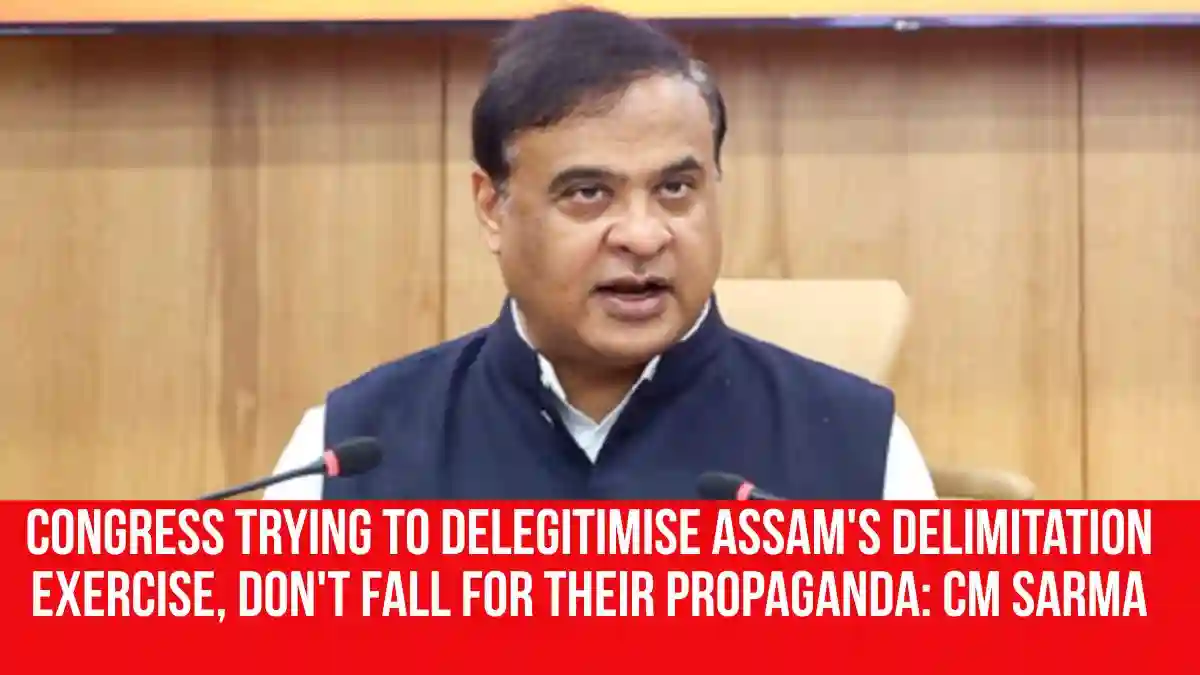
Assam Chief Minister Himanta Biswa Sarma has launched a strong defense of the state’s delimitation exercise while accusing the Congress party of attempting to undermine the process through misinformation.
In a statement posted on social media platform X, CM Sarma criticized what he called Congress’s “ill-informed cabal” for repeatedly using the term “gerrymandering” to delegitimize Assam’s constituency redrawing process. He urged the public not to be swayed by what he characterized as propaganda.
“Assam’s delimitation is not a conspiracy, it was a long-overdue correction after decades of political neglect and vote-bank appeasement,” Sarma stated, framing the exercise as a necessary adjustment rather than a political maneuver.
The Chief Minister’s remarks highlight the contentious nature of electoral boundary changes in Assam, a state with complex demographic dynamics and a history of tensions related to migration. According to Sarma, the delimitation process accurately reflects the aspirations of Assam’s people and serves as a “stopgap arrangement to prevent the civilization from being devoured by illegal migration.”
The controversy centers on constituencies in Lower Assam, where Sarma claims “unchecked demographic changes” have historically reshaped electoral boundaries. He accused Congress of remaining silent about these changes because they allegedly benefited from them politically.
“The real distortion of representation happened then, not now,” Sarma asserted. “Today, when boundaries are being realigned to reflect ground realities, the same Congress leaders, backed by the Left ecosystem, are crying ‘gerrymandering.’ That argument is not just weak, it is outright hypocritical.”
Delimitation exercises, which involve redrawing electoral constituency boundaries based on population changes, are typically conducted to ensure equal representation. However, in regions with significant demographic shifts and migration patterns, such processes often become politically charged.
For Assam, a northeastern state bordering Bangladesh, issues of migration and demographic change have long been politically sensitive. The BJP, which Sarma represents, has consistently campaigned on platforms addressing concerns about illegal migration from neighboring Bangladesh.
In his defense of the delimitation process, Sarma framed it as essential for “restoring balance and safeguarding indigenous Assamese representation.” He argued that the exercise ensures those “rooted in the land, its culture, language, and identity, are not politically sidelined in their own state.”
Political analysts note that electoral boundary changes can significantly impact election outcomes, particularly in regions with concentrated ethnic or religious communities. The Congress party’s opposition to the current delimitation process suggests concern about potential disadvantages to their electoral prospects in future elections.
This controversy emerges against the backdrop of broader regional tensions. In a separate statement referenced in the report, Sarma made inflammatory remarks about neighboring West Bengal, claiming that “Bangladeshi Muslims will snatch WB” if the Trinamool Congress government is not removed.
The delimitation exercise in Assam represents just one aspect of ongoing identity and representation debates in India’s northeastern states, where questions of migration, citizenship, and indigenous rights frequently intersect with electoral politics.
As the implementation of the new electoral boundaries moves forward, the political rhetoric surrounding the process is likely to intensify. Both the ruling BJP and opposition Congress will continue presenting competing narratives about whether the delimitation represents genuine demographic rebalancing or political manipulation.
The Election Commission of India, which typically oversees delimitation exercises, has not issued any statement addressing the specific allegations from either side in the ongoing debate about Assam’s electoral boundaries.
Fact Checker
Verify the accuracy of this article using The Disinformation Commission analysis and real-time sources.

7 Comments
Protecting democratic processes is crucial. While I understand CM Sarma’s perspective, I’d encourage all parties to approach this issue objectively and prioritize the will of Assam’s diverse population.
Allegations of misinformation and political maneuvering are concerning. Assam’s delimitation should be guided by facts and the legitimate needs of its people, not partisan agendas.
Interesting debate around Assam’s delimitation process. It’s a complex issue with valid concerns on both sides. Hopefully the process can be transparent and fair to all communities.
Demographic changes can complicate electoral boundaries. Assam’s delimitation seems to be a contentious issue – I hope all stakeholders can engage constructively to find a balanced solution.
Accusations of gerrymandering are serious. The delimitation exercise should be conducted in a non-partisan manner to ensure fair representation. Transparency will be key to building trust.
Delimitation is a tricky topic, especially in diverse states like Assam. Curious to see how this plays out – hope the process is handled objectively and with the best interests of all residents in mind.
Delimitation is a sensitive topic that often sparks controversy. I hope Assam can find a path forward that ensures fair political representation and social cohesion.