


Listen to the article
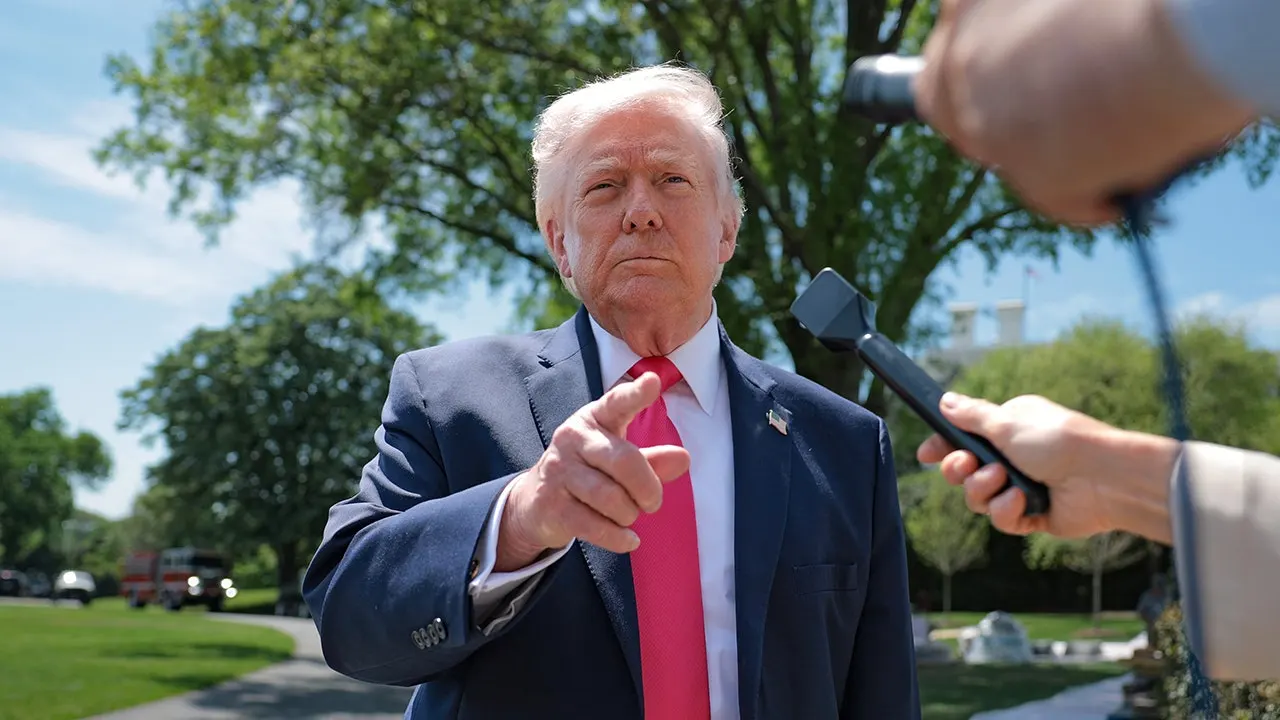
President Trump’s administration announced a significant shift in drug policy Thursday, reclassifying marijuana from a Schedule I controlled substance to the less restrictive Schedule III category, marking a major change in federal cannabis regulation.
Acting Attorney General Todd Blanche signed the order that moves marijuana away from its previous classification alongside drugs like heroin and LSD to a category that acknowledges medical applications and recognizes lower abuse potential. The move delivers on what officials described as President Trump’s commitment to expanding medical treatment options for Americans.
“This rescheduling action allows for research on the safety and efficacy of this substance, ultimately providing patients with better care and doctors with more reliable information,” Blanche said in a statement released by the Department of Justice.
The reclassification represents one of the most substantial federal cannabis policy changes in decades. Schedule III substances are defined as having “a moderate to low potential for physical and psychological dependence,” according to the Drug Enforcement Administration’s classification system. Other Schedule III substances include ketamine and certain products containing limited amounts of codeine.
While marijuana remains illegal under federal law, this rescheduling acknowledges growing scientific consensus about cannabis’s medical applications and potentially paves the way for expanded research opportunities that have long been hindered by the Schedule I classification.
The policy shift comes amid a dramatically changed landscape for cannabis regulation across the United States. Currently, 38 states have legalized marijuana for medical use, and 24 states plus the District of Columbia have approved recreational use for adults. This patchwork of state regulations has created significant legal contradictions with federal policy.
Industry analysts suggest the reclassification could have far-reaching implications for cannabis businesses, particularly regarding taxation and banking access. Under current regulations, cannabis companies face significant restrictions on banking services and cannot deduct ordinary business expenses on federal tax returns due to Section 280E of the tax code, which specifically targets businesses trafficking in Schedule I and II substances.
Medical researchers have long cited the Schedule I classification as a major obstacle to conducting comprehensive studies on marijuana’s therapeutic potential. The reclassification may streamline the approval process for cannabis-related clinical trials and research efforts.
The announcement comes at a time when public opinion on marijuana has shifted dramatically. Recent polling shows approximately two-thirds of Americans support marijuana legalization, reflecting a substantial change in attitudes over the past two decades.
The decision also represents an evolution in the administration’s approach to drug policy. The Trump administration had previously taken varying positions on marijuana regulation, with former Attorney General Jeff Sessions rescinding Obama-era guidance that had deprioritized federal prosecution of marijuana offenses in states that had legalized the substance.
Political analysts note that the timing of this announcement could have implications for the upcoming election cycle, as marijuana policy has become increasingly important to voters across political affiliations. The move might appeal to moderates and libertarian-leaning voters who favor reduced federal restrictions on cannabis.
Health policy experts emphasize that while this represents a significant federal policy shift, much remains uncertain about implementation details and timeline. The reclassification process typically involves multiple federal agencies including the DEA, FDA, and Department of Health and Human Services.
Critics of marijuana legalization have expressed concerns about potential public health impacts, particularly regarding youth access and impaired driving. Proponents counter that regulated markets provide safer products and generate tax revenue while reducing criminal justice burdens.
The administration has not yet provided specific details on implementation timelines or additional regulatory changes that may accompany the rescheduling order.
Fact Checker
Verify the accuracy of this article using The Disinformation Commission analysis and real-time sources.

8 Comments
This policy change could have significant implications for the medical marijuana industry and related equities. Investors will likely be watching closely to see how it plays out.
While I appreciate the administration’s acknowledgment of marijuana’s medical applications, I’m concerned that this doesn’t go far enough. Descheduling would be a much bolder and more impactful move.
This is a significant shift in federal cannabis policy. Reclassifying marijuana as a Schedule III substance recognizes its medical applications and lower abuse potential. It’s a step in the right direction for expanding treatment options and research.
Rescheduling marijuana to Schedule III is a positive development, but it’s still a controlled substance. I hope this leads to further reforms and an eventual descheduling or legalization at the federal level.
You raise a good point. Rescheduling is a step in the right direction, but there’s still a long way to go for full legalization and normalization of medical marijuana.
While this is an important development, I’m curious to see how it will be implemented in practice. Will it lead to real changes in regulations and enforcement, or is it mostly symbolic? Time will tell.
I’m glad to see the Trump administration taking a more progressive stance on medical marijuana. This change will hopefully lead to greater access and more reliable information for patients and doctors.
Expanding medical treatment options and research is critical. I hope this decision leads to more rigorous scientific studies on the safety and efficacy of marijuana for various conditions.