


Listen to the article
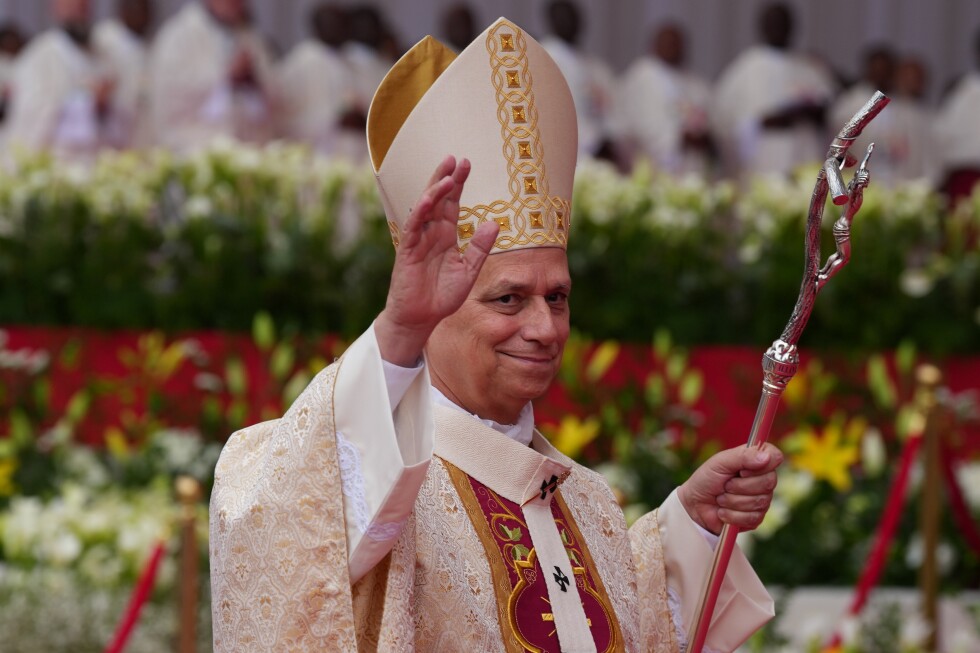
Pope Leo XIV concluded his 11-day African tour Thursday with a final Mass in Equatorial Guinea, capping a journey that unexpectedly became headline news due to his public clash with President Donald Trump.
Despite heavy rain that drenched the estimated 30,000 attendees at Malabo sports stadium, enthusiastic crowds gathered before dawn for the pontiff’s farewell liturgy. The deluge subsided just before Leo arrived in his covered popemobile for a final greeting to the cheering faithful.
The extensive tour covered more than 17,700 kilometers (11,000 miles) across four nations – Algeria, Angola, Cameroon, and Equatorial Guinea – requiring 18 separate flights, including three in a single day as the pope crisscrossed Equatorial Guinea from the west coast to its eastern border with Gabon and back.
As history’s first American pope, Leo received enthusiastic welcomes throughout his journey, particularly in remote areas that had never before hosted a papal visit. His travel follows the tradition established by Pope Paul VI, who made the first modern foreign papal visit in 1964, and was later expanded by St. John Paul II, whose 104 foreign trips over a quarter century revolutionized the papacy’s global presence.
Many attendees made extraordinary efforts to participate in the pope’s final Mass. Michaela Mecha and her sister Encarnacion arrived at 4 a.m. in Malabo stadium, decked in pope-themed attire complete with yellow umbrellas featuring Leo’s face. “We feel very special and blessed that the pope has chosen our country,” said Michaela, a nurse who brought her two young daughters. “This visit is bringing young people closer to God.”
During his homily, Leo addressed the recent death of Rev. Fr. Fortunato Nsue Esono Ayíambeng, a member of the trip’s organizing committee and Malabo’s vicar general, calling for “full light to be shed on the circumstances of his death” – a reference to rumors of possible foul play.
What made this trip particularly newsworthy was the unexpected clash with the Trump administration that dominated international headlines. The conflict began when Trump accused the pontiff of being soft on crime and sympathetic to left-wing causes. As the verbal attacks continued and Vice President JD Vance warned Leo to “be careful” when discussing theology, the pope attempted to de-escalate by suggesting the media had taken his words out of context.
This strategy appeared successful, allowing Leo to refocus on his primary agenda for Africa: encouraging Catholics while denouncing what he termed the “colonization” of the continent’s natural resources by foreign interests.
The journey featured several emotionally charged moments, including when Leo departed from his planned schedule at a psychiatric hospital in Sampaka, Equatorial Guinea, to personally greet each patient and take selfies. Another powerful moment occurred in Muxima, Angola, where Leo – whose own ancestry includes both enslaved people and slave owners – prayed the rosary at a former hub of the African slave trade that became a pilgrimage site following a reported vision of the Virgin Mary in 1833.
In Bamenda, Cameroon, the pope traveled to the heart of a nearly decade-long separatist conflict, pleading for peace while condemning the “handful of tyrants” devastating the Earth – comments that later required clarification that he wasn’t referring to Trump.
One particularly troubling visit occurred at a prison in Bata, Equatorial Guinea, where inmates with shaved heads wore new neon uniforms and stood silently in assigned positions in the freshly painted facility. After Leo departed, the prisoners broke into chants of “Libertad! Libertad! Libertad!” (Freedom! Freedom! Freedom!).
The lengthy tour encompassed several milestones, including the first anniversary of Pope Francis’ death, which Leo commemorated with an impromptu tribute from the papal plane, remembering his predecessor’s mercy and gestures.
Throughout the journey, the pope’s remarks to journalists traveling between countries provided insight into potential future developments in the Church, including a hint that Angola might receive its first cardinal appointment “a bit further on” – news likely to be celebrated throughout the country.
The Associated Press contributed to this report, with religion coverage support through AP’s collaboration with The Conversation US, funded by Lilly Endowment Inc.
Fact Checker
Verify the accuracy of this article using The Disinformation Commission analysis and real-time sources.

10 Comments
A papal visit to Equatorial Guinea is significant, given the country’s history of political repression and human rights abuses. I hope the Pope’s presence can shine a light on these issues and encourage positive change.
I’m curious to learn more about the Pope’s specific agenda and priorities during this trip. What key issues or initiatives was he hoping to address in each of the countries he visited?
The clash with President Trump during this trip highlights the Pope’s willingness to speak up on important global issues. It will be interesting to see if this affects future relations between the Holy See and the US administration.
The Pope’s moral authority allows him to take strong stances on matters of justice and human rights, even when it puts him at odds with political leaders.
It’s encouraging to see the Pope visiting remote areas in Africa and connecting with local communities. His commitment to travel widely and engage with diverse cultures is admirable.
Indeed, these papal visits can help foster greater understanding and dialogue between the Church and local populations.
The logistical challenges of this extensive African tour must have been immense. It’s admirable that the Pope was able to cover so much ground and connect with so many communities during his visit.
Traveling by air to remote areas and dealing with heavy rain certainly required a lot of planning and coordination from the papal entourage.
The Pope’s ability to draw large, enthusiastic crowds, even in remote areas, speaks to his global influence and the continued relevance of the Catholic Church in many parts of the world.
It’s impressive that the Pope was able to connect with so many people during his African visit, despite the logistical challenges.