


Listen to the article
US-Brokered Israel-Lebanon Talks Resume Amid Hezbollah Question
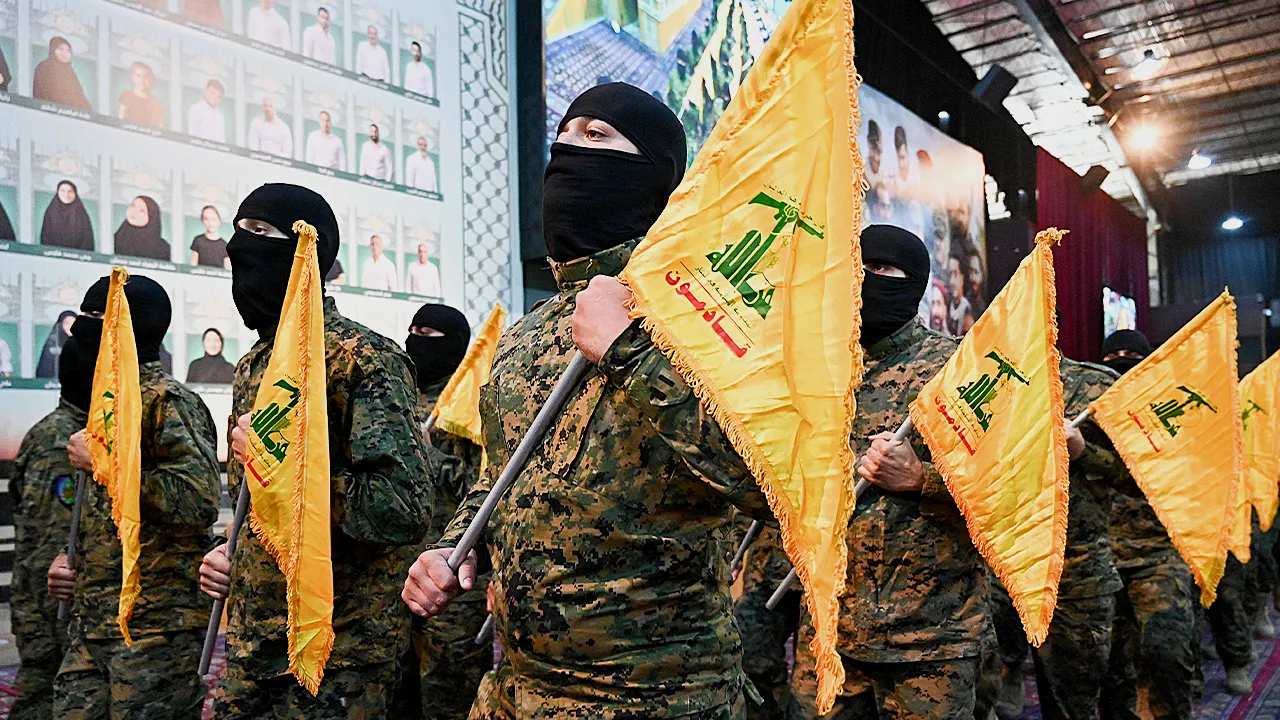
As Israel and Lebanon return to Washington for US-brokered talks on Thursday, negotiators face the same intractable challenge that has derailed previous peace efforts: the future of Hezbollah, Iran’s powerful proxy force in Lebanon.
The meeting, hosted by Secretary of State Marco Rubio, brings together senior US officials—including Ambassadors Mike Huckabee and Michel Issa along with Counselor Michael Needham—with Israeli Ambassador Yechiel Leiter and Lebanese Ambassador Nada Hamadeh. This follows what a State Department spokesperson described as a “productive” initial session on April 14.
“We will continue to facilitate direct, good-faith discussions between the two governments,” the spokesperson told Fox News Digital.
The talks come during a fragile ceasefire established in mid-April, providing what diplomats characterize as a narrow diplomatic window following weeks of intense cross-border violence that began on March 2. The recent fighting displaced over one million Lebanese civilians and forced countless Israelis into shelters, underscoring the conflict’s devastating human toll.
Despite the current pause in hostilities, the fundamental drivers of the conflict remain unresolved. At the center of this diplomatic impasse lies a seemingly irreconcilable standoff: Hezbollah refuses to disarm without a complete Israeli withdrawal from southern Lebanon, while Israel insists it cannot withdraw until Hezbollah disarms.
“I’m not at all optimistic,” said Barak Seener of the Henry Jackson Society think tank. “Lebanon is far too weak and divided to force Hezbollah to disarm. And Hezbollah is so enmeshed in Lebanon’s political system. Any attempt to disarm Hezbollah risks civil war.”
The terrorist organization’s deep entrenchment in Lebanon’s political and security apparatus significantly complicates US efforts. A senior US official familiar with the negotiations noted that Lebanon’s president, Joseph Aoun, isn’t necessarily the decisive factor in these discussions. Instead, Nabih Berri, the speaker of Lebanon’s parliament, wields the true authority—highlighting the complex power dynamics within Lebanese politics.
Further complicating matters, Hezbollah continues to oppose any direct contact with Israel while maintaining significant influence over Lebanon’s political and security decisions.
Nevertheless, there are signs that public sentiment in Lebanon may be shifting. “There is a growing sense across Lebanon that any US-brokered negotiation track could be a rare opportunity to restore balance to the state,” said Rami Naeem, a Lebanese journalist with Jusoor News.
This sentiment reflects mounting frustration with Hezbollah’s role in the country’s ongoing crises. As Mariam Kasrawani, another Lebanese analyst at Jusoor News, observed: “It is becoming harder to ignore the depth of the crisis. Some are now saying it plainly: Hezbollah has taken Lebanon as a whole—and Shia in particular—to a very bad place.”
Given these constraints, the current talks appear focused on more limited objectives rather than comprehensive resolution. “Talks are focused on ceasefire expansion, Hezbollah withdrawal from border zones, and an expanded presence of the Lebanese army,” Seener explained. “Talks are not at all focused on disarmament.”
This pragmatic approach suggests both sides may be pursuing conflict management rather than conflict resolution—at least for now.
Adding another layer of complexity, Saudi daily Asharq Al-Awsat reported that the US might press Lebanon to repeal its 1955 Israel Boycott Law, which prohibits contact with Israelis. While the report frames such a move as a potential step toward normalization, neither US nor Lebanese officials have confirmed this information.
The negotiations take place against a backdrop of broader regional tensions, with Iran continuing to support Hezbollah as part of its network of proxy forces opposing Israel. International mechanisms—including the United Nations Interim Force in Lebanon (UNIFIL) and various multilateral coordination groups—have struggled to bridge the fundamental gaps between the parties since late 2024.
As the talks continue, observers remain cautious about prospects for a lasting agreement. The temporary ceasefire has paused the violence, but the fundamental question of Hezbollah’s future in Lebanon—and by extension, Iran’s influence in the region—remains as challenging as ever.
Fact Checker
Verify the accuracy of this article using The Disinformation Commission analysis and real-time sources.

11 Comments
Tensions between Israel and Lebanon over Hezbollah’s role are long-standing and continue to be a major obstacle to peace. The upcoming talks will require nuanced diplomacy to balance regional security interests and avoid reigniting conflict.
Agreed, the stakes are high and the path forward is uncertain. Constructive dialogue and compromise will be essential to make progress on this thorny issue.
The Hezbollah disarmament issue is a complex and sensitive one. Both sides have deep-rooted concerns that need to be carefully navigated. Hopefully, the US-brokered talks can find a path forward that addresses security needs and avoids further escalation.
The prospect of civil war in Lebanon is deeply concerning. I hope the upcoming negotiations can ease tensions and chart a course that addresses Hezbollah’s role without triggering further violence and unrest.
Agreed, avoiding a descent into civil war should be a top priority. Constructive diplomacy is needed to find a way forward that maintains security while respecting Lebanon’s sovereignty.
The Hezbollah disarmament issue is a longstanding geopolitical challenge with high stakes for the region. I’m interested to see if the US can facilitate a breakthrough in the upcoming Israel-Lebanon talks.
The potential for civil war in Lebanon is deeply concerning. I hope the US-brokered talks can find a path forward that balances security needs and respects Lebanon’s sovereignty.
Given the history of conflict in the region, the Hezbollah disarmament question is a sensitive and complex one. Careful, nuanced diplomacy will be crucial to navigate this issue and promote stability.
Absolutely. Addressing Hezbollah’s role without sparking wider conflict will require skilled mediation and a willingness to compromise from all sides.
Hezbollah’s disarmament has long been a stumbling block in Israel-Lebanon relations. The upcoming negotiations will test the diplomatic skills of all involved to find a solution that works for the region.
Hezbollah’s disarmament has been a contentious topic for years. I’m curious to see if the US-led talks can break the deadlock and find a mutually acceptable solution that enhances stability in the region.