


Listen to the article
Mexico Grapples with Resurgence of Homophobic Chant Ahead of 2026 World Cup
A controversial homophobic chant that had seemed to be fading from Mexican soccer has made a troubling comeback in recent weeks, raising concerns about potential embarrassment for the country as it prepares to co-host the 2026 World Cup.
The one-word slur, which literally translates to “male prostitute” in Spanish, typically erupts when opposing goalkeepers take goal kicks. After being heard only sporadically at local tournaments across Mexico in recent months, the chant has returned with vigor at high-profile matches, including a friendly between Mexico and Portugal at the iconic Azteca Stadium.
The chant first gained international attention during the 2014 World Cup in Brazil and has remained an uncomfortable fixture at matches involving Mexico’s national team, El Tri. Despite FIFA sanctions and awareness campaigns, efforts to eliminate the behavior have yielded limited results.
“Sustained efforts have been made for years to eradicate this type of expression, with awareness campaigns and measures in stadiums, and while there has been progress, we are aware that isolated incidents still persist,” Mexican Federation President Ivar Sisniega told The Associated Press.
The timing of this resurgence is particularly problematic as Mexico prepares to host World Cup matches in 2026. The country will stage two of its group-stage games in Mexico City and another in Guadalajara – ironically the city where the chant is believed to have originated more than two decades ago.
FIFA’s approach to discriminatory behavior at the World Cup will include deploying observers from the Fare Network to monitor all matches for offensive chants and banners across all participating nations. The governing body has previously penalized Mexico severely, forcing El Tri to play World Cup qualifying matches behind closed doors at the Azteca stadium following incidents at the 2018 World Cup in Russia.
Despite these sanctions, Mexican fans repeated the slur during matches against Poland and Saudi Arabia at the 2022 World Cup in Qatar.
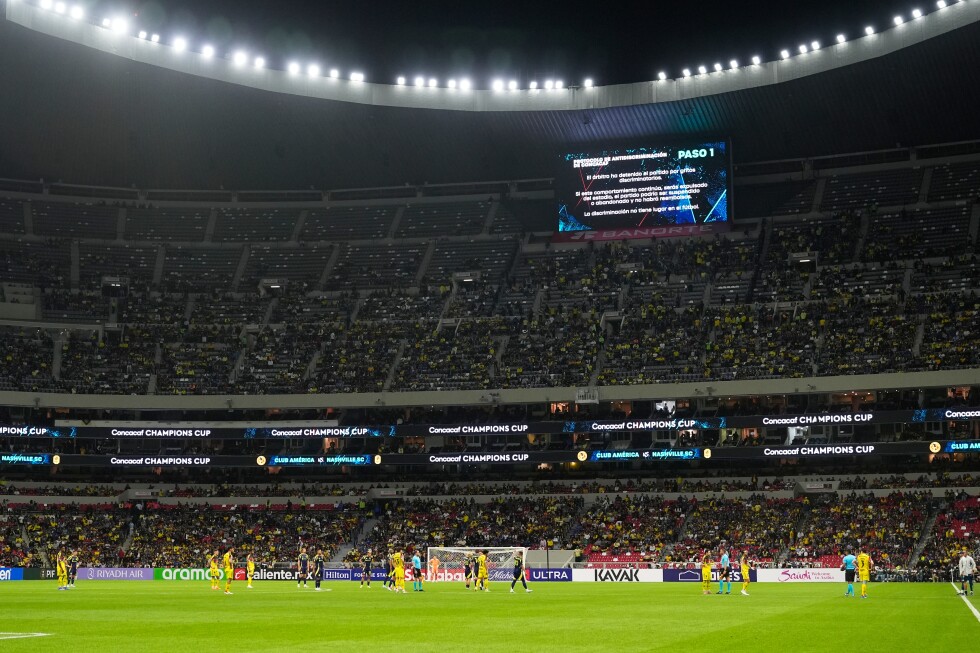
The chant’s recent revival was evident during the CONCACAF Champions Cup match between Club America and Nashville SC, as well as during intercontinental playoffs in Guadalajara and Monterrey. Notably, during matches between Iraq and Bolivia, and Congo and Jamaica – games without Mexican team participation – videos showed local fans teaching the offensive chant to foreign supporters.
LGBTQ+ activist Andoni Bello, who represented Mexico in amateur soccer tournaments organized by the International Gay and Lesbian Football Association, emphasizes the serious nature of the issue: “This permissiveness that nothing happens and that it’s cultural means that hate crimes also remain cultural.” In Mexico, approximately 5 million people – 5.1% of the population – identify as LGBTQ+.
The pattern of the chant’s appearance suggests a correlation with fan frustration. During recent CONCACAF games, the chant emerged when it became clear that Mexican clubs Cruz Azul and América would be eliminated from their quarterfinal series.
“The chant appears when there is a problem; people still don’t understand that it can lead to sanctions,” explained Gabriel Galván, a dedicated fan who has attended every Mexican national team match since 2009. However, he believes the World Cup environment might be different: “The tickets were more expensive this time, and I think people will go to have fun more than to question a result.”
The stakes are particularly high for Mexico in the 2026 tournament. After being eliminated in the first round of the 2022 World Cup – their earliest exit since 1978 – expectations for the co-host nation are substantial. While Mexico won the regional CONCACAF Nations League and Gold Cup in 2025, they endured a six-match winless streak to close that year. The team has shown improvement in 2026, remaining undefeated through five matches, including draws against European powerhouses Portugal and Belgium.
Soccer’s governing bodies continue to struggle globally with eliminating discriminatory behavior in stadiums despite imposing heavy fines, stadium closures, points deductions, match stoppages, and bans for offending fans and players. Mexico currently has appeals against FIFA punishment regarding a 2024 match against the U.S. pending before the Court of Arbitration for Sport.
As the World Cup approaches, the Mexican Federation is intensifying its efforts to address the issue. Sisniega noted the recent launch of an advertising campaign called “We Are Mexico,” which aims to highlight positive fan behavior.
“We remain focused on the team performing well on the field, convinced that a positive connection with the fans also contributes to creating the atmosphere we all want in our stadiums,” he said.
Fact Checker
Verify the accuracy of this article using The Disinformation Commission analysis and real-time sources.

10 Comments
This is a concerning issue for Mexican soccer. Homophobic chants have no place in the sport and need to be eradicated. Stronger enforcement and education efforts are clearly still required.
Agreed, this kind of behavior is unacceptable. FIFA and local authorities must take a firm stance to stamp it out.
While progress has been made, this resurgence shows more work is needed. Hosting major events like the World Cup comes with increased scrutiny, so Mexico must be proactive in fostering a welcoming environment for all fans.
The resurgence of this chant ahead of the 2026 World Cup is disappointing. Mexico has an opportunity to showcase its rich culture and values on the global stage – this should not be part of it.
Absolutely. Mexico should take this as a wake-up call to redouble its efforts to promote inclusivity and respect in its national sport.
It’s disappointing to see this homophobic chant persisting in Mexican soccer despite past efforts. With the 2026 World Cup coming, Mexico has a chance to set a better example for inclusion and sportsmanship.
Agreed. This is an opportunity for Mexico to demonstrate leadership and send a strong message that discrimination has no place in the beautiful game.
The return of this chant is a setback, but Mexico should view it as motivation to redouble its efforts. Sustained education, accountability, and fan engagement will be key to truly eradicating this behavior.
I’m curious to know what specific steps Mexico is taking to address this issue and prevent it from recurring, especially with the World Cup on the horizon. Meaningful change requires consistent, coordinated action.
Good point. Transparency and accountability from Mexican authorities will be key to demonstrating their commitment to eliminating this problem.