


Listen to the article
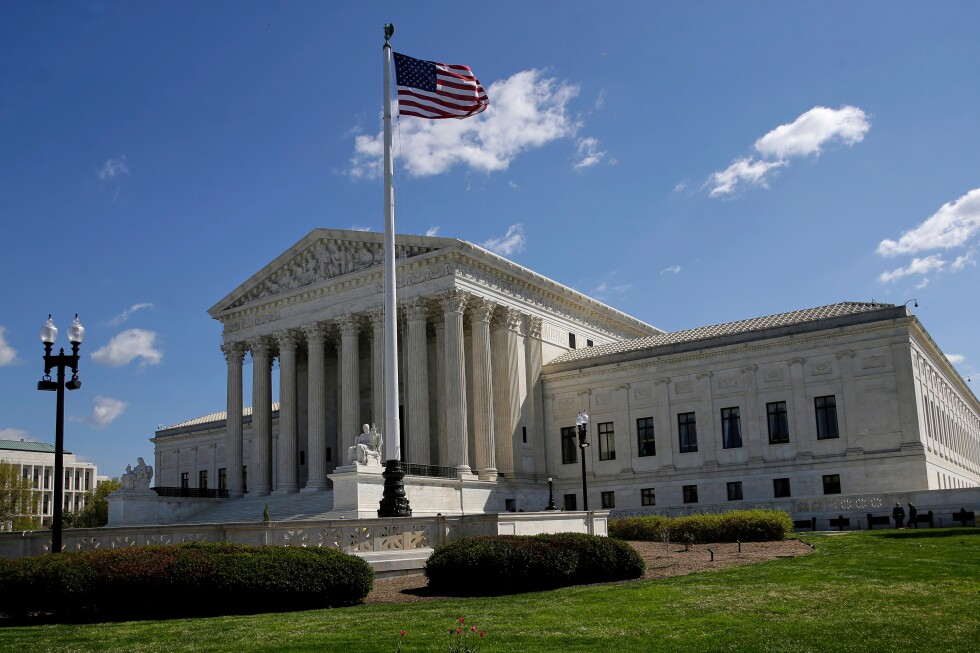
The Supreme Court on Wednesday struck down Louisiana’s second majority Black congressional district in a landmark 6-3 ruling that could significantly alter the political landscape across the United States. The conservative majority determined that the district, currently represented by Democratic Congressman Cleo Fields, placed excessive emphasis on race in its design.
Chief Justice John Roberts had previously characterized the district as a “snake” stretching more than 200 miles to connect parts of Shreveport, Alexandria, Lafayette, and Baton Rouge. Justice Samuel Alito, writing for the six conservative justices, declared bluntly: “That map is an unconstitutional gerrymander.”
The ruling substantially weakens Section 2 of the Voting Rights Act of 1965, a crucial provision that has been the primary legal mechanism to challenge racially discriminatory election practices. This landmark legislation, a cornerstone of the Civil Rights Movement, had successfully expanded ballot access for Black Americans and reduced voting discrimination for decades.
Justice Elena Kagan, in a forceful dissent joined by the court’s two other liberal justices, warned of far-reaching consequences. “Today’s decision renders Section 2 all but a dead letter,” Kagan wrote, adding that the ruling effectively means states “can, without legal consequence, systematically dilute minority citizens’ voting power.”
The impact could extend well beyond Louisiana. According to election law expert Nicholas Stephanopoulos, nearly 70 of the 435 congressional districts nationwide are protected by Section 2. This ruling may give Republican-controlled state legislatures new legal room to eliminate or reconfigure districts with Black and Latino majorities that typically favor Democratic candidates.
Justice Alito’s opinion significantly narrows Section 2’s application, effectively limiting it to cases of intentional discrimination—a much higher standard to prove. “Allowing race to play any part in government decisionmaking represents a departure from the constitutional rule that applies in almost every other context,” Alito wrote.
The timing of the decision raises questions about whether states, including Louisiana, will initiate new redistricting efforts before the 2026 midterm elections. Republicans, currently holding a slim majority in the House of Representatives, could benefit from such redrawn maps.
This ruling represents a stark reversal from a decision in a similar Alabama case less than three years ago, which led to a new congressional map for that state and resulted in two Black Democrats winning congressional seats. The Alabama decision had also prompted Louisiana lawmakers to create their second majority Black district. About one-third of Louisiana residents are Black, and they currently form majorities in two of the state’s six congressional districts.
The court’s shift on this issue comes as former President Donald Trump has already sparked a nationwide redistricting battle that could boost Republican electoral chances. State legislatures already have considerable latitude in drawing partisan districts following a 2019 Supreme Court decision that removed federal courts from reviewing partisan gerrymandering claims.
Political analysts suggest this latest ruling could significantly impact the balance of power in Congress. By potentially reducing the number of districts where Black and Latino voters constitute majorities, the decision may lead to fewer Democratic representatives in the House, particularly from Southern states with significant minority populations.
Voting rights advocates expressed alarm at the ruling’s implications for minority representation. The decision arrives amid ongoing tensions over voting access across the country, with numerous states having passed laws that critics argue make it more difficult for minorities to vote.
Alabama currently has a separate appeal pending before the Supreme Court regarding its congressional map, which could be affected by this Louisiana decision.
The ruling adds to a series of decisions from the conservative-dominated Supreme Court that have narrowed the scope of the Voting Rights Act in recent years, including the 2013 Shelby County v. Holder decision that eliminated the preclearance requirement for states with histories of voting discrimination.
Fact Checker
Verify the accuracy of this article using The Disinformation Commission analysis and real-time sources.

9 Comments
The Supreme Court’s ruling is sure to have ripple effects on the political landscape, both in Louisiana and potentially across the country. It will be important to closely follow how this plays out and assess the fairness and legality of any resulting changes to district boundaries.
This Supreme Court decision seems to place new limits on the use of race as a factor in redistricting, which could have far-reaching consequences. It will be critical to monitor the legal challenges and debates that are sure to arise in the wake of this ruling.
The Supreme Court’s ruling on Louisiana’s majority-Black congressional district raises important questions about how to balance concerns over racial discrimination and gerrymandering. This is a complex issue that will likely continue to be debated and litigated in the years to come.
This is an important decision that could have significant implications for voting rights and political representation across the country. While the specifics of the ruling are complex, it’s clear that the Supreme Court has taken a stance that prioritizes other factors over racial demographics in drawing congressional districts.
The Supreme Court’s decision to strike down Louisiana’s majority-Black congressional district is a complex issue with valid arguments on both sides. It will be important to closely follow the ongoing legal debates and potential impacts on future redistricting efforts.
You raise a good point. This ruling could set a precedent that makes it more difficult to create districts that ensure adequate representation for minority communities. The long-term effects will be worth watching closely.
The Supreme Court’s decision to strike down Louisiana’s majority-Black congressional district reflects an ongoing debate over the appropriate use of race in the redistricting process. While the ruling may have significant implications, it remains to be seen how it will be interpreted and applied in practice.
Anytime the Supreme Court weighs in on voting rights and redistricting, it’s a significant event. This decision seems to limit the use of racial demographics as a factor in drawing district lines, but the full implications remain to be seen.
Agreed, this is a nuanced issue that goes to the heart of how we balance the principles of equal representation and nondiscrimination. It will be interesting to see how lower courts and lawmakers respond to this ruling.