


Listen to the article
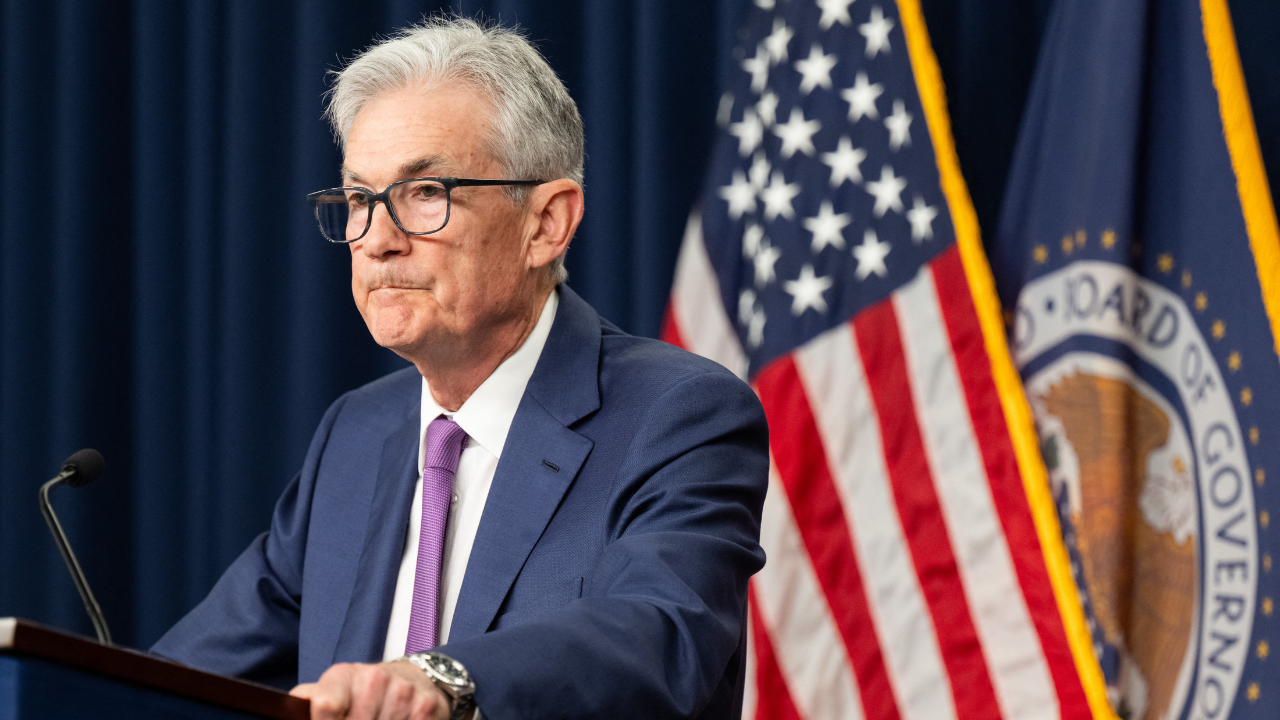
In a world where every detail is scrutinized for hidden meaning, Federal Reserve Chair Jerome Powell’s preference for purple neckwear has become an unexpected symbol of the central bank’s commitment to political independence.
As Powell prepares to lead his final news conference this Wednesday before his term as chair concludes, analysts are paying attention to everything from his economic projections to his choice of tie color – particularly as tensions with President Donald Trump have escalated in recent months.
“I like purple ties,” Powell explained candidly following remarks at a Society for Advancing Business Editing and Writing conference in Virginia last April. What began as a personal preference evolved into a deliberate choice laden with significance in America’s polarized political landscape.
Powell revealed that after wearing a purple tie on one occasion, he considered returning to more traditional colors for subsequent appearances. “I go, ‘Hmm, maybe not.’ So I wind up wearing purple ties. And then it becomes a thing,” he said. “And now I definitely wear purple ties all the time.”
The Fed chair later acknowledged the symbolic reasoning behind his sartorial choice. By avoiding red and blue – colors widely associated with the Republican and Democratic parties respectively – Powell has subtly reinforced the Federal Reserve’s nonpartisan stance. Purple, created by blending red and blue, visually represents this political neutrality.
“We are strictly nonpolitical—I can’t stress that enough,” Powell emphasized. “It’s not that we are bipartisan, we are nonpolitical. We don’t do that. And so, purple is a good color for that.” Then, returning to his original explanation, he added: “Plus, I like purple ties.”
This commitment to neutrality has become increasingly important as relations between the central bank and the White House have deteriorated. What started as policy disagreements over interest rates has intensified into one of the more contentious periods of Powell’s eight-year tenure, with Trump publicly criticizing Fed decisions and even launching personal attacks against the chairman.
The symbolism of Powell’s tie color reflects a longstanding tradition of Fed independence. Central bank chairs have historically worked to maintain distance from political pressures, carefully calibrating both their public statements and personal image to avoid appearing aligned with either major party. This independence is considered crucial for the Fed to make economic decisions based on data rather than political considerations.
Powell’s career at the central bank has straddled administrations of both parties. He was initially appointed to the Fed’s Board of Governors by President Obama in 2012, then elevated to chair by President Trump in 2017, replacing Janet Yellen. In 2022, President Biden reappointed him to a second four-year term as chair, which expires May 15, 2026.
While Powell’s chairmanship will soon end, his term as a Fed governor extends until 2028, allowing him the option to remain at the central bank in a different capacity. When asked about his future plans in March, Powell told reporters he had not yet decided whether he would continue as a board member after his chairmanship concludes.
The timing of Powell’s departure from the Fed chairmanship comes during a period of economic uncertainty. The central bank is navigating complex challenges, including bringing inflation back to its 2% target while attempting to achieve a “soft landing” that avoids pushing the economy into recession. How the Fed manages interest rates in the coming months could significantly impact economic conditions heading into the November presidential election.
As Powell approaches this transition, his purple ties stand as a quiet reminder of the delicate balance the Federal Reserve must maintain – independent of political influence while making decisions that inevitably carry political consequences. In a Washington environment where even a necktie can become a political statement, Powell’s purple choice speaks volumes about his vision for America’s central bank.
Fact Checker
Verify the accuracy of this article using The Disinformation Commission analysis and real-time sources.

22 Comments
Exploration results look promising, but permitting will be the key risk.
Good point. Watching costs and grades closely.
Good point. Watching costs and grades closely.
The cost guidance is better than expected. If they deliver, the stock could rerate.
Good point. Watching costs and grades closely.
Good point. Watching costs and grades closely.
If AISC keeps dropping, this becomes investable for me.
Good point. Watching costs and grades closely.
Good point. Watching costs and grades closely.
Interesting update on Powell’s Subtle Visual Signal Reinforces Federal Reserve Independence. Curious how the grades will trend next quarter.
Good point. Watching costs and grades closely.
Good point. Watching costs and grades closely.
I like the balance sheet here—less leverage than peers.
Uranium names keep pushing higher—supply still tight into 2026.
If AISC keeps dropping, this becomes investable for me.
Good point. Watching costs and grades closely.
Good point. Watching costs and grades closely.
Interesting update on Powell’s Subtle Visual Signal Reinforces Federal Reserve Independence. Curious how the grades will trend next quarter.
Good point. Watching costs and grades closely.
I like the balance sheet here—less leverage than peers.
Good point. Watching costs and grades closely.
Good point. Watching costs and grades closely.