


Listen to the article
Federal Judge Blocks Trump Administration’s Bid to Access Arizona Voter Rolls
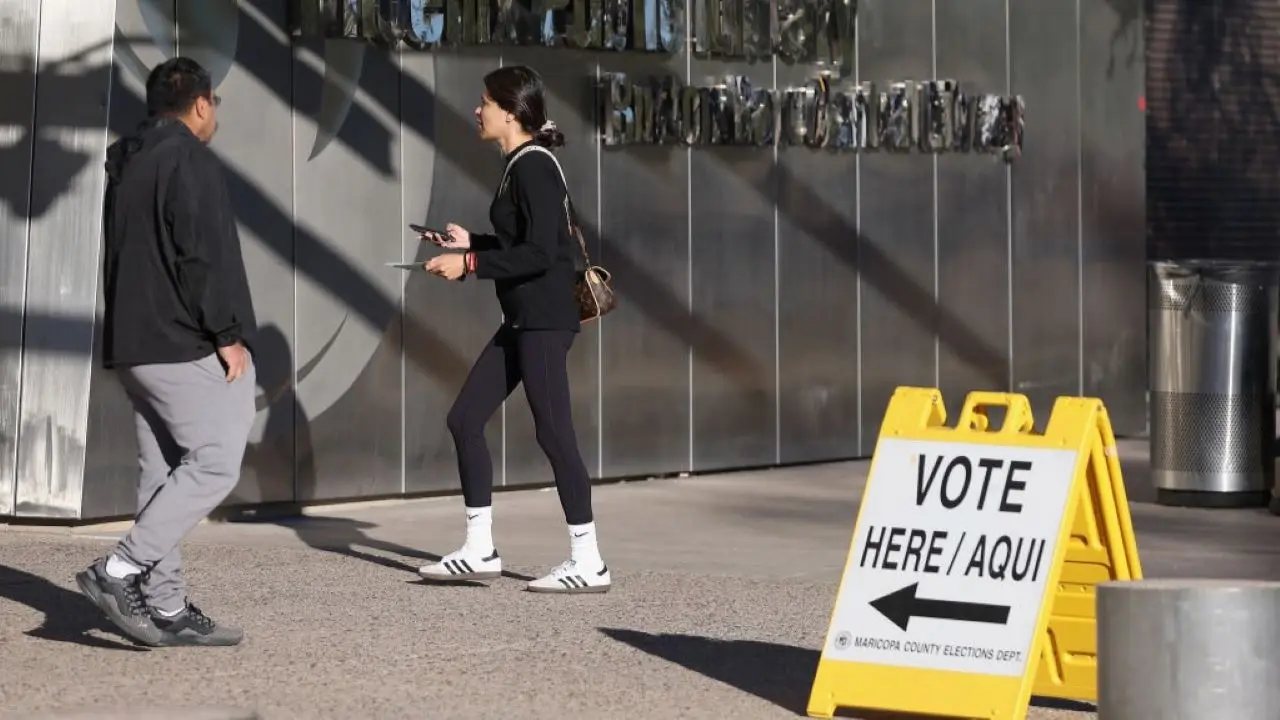
A federal judge in Arizona has rejected the Trump administration’s efforts to gain access to the state’s voter records, dealing a significant blow to the Department of Justice’s nationwide voter roll investigation.
U.S. District Judge Susan Brnovich, who was appointed by President Trump, dismissed the DOJ’s lawsuit against Arizona Attorney General Adrian Fontes with prejudice on Tuesday. In her ruling, Judge Brnovich stated that voter rolls are “not a document subject to request by the Attorney General.”
The Justice Department had demanded that Fontes turn over comprehensive voter data, including sensitive personal information such as dates of birth, addresses, driver’s license numbers, and partial Social Security numbers.
Following the decision, Fontes celebrated the outcome as a victory for privacy rights. “This moment is a win for voter privacy,” he said in a statement. “I will never comply with illegal requests that put Arizona voters in harm’s way.”
Arizona now joins a growing coalition of states resisting the administration’s voter record investigations. Rhode Island, California, Massachusetts, Michigan, and Oregon have similarly rebuffed federal attempts to access their voter rolls. The resistance highlights increasing tension between federal and state authorities over election oversight.
Meanwhile, at least 13 states have either complied with or pledged to comply with the Trump administration’s requests, including Alaska, Arkansas, Indiana, Louisiana, Mississippi, Nebraska, Ohio, Oklahoma, South Carolina, South Dakota, Tennessee, Texas, and Wyoming.
The administration has maintained that access to this data is necessary to ensure states are following federal election laws and to verify the citizenship status of registered voters. These efforts come amid the administration’s broader focus on election integrity issues.
The legal battle in Arizona unfolds against the backdrop of other election-related developments across the country. In North Carolina, state officials recently identified approximately 34,000 deceased individuals on voter rolls following a comprehensive comparison with federal data. The North Carolina State Board of Elections submitted over 7.3 million voter records to the federal Systematic Alien Verification for Entitlements (SAVE) database as part of an initiative to improve the accuracy of the state’s voter registration list.
Sam Hayes, executive director of the North Carolina State Board of Elections, expressed surprise at the findings. “While we expected to find some cases, this is higher than we anticipated,” Hayes said in a statement. However, the board emphasized that the presence of deceased individuals on voter rolls does not necessarily indicate fraudulent voting activity.
The ruling in Arizona comes during the same week that reports emerged about a Department of Justice investigation into alleged voter fraud in Michigan’s Wayne County. According to Fox News reports, the DOJ is examining instances of potentially fraudulent voting and alleged non-compliance with the Help America Vote Act.
The ongoing disputes between federal and state authorities over voter roll access highlight fundamental tensions in America’s federalist system, where states traditionally maintain control over election administration while the federal government seeks to ensure compliance with national standards.
As the 2024 election cycle intensifies, these legal battles underscore the continuing debate about the proper balance between securing election integrity and protecting voter privacy—a tension likely to persist regardless of the outcome in November.
Fact Checker
Verify the accuracy of this article using The Disinformation Commission analysis and real-time sources.

12 Comments
As a mining professional, I don’t have a strong partisan stance on this issue. However, I believe that safeguarding individual privacy rights should be a top priority, even in the context of election-related data.
Well said. Maintaining a balance between election integrity and personal privacy is a delicate challenge that deserves careful consideration.
This ruling highlights the ongoing tension between federal power and state sovereignty when it comes to voter data. It will be interesting to see how this case progresses and what impact it may have on the mining and energy sectors.
That’s a good point. The broader implications of this case could extend beyond just voter privacy and touch on federalism and the balance of power between the states and the federal government.
This is a complex issue with valid arguments on both sides. I’m curious to see how it plays out and what the long-term implications could be for election integrity and transparency.
You raise a good point. There are legitimate concerns about both voter privacy and election security that need to be carefully balanced.
Interesting development in the ongoing battle over voter data access. Upholding voter privacy rights is critical, even if it means pushing back against the federal government’s demands.
I agree, protecting sensitive voter information should be a top priority. The judge’s ruling is an important win for privacy and democratic principles.
As a mining investor, I don’t have a strong opinion on this political matter. However, I’m interested in how it could potentially impact the mining and energy sectors if the administration continues to push for voter data access.
That’s a fair observation. Changes in the political landscape can certainly have ripple effects across different industries, including mining and energy.
The judge’s decision to dismiss the DOJ’s lawsuit is a clear victory for Arizona’s stance on protecting voter privacy. It will be interesting to see if this sets a precedent for other states to follow.
Absolutely. This ruling could have broader implications for how states handle federal demands for voter data, which is an important issue to monitor.