


Listen to the article
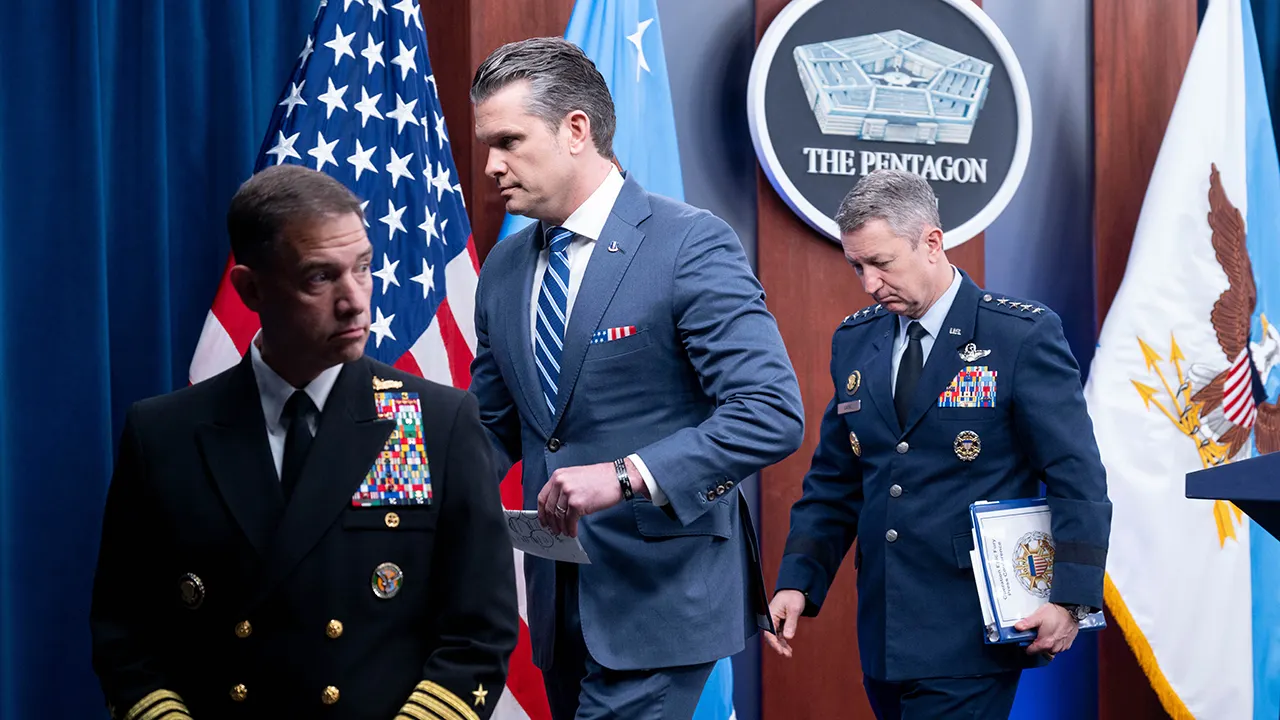
Department of War Secretary Pete Hegseth is set to face intense scrutiny from lawmakers as he makes his first appearance on Capitol Hill since the outbreak of conflict with Iran. Hegseth, alongside Chairman of the Joint Chiefs of Staff Gen. Dan Caine, will testify before the House Armed Services Committee on Wednesday, where they are expected to advocate for the administration’s proposed $1.5 trillion defense budget for the upcoming fiscal year.
The high-stakes hearing comes at a critical juncture, just two days before a 60-day deadline that could force the Trump administration to scale back its military operations in the Middle East without explicit congressional authorization. Several prominent Senate Republicans, including Sens. John Curtis of Utah, Susan Collins of Maine, and Thom Tillis of North Carolina, have voiced opposition to extending the conflict beyond the two-month mark. Senator Lisa Murkowski of Alaska is reportedly drafting an Authorization for the Use of Military Force (AUMF) that would require Senate approval for continued military engagement.
The War Powers Act allows for a 30-day extension of hostilities without congressional approval, but it remains unclear whether President Trump intends to abide by this timeline or if lawmakers will factor in the current ceasefire when considering the approaching deadline. Republicans have thus far rejected multiple Democratic attempts to limit Trump’s war powers in Iran, arguing such restrictions would unduly constrain the president’s authority.
Democratic lawmakers are expected to press Hegseth on what they characterize as insufficient transparency regarding the administration’s Iran strategy. Rep. Adam Smith of Washington, the ranking Democrat on the House Armed Services Committee, previewed his concerns to CBS News, asking pointedly: “What’s his plan for the war? Because the other piece of this is the president keeps threatening massive escalation.”
Additional areas of concern likely to be raised include the depletion of weapons stockpiles resulting from the conflict, the long-term financial implications of the war, and the recent series of high-profile military dismissals under Hegseth’s leadership. These dismissals include former Navy Secretary John Phelan and Air Force General Randy George, raising questions about leadership stability within the military’s highest ranks.
The Pentagon’s formal request to Congress to officially recognize its name change from the Department of Defense to the Department of War—at a projected cost of at least $52 million—has also drawn criticism. Rep. Pramila Jayapal, D-Wash., voiced her disapproval on social media, stating, “The American people can’t afford groceries, gas or rent—and the Pentagon has ALREADY wasted $50 million on renaming the Department of Defense to the Department of War. Now they want more money.”
In an apparent effort to address fiscal accountability concerns ahead of the hearing, Hegseth announced a Joint Task Force Audit aimed at delivering a clean financial audit of the Pentagon’s 2028 financial statements. This initiative comes after years of failed audits within the department.
“We need to be brutally honest with ourselves. For far too long, this department’s financial reporting has been nothing short of a disaster,” Hegseth stated in a social media video. “Today that changes as it has during this administration, the era of excuses is over.”
Following Wednesday’s House appearance, Hegseth and Caine will face additional questioning before the Senate Armed Services Committee on Thursday, as congressional oversight of the administration’s military actions continues to intensify.
The hearings come at a pivotal moment for U.S. foreign policy in the Middle East, with implications for military strategy, defense budgeting, and the constitutional balance of war powers between the executive and legislative branches.
Fact Checker
Verify the accuracy of this article using The Disinformation Commission analysis and real-time sources.

14 Comments
As a former Army officer, Hegseth’s perspective on the administration’s Iran strategy will likely carry significant weight. However, lawmakers should ensure they scrutinize all available evidence and expert analysis before reaching their conclusions.
The upcoming hearing will be a crucial test of the administration’s ability to navigate the complex geopolitical landscape and maintain congressional backing for its foreign policy initiatives.
This is a high-stakes hearing with significant implications for US foreign policy and military operations. It will be interesting to see how Hegseth and Caine frame the administration’s Iran strategy and defense budget request before Congress.
Given the bipartisan opposition in the Senate, the administration may face an uphill battle in securing extended authorization for military action in the Middle East.
The administration’s $1.5 trillion defense budget request is ambitious, but it remains to be seen whether Congress will approve such a substantial increase in military spending amidst other pressing national priorities.
With bipartisan concerns about the scope and duration of the Iran conflict, Hegseth and Caine will need to present a compelling case to secure continued congressional support.
It’s concerning to see prominent Republican senators voicing opposition to extending the Iran conflict. This could signal growing bipartisan skepticism about the administration’s foreign policy approach.
The drafting of a new AUMF by Senator Murkowski suggests an effort to reassert congressional authority over matters of war and peace.
The $1.5 trillion defense budget request is staggering, especially with the looming congressional deadline on the Iran conflict. Lawmakers will surely scrutinize how these funds would be allocated.
With competing priorities like domestic infrastructure, healthcare, and education, the defense budget will likely face intense debate in Congress.
The War Powers Act provides a framework for congressional oversight, but its application in this context remains unclear. Lawmakers will likely seek greater clarity on the administration’s legal justification for its actions.
With the 60-day deadline looming, the testimony from Hegseth and Caine will be closely watched for any signs of a shift in the administration’s Iran strategy.
As a key Fox News personality, Hegseth’s advocacy for the administration’s Iran policy will be scrutinized for potential political bias. Lawmakers should aim to cut through the partisan rhetoric and focus on the facts.
The upcoming hearing represents a critical juncture in the ongoing debate over the appropriate use of military force. The outcome could have far-reaching implications for US foreign relations and national security.