


Listen to the article
Social Media Misinformation Drives Millions to Abandon Sunscreen, AAD Study Finds
As summer approaches, alarming new data from the American Academy of Dermatology (AAD) reveals that misinformation is causing millions of Americans to reduce or completely stop using sunscreen, placing them at increased risk for skin cancer and premature aging.
The findings, released today as part of AAD’s annual Practice Safe Sun Survey ahead of Skin Cancer Awareness Month in May, show that over 16 million adults have altered their sun protection habits based on false claims encountered online—with younger generations particularly vulnerable to this dangerous trend.
“While it’s encouraging that over half of Americans are using sunscreen, young people and adults are navigating an overwhelming amount of conflicting information about sun protection,” said AAD President Dr. Murad Alam. “Misinformation reinforces harmful tanning myths, leading people to underestimate the risks of UV light exposure and ignore protective measures.”
The survey exposes a significant disconnect between Americans’ perceived sun safety knowledge and actual protective behaviors. Despite 67% of respondents rating their own sun protection habits as “good” or “excellent,” nearly half scored a “C” or lower on the AAD’s sun safety quiz. Generation Z (ages 18-29) performed particularly poorly, with one-third receiving a D or F, despite expressing high confidence in their knowledge.
Social media platforms have emerged as primary sources of skincare information, especially for younger Americans. While 21% of all adults rely on Instagram or TikTok influencers for skincare advice, that number jumps to 36% among Gen Z respondents. Nearly half of all Americans—and 64% of Gen Z—report encountering sunscreen misinformation online.
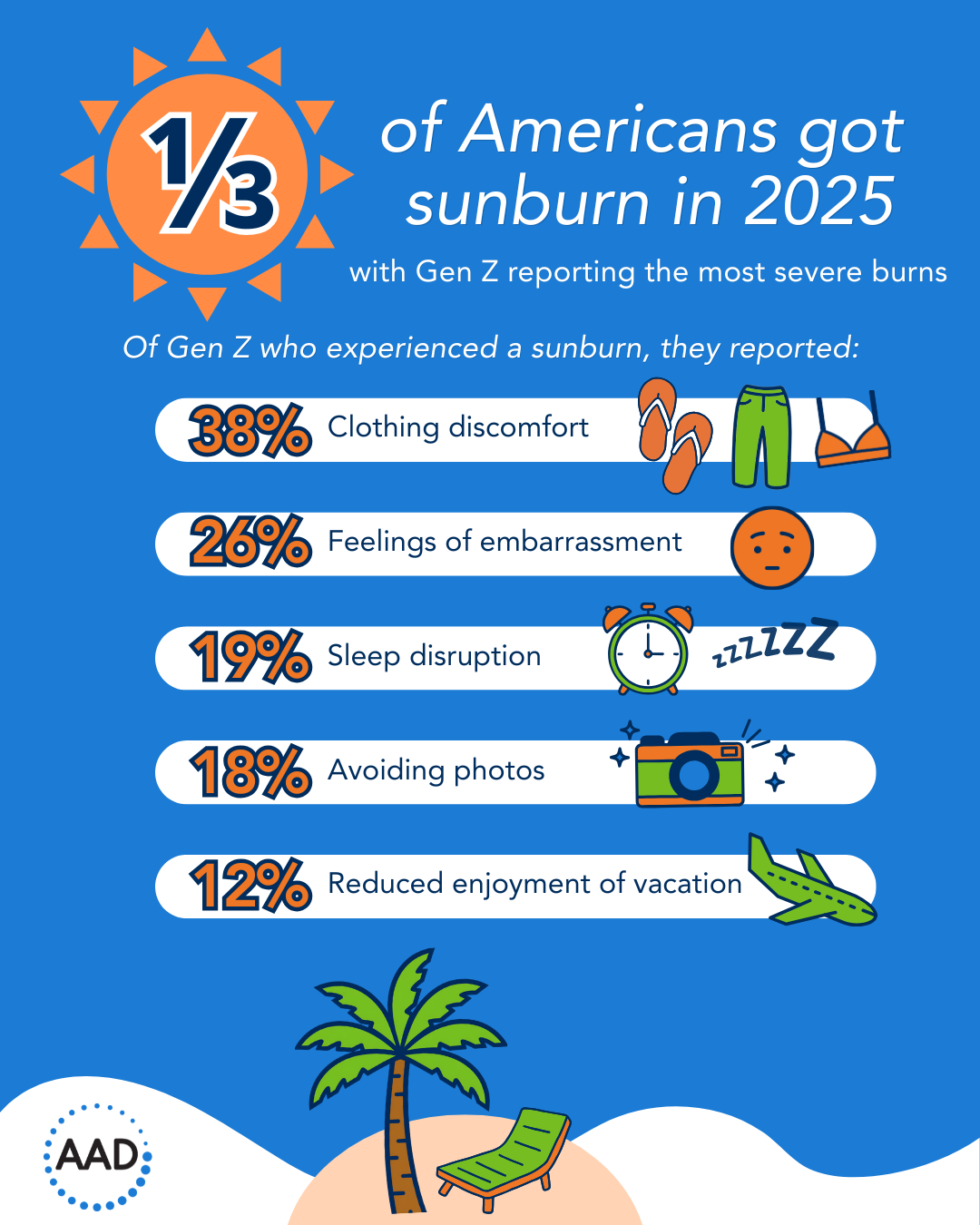
The consequences of this misinformation are tangible. Although 57% of Americans regularly use sunscreen, one-third reported getting sunburned in the past year. Medical experts stress that there’s no such thing as a “safe tan,” yet persistent myths continue to influence behavior.
“There is no such thing as a safe tan. Every time you tan or burn, you are damaging the DNA in your skin,” Dr. Alam emphasized. “Sunburns cause pain and embarrassment in the short term, and over time they make the skin look wrinkled, spotted, and old, while also dramatically increasing the risk of skin cancer.”
The survey uncovered several persistent tanning myths that continue to influence behavior. A striking 83% of adults believe sun exposure gives them a “healthy-looking glow,” while 55% think tanned skin looks healthier. More than half (52%) believe at least one false tanning claim, including that tanning is safe if you don’t burn (29%) or that a base tan can prevent sunburn or reduce cancer risk (19%).
These misconceptions persist despite growing concern about long-term skin health. Half of adults worry about premature aging, and 43% are already seeing damage like wrinkles or dark spots from sun exposure. Looking back, 70% wish they had done more to protect their skin earlier in life.
Yet knowledge gaps continue to undermine protection efforts, with 21% unaware that sunscreen helps prevent premature aging and 26% not realizing it can help prevent dark spots.
Dr. Alam notes that the effects of UV exposure accumulate over time, increasing skin cancer risk—now the most common form of cancer in the United States. With at least one in five Americans developing skin cancer in their lifetime, and over 160 million American adults getting a suntan in 2025 (nearly 60 million doing so intentionally), the stakes are high.
The AAD recommends performing regular skin self-examinations and consulting a board-certified dermatologist about any new or changing spots. For Skin Cancer Awareness Month and Melanoma Monday (May 4), the organization is emphasizing the importance of reliable medical information sources and consistent sun protection habits.
“The data show that many Americans are learning about long-term sun damage the hard way,” Dr. Alam said. “The good news is that much of this damage is preventable with simple, consistent sun protection habits.”
The AAD survey was conducted online from January 19 to February 2, 2026, with a nationally representative sample of 1,132 U.S. adults. The margin of error is ±3%.
Fact Checker
Verify the accuracy of this article using The Disinformation Commission analysis and real-time sources.

10 Comments
This is really concerning. It’s critical that people have access to accurate, science-based information on sun safety and skin cancer prevention. Misinformation can have serious public health consequences.
Agreed. Sunscreen is so important, especially for younger generations who may be more vulnerable to misinformation online. Dermatologists need to be proactive in debunking the dangerous myths.
It’s alarming to see how misinformation can have such a tangible impact on public health behaviors. Skin cancer is a major issue, and the dermatology community needs to be proactive in debunking false claims.
This is a concerning trend, especially given the serious health risks of UV exposure. I hope the dermatology community can find effective ways to counter the misinformation and reinforce the importance of sunscreen.
Agreed. Educating the public on the science behind sun safety recommendations is key. Social media companies also need to take a stronger stance against the spread of dangerous health myths.
It’s alarming to see so many Americans putting their health at risk due to false claims about sun protection. Skin cancer is a major public health issue that requires evidence-based education.
Absolutely. With summer coming, this is a timely reminder to check trusted medical sources for the facts on sun safety. Raising awareness is crucial to combating dangerous misinformation.
This is a troubling development that highlights the real-world consequences of health misinformation. I hope this spurs a renewed effort to promote evidence-based sun protection, especially for vulnerable populations.
Absolutely. Dermatologists and public health authorities need to aggressively counter these dangerous myths and make sure people understand the importance of using sunscreen.
The statistics on reduced sunscreen use are really eye-opening. I hope this study prompts a renewed focus on promoting evidence-based sun protection, especially for vulnerable groups like young adults.