


Listen to the article
The Victorian era witnessed a fascinating evolution in photography, where creative manipulation techniques transformed the medium from mere documentation into an art form capable of expressing imagination and fantasy.
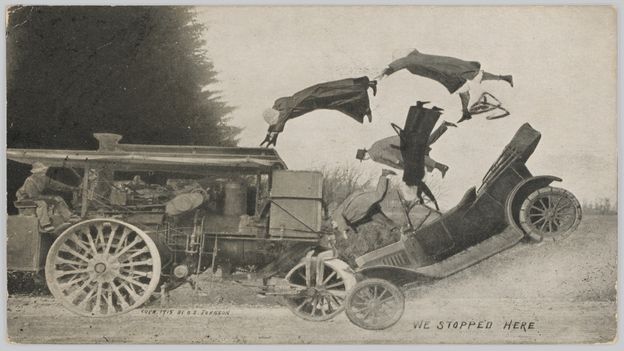
In what art historians now recognize as early examples of photographic manipulation, Victorian photographers employed various darkroom techniques to create illusions that captivated audiences of the time. These manipulated images demonstrate how photography’s relationship with truth has evolved significantly since its inception.
Among the most popular formats for these creative expressions were cartes de visite—small, mass-produced prints mounted on card that became collectible items in the late 19th century. One anonymous example from approximately 1870-1890, titled “Daydream,” showcases the sophisticated darkroom techniques of the era. The image depicts a couple with their professional tools while simultaneously revealing the woman’s imagined future as a mother through a ghostly overlay.
“This was achieved through a darkroom trick,” explains curator Hans Rooseboom, who notes that photographers would shield portions of photographic paper from light exposure before adding a second negative. This technique effectively created a visual narrative that revealed the subject’s innermost thoughts—a precursor to the thought bubbles that would later become standard in comic strips and visual storytelling.
The manipulation of photographic reality extended beyond simple overlays. Leonard de Koningh’s work “Man startled by his own reflection” (c. 1870-1880) demonstrates another technical achievement. In this comical memento mori, a man appears to confront his own ghost in a seamless double exposure. De Koningh exposed just half of the photographic plate initially, then had the subject change positions before exposing the second half.
“It’s like a magician,” Rooseboom marvels. “You know you are being tricked, but you don’t know how the photographer does it.” This approach echoed the philosophy of Oscar Gustave Rejlander, a pioneer of composite printing, who argued that such manipulations led “not to falsehood but to truth” since “an image made by a single negative is not true, nor will it ever be so—the focus cannot be everywhere.”
Perhaps most striking among these early manipulated photographs is FM Hotchkiss’s macabre “Decapitation” (c. 1880-1900). This cabinet card—a larger format that had replaced the smaller cartes de visite by the 1880s—displays dark humor through the apparent severing of a subject’s head. The illusion is so convincing that only the strategic placement of a curtain (concealing the original head position) and minor retouching marks visible under microscopic examination reveal the technique.
The ethical considerations surrounding photographic manipulation that dominate today’s discussions were largely absent in this era. “We still expect photography to bring the truth, but this idea only really emerged from the illustrated magazines of the 1930s,” Rooseboom notes. “Until then, the creative freedom to alter the image was unchallenged. There was no ethical restraint on producing non-realistic images. No one would forbid you from doing this.”
By the 1880s, cabinet cards had largely supplanted cartes de visite in popularity, offering larger formats for these creative illusions. Both formats served as vehicles for photographers to experiment with reality in ways that would influence visual communication for generations to follow.
What’s particularly remarkable is how these Victorian-era photographers achieved such convincing effects with purely analog techniques—double exposures, selective development, and physical retouching—long before the digital manipulation tools that are commonplace today. Their work reminds us that the manipulation of photographic reality is not merely a modern phenomenon but has been intrinsic to the medium almost since its invention.
These images, now preserved in institutions like the Rijksmuseum, provide a window into both the technical ingenuity and the creative imagination of early photographers who pushed the boundaries of their medium to express deeper truths about human experience.
Fact Checker
Verify the accuracy of this article using The Disinformation Commission analysis and real-time sources.

10 Comments
I’m curious to learn more about the specific techniques used by these Victorian photographers to create their illusions. It must have required a lot of skill and creativity to pull off such convincing manipulations without modern digital tools.
These historical photo manipulations are a great reminder that we shouldn’t always take images at face value, even in an era before digital editing. It’s important to be critical consumers of visual media, then and now.
Absolutely. These examples show how photography has long been used to create illusions and shape perceptions, which is an important lesson to keep in mind when evaluating visual information.
The ‘Daydream’ image is a particularly striking example of how these early photo manipulations could evoke a sense of fantasy and emotion. I wonder if the original viewers would have been enchanted or unsettled by the ghostly overlay of the woman as a mother.
Good point. Manipulated images like this must have felt quite uncanny and unsettling to the Victorian audience, even as they were captivated by the creativity on display.
It’s fascinating to see how the boundaries of truth and fiction in photography have been explored and pushed throughout history. These early ‘fakes’ demonstrate that the medium has always had the potential for creative interpretation, not just strict documentation.
These historical photo ‘fakes’ are a great example of how the relationship between photography and truth has evolved. Even in the Victorian era, there was an appetite for imaginative, manipulated images that blurred the line between documentation and artistic expression.
I agree. It’s interesting to see how the perception and use of photography has changed over time, from a tool for capturing reality to a medium for creative expression and imagination.
I’m impressed by the technical skill and artistry on display in these early photographic ‘fakes’. It’s a great reminder that the medium has always been capable of so much more than just straightforward documentation.
Fascinating look at the early days of photographic manipulation. It’s amazing how creative photographers were in using darkroom techniques to create fantastical images. I wonder what the audiences at the time would have thought of these ‘fakes’ – were they seen as artistic expression or deception?