


Listen to the article
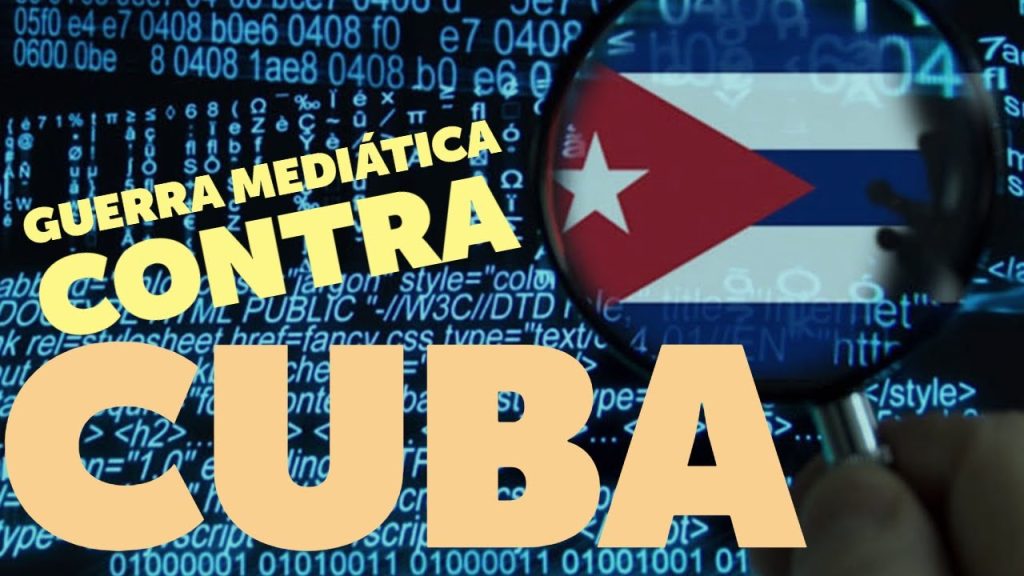
In an era marked by unprecedented access to information, the line between fact and fiction has become increasingly blurred, according to Roberto Morales Ojeda, a high-ranking official in Cuba’s Communist Party.
Speaking out on social media this week, Morales Ojeda, who serves as a Political Bureau member and Secretary of Organization of the Central Committee of the Communist Party of Cuba, highlighted what he describes as a troubling paradox in modern communications.
“We live in the era with the most information channels in history, but paradoxically, also in the era where the truth has become more elusive. Never before have we been so ‘cornered’ by fallacies,” he stated.
The Cuban leader pointed to what he characterizes as systematic manipulation by “gigantic media monopolies” that are backed by “main centers of capitalist power.” According to Morales Ojeda, these entities have developed sophisticated methods to present complex global issues as simplistic moral narratives.
“The serious aspect of the matter is not only the existence of lies—which have always accompanied power—but the sophistication with which they are disguised,” he warned, suggesting that such tactics serve multiple purposes in the international arena.
Morales Ojeda cited several examples of how he believes this strategy operates in practice, including justifying military interventions, spreading misinformation about global events, and systematically vilifying nations whose positions contradict dominant narratives.
His comments come against a backdrop of long-standing tensions between Cuba and Western media outlets, particularly those in the United States. The island nation has frequently criticized foreign media coverage of its domestic affairs, economic challenges, and political system as biased and lacking historical context.
The most concerning aspect, according to the Cuban official, is the passive acceptance of these narratives by global audiences. He expressed alarm at how “millions of people repeat slogans without exercising critical thinking,” referencing historical examples such as the claims about weapons of mass destruction that preceded the Iraq War.
For Cuba, which has been under a U.S. embargo for over six decades and has weathered numerous information campaigns against its government, Morales Ojeda framed media literacy as more than an intellectual exercise—it’s “an act of survival.”
“When we allow them to take away our ability to doubt, to compare, or simply to seek other sources, we cease to be citizens and become mere pawns in a choreographed manipulation,” he cautioned.
His statement reflects ongoing concerns in various countries about media concentration, the decline of independent journalism, and the rise of polarized information ecosystems that can amplify disinformation.
Media analysts note that while concerns about information manipulation are legitimate across the political spectrum, governments themselves—including Cuba’s—have been criticized by press freedom organizations for restricting independent media and controlling information flows.
The commentary from Morales Ojeda encapsulates a sentiment increasingly voiced by leaders from countries with strained relationships with Western powers, who argue that global information flows remain dominated by a handful of corporations and governments with specific geopolitical interests.
“True rebellion is thinking,” Morales Ojeda concluded, suggesting that critical engagement with information sources represents a form of resistance in a media landscape shaped by powerful interests.
As digital platforms continue to transform how information is created and consumed globally, the challenge of distinguishing fact from fiction remains a pressing concern for citizens, governments, and media organizations alike.
Fact Checker
Verify the accuracy of this article using The Disinformation Commission analysis and real-time sources.

14 Comments
While I’m skeptical of the Cuban government’s motives, I can’t deny that the proliferation of misinformation and biased reporting is a serious global problem. This is a complex issue that requires nuanced discussion, not simplistic finger-pointing.
Agreed. We shouldn’t dismiss these concerns just because they’re coming from a communist regime. The challenge of maintaining truth and objectivity in media is one that all societies must grapple with.
It’s unsurprising to hear these sentiments from a Cuban official, given the country’s long history of distrust towards Western media. However, the point about the sophistication of modern disinformation tactics is valid and worth considering more broadly.
You raise a fair point. Cuba’s perspective on this issue may be colored by its own political agenda, but that doesn’t mean the underlying concerns about media manipulation aren’t legitimate and deserving of further scrutiny.
This is a complex issue with valid concerns on both sides. While media manipulation is a real problem, we must be wary of attempts to discredit journalism and undermine the free press, even by those claiming to fight against it.
Exactly. It’s important to maintain a balanced and nuanced approach, acknowledging the legitimate issues while also recognizing the vital role of a free and independent media in a democratic society.
While I’m sympathetic to the concerns raised about media manipulation, I’m cautious about accepting the Cuban government’s perspective at face value. We should carefully evaluate the evidence and seek out a range of expert opinions before drawing conclusions.
That’s a prudent approach. It’s important to maintain a critical eye and not let our own biases or preconceptions cloud our judgment on this complex issue. Rigorous, impartial analysis is key.
The Cuban official’s warnings about media manipulation are not entirely unfounded, but we must also consider the political context and potential biases in his statements. Addressing this challenge will require collaborative efforts across national boundaries and political divides.
Well said. This is a global issue that transcends individual countries or ideologies. Constructive dialogue and a shared commitment to truth and accountability will be crucial in finding solutions.
Morales Ojeda raises some valid points about the worrying trend of media monopolies and their potential to distort the truth. However, I would caution against taking his claims at face value without further investigation and verification.
That’s a fair assessment. We should approach this issue with a critical eye and not automatically assume the Cuban government’s perspective is the whole truth. Robust, impartial analysis is needed to fully understand the dynamics at play.
This is a concerning trend indeed. The power and reach of global media conglomerates can be used to shape public opinion in troubling ways. We must remain vigilant and seek out diverse, trustworthy sources to form our own views on complex issues.
I agree, the ability to present narratives as simplistic moral tales is worrying. It’s crucial that we think critically and not blindly accept what the media tells us, no matter how authoritative it may seem.