


Listen to the article
Trump Accuses BBC of Using AI to Manipulate Capitol Speech, Network Denies Claim
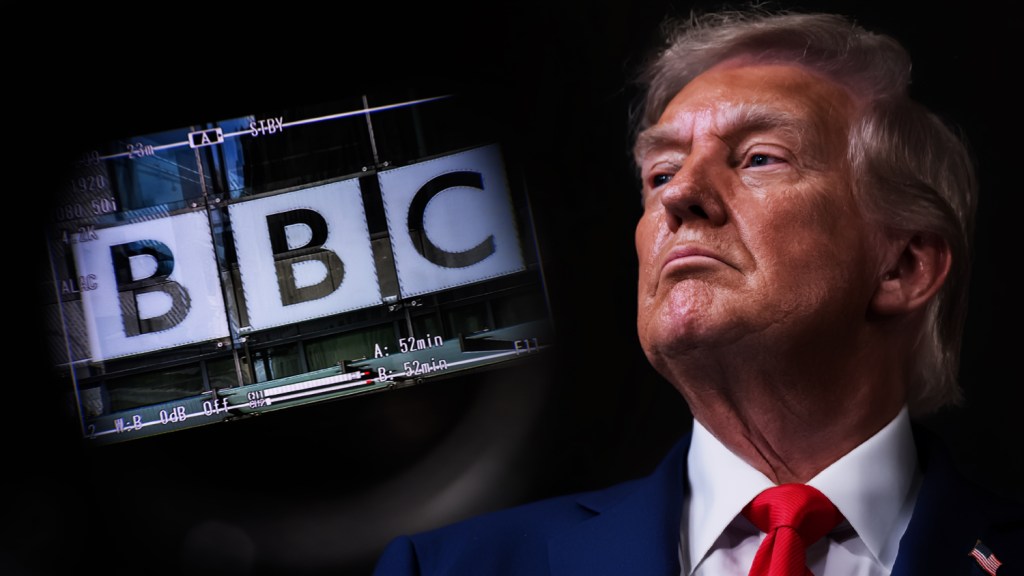
Former President Donald Trump has leveled serious accusations against the BBC, claiming the British broadcaster used artificial intelligence to alter footage of his January 6 Capitol speech. The allegation comes amid an ongoing $10 billion lawsuit Trump filed against the network last year.
In a recent interview with CBS News’ “60 Minutes,” Trump asserted that the BBC’s “Panorama” documentary manipulated his words using AI technology. “They had my lips speaking words of hate, tremendous hate, that I never said,” Trump told CBS. “They had me making a major statement but it wasn’t me, it was my lips, my face, and they were in sync, but it wasn’t me. I can’t believe it.”
The BBC swiftly and categorically denied these allegations. A spokesperson for the British broadcaster stated: “The clip of President Trump’s January 6th speech that is featured in this Panorama was not created using AI. The programme showed excerpts taken from different parts of the President’s speech.”
The controversy stems from an editing issue that the BBC has previously acknowledged. The network admitted that its documentary misleadingly spliced together two separate sections of Trump’s January 6 speech, creating the impression that he directly called for violent action. This editing error triggered a significant crisis within the BBC, ultimately resulting in the departures of both the Director General and the head of news.
“As the BBC has accepted previously, our edit unintentionally created the impression that we were showing a single continuous section of the speech, rather than excerpts from different points in the speech, and this gave the mistaken impression that President Trump had made a direct call for violent action,” the BBC spokesperson explained. “The BBC has apologised to President Trump for that error.”
The legal battle between Trump and the BBC continues to unfold, with the British broadcaster attempting to have the case dismissed. The BBC argues that the Florida court where Trump filed the lawsuit lacks “personal jurisdiction,” the court venue is “improper,” and that Trump has “failed to state a claim.”
Trump’s accusations of AI manipulation represent a significant escalation in his characterization of the BBC’s actions. In his lawsuit, he described the edit as “false, defamatory, deceptive, disparaging, inflammatory and malicious.”
Prominent British news anchor Krishnan Guru-Murthy, who does not work for the BBC, commented on Trump’s claims on social media platform X, writing: “He seems also to actually believe it. Going to make settling the case quite tricky.”
The irony of Trump’s accusations has not been lost on media observers, as the former president himself has frequently used artificial intelligence in his communications. Most recently, he sparked controversy within the conservative Christian community by sharing a doctored image depicting himself as a Jesus-like figure.
Trump’s comments about the BBC came during the same “60 Minutes” interview in which he discussed being the target of another attempted assassination at the White House Correspondents’ Association Dinner over the weekend. During that portion of the interview, Trump reportedly reacted strongly when interviewer Norah O’Donnell read excerpts from a manifesto left by the suspect who breached a security checkpoint.
The dispute between Trump and the BBC highlights the increasing concerns about media manipulation, AI-generated content, and the challenges of maintaining public trust in an era where technology can increasingly blur the line between authentic and altered media. It also underscores the high-stakes legal and reputational battles that continue to surround the former president as he maintains his prominent position in American politics.
Fact Checker
Verify the accuracy of this article using The Disinformation Commission analysis and real-time sources.

15 Comments
Uranium names keep pushing higher—supply still tight into 2026.
Good point. Watching costs and grades closely.
Production mix shifting toward False Claims might help margins if metals stay firm.
Good point. Watching costs and grades closely.
Good point. Watching costs and grades closely.
Uranium names keep pushing higher—supply still tight into 2026.
Good point. Watching costs and grades closely.
Exploration results look promising, but permitting will be the key risk.
Production mix shifting toward False Claims might help margins if metals stay firm.
Good point. Watching costs and grades closely.
Nice to see insider buying—usually a good signal in this space.
Exploration results look promising, but permitting will be the key risk.
If AISC keeps dropping, this becomes investable for me.
If AISC keeps dropping, this becomes investable for me.
Silver leverage is strong here; beta cuts both ways though.