


Listen to the article
Misinformation Spreads at Alarming Speed Following White House Correspondents’ Dinner Shooting
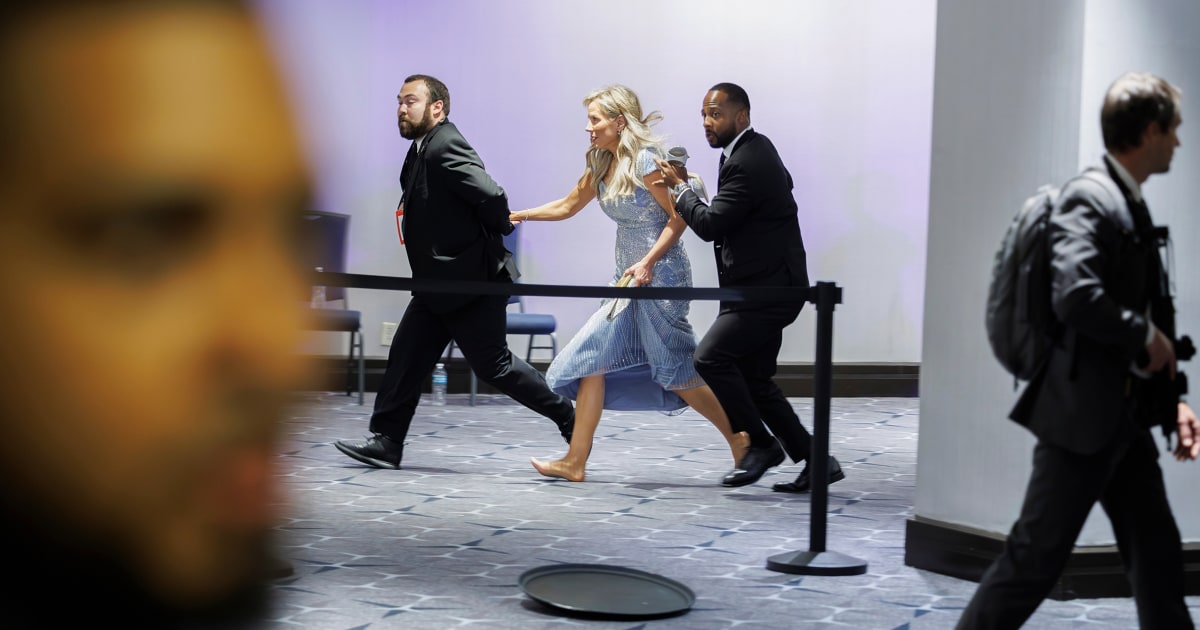
Within minutes of the first reports of shots fired at Saturday night’s White House Correspondents’ Association dinner, conspiracy theories and misinformation began flooding social media platforms. The primary false claim—that the incident had been staged—spread with unprecedented rapidity, underscoring a growing crisis of institutional trust in American society.
Despite authorities quickly releasing verified information about suspected shooter Cole Tomas Allen, a 31-year-old from Torrance, California, unfounded speculation continued to gain traction throughout Sunday. Law enforcement officials reported that Allen’s brother informed them that the suspect had sent writings displaying anti-Trump sentiment to family members prior to the incident.
Even former President Trump, himself known for promoting conspiracy theories in the past, remarked on the unusually swift emergence of these false narratives during a Sunday interview with CBS’s “60 Minutes.”
“Usually it takes a little bit longer,” Trump said. “Usually they wait about two or three months to start saying that.”
The immediate surge of conspiracy theories highlights how knee-jerk skepticism of current events has become normalized for many Americans, exacerbated by diminishing trust in institutions and increasingly partisan politics.
“I would have been surprised if they hadn’t developed because we’re in a society that is absolutely saturated with conspiracism,” said Michael Barkun, professor emeritus in political science at Syracuse University.
Social media platforms became ground zero for the spread of these theories. On Reddit, many popular posts about the incident either directly or indirectly suggested it had been staged, while Instagram posts claiming Trump or the White House orchestrated the situation garnered thousands of engagements. On X (formerly Twitter), “staged” trended alongside references to “Butler”—the site of a previous assassination attempt against Trump that has spawned similar conspiracy theories.
While few high-profile Democratic politicians engaged with these theories, commentators from both the political left and right criticized the wild speculation.
The prevalence of “false flag” conspiracy theories has grown in recent years. Some on the political right have previously labeled events such as the Sandy Hook Elementary School shooting and the January 6, 2021, Capitol riot as staged operations. More recently, similar thinking has emerged on the left, particularly regarding the Butler assassination attempt against Trump.
“It comes in waves in the U.S.,” noted Mark Fenster, a scholar at the University of Florida who studies conspiracy theories. “We have had periods in which there has been both political violence and this sort of fear of conspiracy… One thing that’s different for today is the fact that it’s so observable… These things can circulate more broadly and more quickly.”
The information ecosystem surrounding the event quickly became polluted with various false claims. Fake images of Allen circulated online, as did AI-enhanced security videos. One post on X suggesting time travel was involved received over 1.2 million views by Monday morning, while an AI-generated video falsely depicting commentator Tucker Carlson promoting the “staged” theory also made rounds online.
A pro-Iran AI propaganda account seized the opportunity to create content exploiting the conspiracy narrative. Other users misconstrued statements from White House press secretary Karoline Leavitt, who had mentioned “shots will be fired” in a red carpet interview preceding the incident—a clear reference to the content of the president’s upcoming speech, not the shooting that would later occur.
Some conspiracy theorists suggested the attack was covertly orchestrated by the Trump administration to gain political advantage and support the construction of a $400 million ballroom addition to the White House East Wing. Former right-wing social media influencer Ashley St. Clair claimed that while she didn’t believe the incident was staged, the coordinated messaging about the ballroom proposal in its immediate aftermath showed evidence of organized communication among Trump supporters.
Experts warn that the rise of conspiratorial thinking across the political spectrum presents serious dangers for American society.
“The danger, obviously, is that it further stymies our political system, that our political system depends upon parties and branches of government that can get along well enough to enact laws and to enforce laws in a way that is even handed and legitimate,” Fenster explained. “And to the extent that government actors and political parties and popular politics are based upon this sort of deeply ingrained suspicion… it really makes it that much more difficult to run a country.”
Even as the events were unfolding, some anticipated the conspiracy-fueled reaction. Rep. Jamie Raskin (D-Md.) told NBC News as he left the dinner: “You know right-wing media is filled with all kinds of conspiracy theories lately about how President Trump’s first assassination attempt was phony and fake? This is going to fuel all of that stuff, I’m sure.”
Fact Checker
Verify the accuracy of this article using The Disinformation Commission analysis and real-time sources.

10 Comments
I’m curious to see how this story develops as more information becomes available. It’s important to approach it with an open mind, but also to be wary of unsubstantiated claims that could distract from the real issues at hand.
Well said. Keeping an open but critical mindset will be key to understanding the truth of what happened and responding appropriately.
While I understand the desire to make sense of such events, resorting to unsubstantiated ‘false flag’ theories is unproductive and potentially dangerous. It’s important to rely on official sources and avoid fueling further speculation at this stage.
Absolutely. Maintaining trust in our institutions and democratic processes should be the priority, not propagating conspiracy theories with no evidence.
Tragic incident at the White House Correspondents’ Dinner. It’s concerning to see conspiracy theories spreading so quickly before all the facts are known. We should wait for the authorities to complete their investigation before jumping to conclusions.
I agree, responsible reporting and fact-checking are crucial in these situations. Spreading unverified claims can do more harm than good.
It’s disheartening to see misinformation spreading so rapidly, especially around sensitive events like this. We should focus on supporting the victims and their families, and let the authorities conduct a thorough investigation before drawing any conclusions.
Well said. Compassion and patience are needed in times like these, not unfounded speculation.
As someone who follows the mining and energy sectors closely, I’m concerned about the potential for these false claims to disrupt important conversations around policy and regulation. We need to keep the focus on facts and evidence-based analysis, not conspiracy theories.
Agreed. Maintaining a clear, rational discourse is crucial, especially on issues that impact critical industries like mining and energy.