


Listen to the article
Study Finds Inoculation Interventions More Effective Than False Tags in Combating Misinformation
A groundbreaking online study has revealed that pre-emptively warning social media users about misinformation techniques can significantly reduce engagement with false content, outperforming the current tagging methods used by major platforms like Facebook.
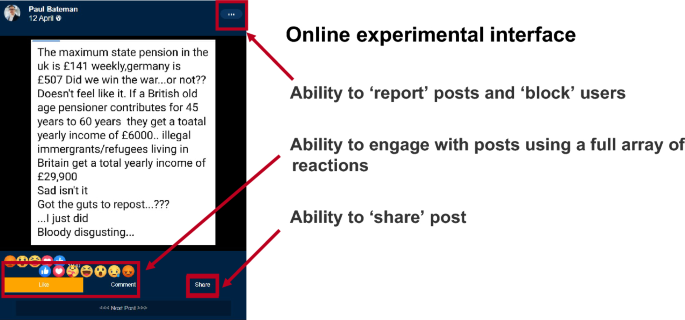
The research, conducted in the UK with over 2,400 participants, used a realistic mock social media interface to measure how different intervention strategies affected user behavior when confronted with misinformation across health, politics, and financial topics.
Participants encountered a feed of 30 posts—half containing legitimate information and half featuring misinformation sourced from fact-checking organizations. The researchers tracked three key engagement metrics: positive engagement (likes and loves), any reaction (including all emoji reactions), and sharing behavior.
“We wanted to measure actual behavioral responses rather than just stated intentions,” explained one of the study’s researchers. “By creating a realistic simulation, we could observe how people naturally interact with both legitimate and false content in their feeds.”
The study divided participants into three groups: a control group that received no intervention, a group that saw standard “false information” tags on suspect posts (similar to Facebook’s current approach), and a group that received a short “inoculation” training session before viewing any content.
The inoculation intervention provided users with both a warning about misinformation dangers and specific tools to identify potentially false content, focusing on post attributes rather than specific topics to create a “broad-spectrum defense” against various manipulation techniques.
Results were striking. The inoculation approach reduced the odds of users “liking” or “loving” misinformation posts by 59% compared to the control group, while the false tag approach achieved only a 33% reduction. When comparing interventions directly, the inoculation strategy proved significantly more effective than traditional false tags.
“What makes these findings particularly notable is that the inoculation intervention appeared to work equally well regardless of a person’s cognitive reflection abilities,” noted one researcher. “In contrast, the effectiveness of false tags varied depending on users’ analytical thinking skills.”
The research revealed interesting patterns across different types of misinformation. The inoculation approach showed more consistent results when addressing health-related falsehoods compared to political or financial misinformation, where effectiveness varied more significantly by post.
Engagement with misinformation was relatively low across all groups, with 72.3% of participants never “liking” or “loving” any misinformation posts. However, broader reactions to misinformation were more common, with 40.7% of users reacting with any emoji to two or more false posts. Only 16% of participants shared misinformation content.
The study also revealed a potential side effect: the inoculation approach reduced engagement with legitimate information as well, suggesting it may promote a general skepticism toward all social media content rather than selective skepticism toward false information.
These findings have significant implications for social media companies and policymakers seeking effective strategies to combat misinformation. Rather than relying solely on after-the-fact labeling of false content, platforms might consider implementing proactive educational approaches that equip users with the skills to identify misinformation independently.
“What we’re seeing is that giving people the tools to recognize misinformation on their own is more effective than simply telling them what’s false,” commented one expert. “This preventative approach could fundamentally change how we tackle the spread of false information online.”
The research adds to a growing body of evidence suggesting that psychological inoculation strategies might be crucial in building resilience against the rising tide of misinformation across social media platforms.
Fact Checker
Verify the accuracy of this article using The Disinformation Commission analysis and real-time sources.

10 Comments
Misinformation is a serious threat, so I’m glad to see research exploring effective interventions. Inoculation appears to be more impactful than passive labeling – empowering users to identify manipulation tactics seems like a smart approach.
This is an encouraging finding. Giving people the tools to spot manipulative tactics could be a game-changer in the fight against misinformation. Curious to see if the effects hold over time and across different demographics.
Absolutely. Inoculation seems more effective than just flagging posts, as it helps people internalize the techniques used to mislead. Definitely an approach worth exploring further.
This is a really fascinating and timely study. Inoculation seems like a promising way to combat the spread of misinformation, which has become a major societal challenge. I’m curious to see if these findings can be replicated at scale.
Yes, the ability to observe actual user behavior in a realistic simulation is a key strength of this research. The real-world applicability is exciting and I hope platforms take note of these findings.
This study offers an encouraging path forward in the battle against online misinformation. Proactively educating users about manipulation techniques could be a game-changer. I’m curious to see how these findings might be applied across different social media platforms and content areas.
Agreed. Inoculation seems more effective than simply flagging posts as false. Helping people build critical thinking skills to spot misinformation is a more sustainable solution. Excited to see if this approach can scale effectively.
Kudos to the researchers for taking a proactive, evidence-based approach to this critical issue. Empowering social media users to identify manipulation tactics is a smart strategy. I hope this study sparks wider adoption of inoculation techniques.
Interesting study on combating misinformation spread on social media. Inoculation interventions seem more effective than simple content labeling. Curious to see if this approach could be scaled up across different platforms and topics.
Yes, it’s an important issue to address, as misinformation can have real-world consequences. Proactive education may be key to empowering users to think critically about online content.