


Listen to the article
In a bold move against medical misinformation, the union of young general practitioners ReAGJIR has launched an innovative campaign that turns the tables on social media influencers who spread dangerous health advice. Working with advertising agency BETC Paris, the organization has created deepfake videos that transform misinformed content creators into messengers of medical truth.
The initiative responds to an alarming trend of unverified health information proliferating across social media platforms. According to a recent study by healthcare technology company Tebra, approximately 45% of medical advice shared on TikTok contains false or misleading information, posing significant risks to public health.
Social media platforms have become breeding grounds for dubious health recommendations ranging from inserting garlic cloves in the nose to treat flu, ingesting methylene blue for supposed health benefits, and promoting dangerous dietary practices. These unfounded “remedies” often gain traction among millions of users, with younger audiences being particularly vulnerable to such misinformation.
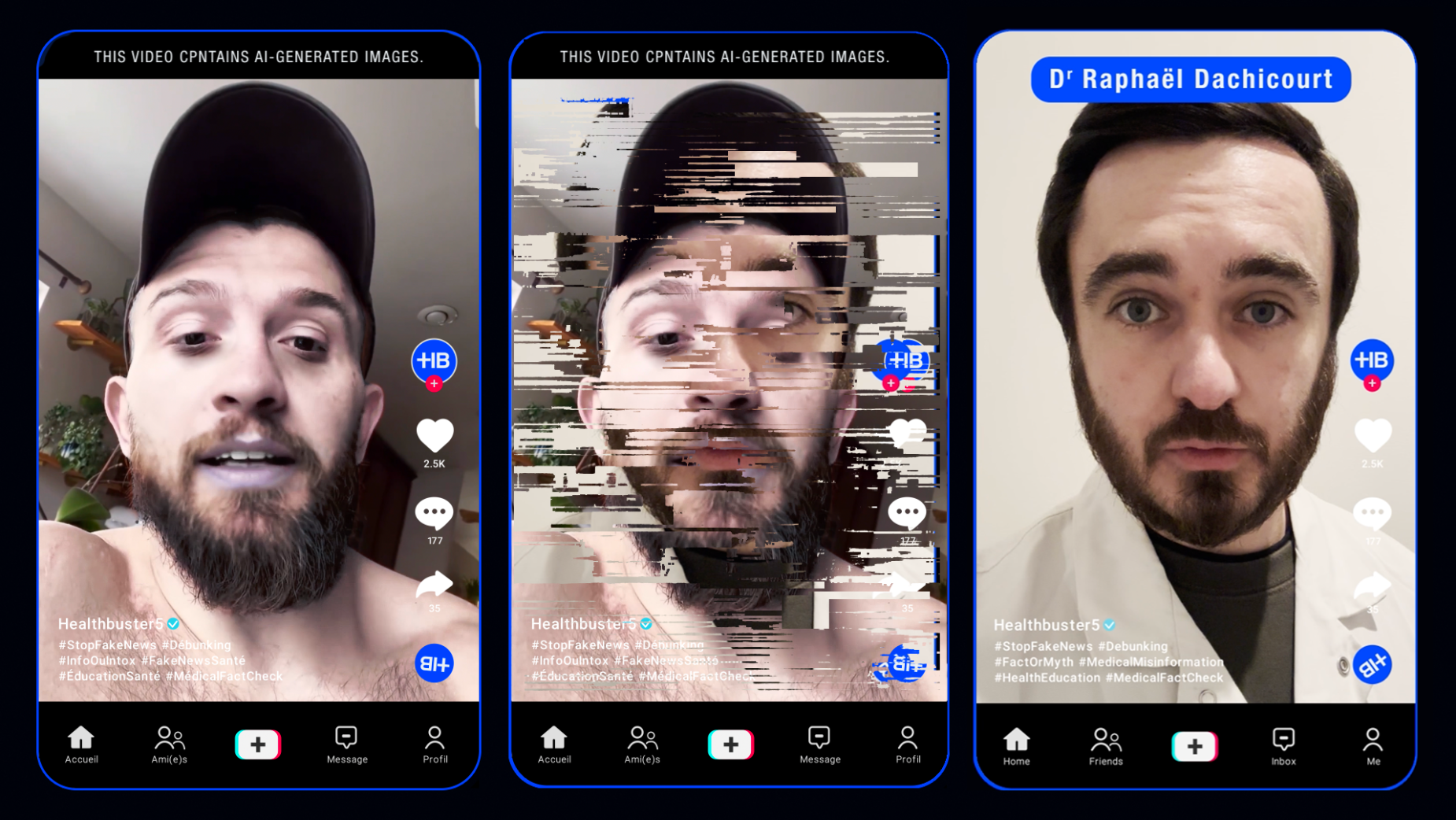
ReAGJIR’s countermeasure comes in the form of @healthbuster5, dedicated accounts on TikTok and Instagram that expose the potential dangers of following unqualified medical advice. The campaign’s ingenious approach uses artificial intelligence to create deepfake videos of the very influencers who promoted questionable health practices.
In these modified videos, influencers appear to reveal the harmful consequences they experienced after following their own recommendations. For instance, an influencer who previously advocated using garlic cloves to treat flu now “admits” to suffering from a nasal infection as a result. Another who recommended ingesting methylene blue now “discusses” the anemia they developed following their own advice.
The videos conclude with a powerful revelation: these weren’t actually the original influencers speaking, but qualified medical professionals who used AI technology to adopt the influencers’ appearance. This clever twist serves to emphasize the campaign’s core message: when it comes to health matters, only trust certified medical professionals.
“The spread of medical misinformation has real-world consequences, especially for younger generations who are most active on these platforms,” said a spokesperson for ReAGJIR. “Our campaign uses the same digital channels where these harmful myths spread to deliver accurate information and educate users about potential dangers.”
The timing of this initiative is particularly relevant as health misinformation continues to flourish in the post-pandemic digital landscape. Public health experts have expressed growing concern about the impact of unverified health content on social media, which can lead to delayed proper medical care, harmful self-treatment practices, and widespread public confusion about health issues.
Digital health literacy has become an increasingly important focus for medical organizations worldwide. The ReAGJIR campaign represents a creative approach to this challenge, meeting young users on the platforms where they consume information while teaching critical evaluation skills for online health content.
The #HEALTHBUSTER operation invites social media users to visit the @healthbuster5 accounts on TikTok and Instagram whenever they encounter questionable health advice trending online. The accounts serve as resources for fact-checking popular health claims and provide reliable information from qualified medical professionals.
This innovative use of AI technology to combat misinformation marks a potential turning point in how healthcare organizations engage with social media platforms, suggesting that the tools often used to spread false information can be repurposed to promote medical accuracy and public health.
Fact Checker
Verify the accuracy of this article using The Disinformation Commission analysis and real-time sources.

9 Comments
Concerning to see the scale of misinformation around medical topics on social media platforms. Kudos to the organization for developing this AI-powered deepfake initiative to directly counter the spread of dangerous health advice.
While the use of deepfakes raises some ethical concerns, I appreciate the organization’s efforts to leverage this technology for a greater good – combating the dangerous spread of unverified health advice on social media. An interesting approach.
This is a bold and creative move to address a very real public health issue. Using deepfake technology to turn misinformation purveyors into messengers of medical truth is an intriguing tactic. Hopefully it can make a meaningful impact.
Turning the tables on social media influencers spreading dangerous misinformation is a bold move. While the use of deepfakes raises some ethical questions, the potential public health benefits of this initiative are compelling.
I’m curious to see how effective this deepfake-based campaign will be in combating the proliferation of false medical information online. Innovative approach, but will it be able to keep up with the rapid spread of misinformation?
Given the scale of the medical misinformation problem, any innovative approaches to combat it are worth exploring. I’m curious to see how this deepfake initiative plays out and if it can make a meaningful impact.
Interesting strategy to leverage deepfake videos and turn the tables on social media influencers peddling dangerous misinformation. Fact-checking and correcting false health claims is crucial, especially for vulnerable younger audiences.
An innovative use of deepfake technology to combat medical misinformation. While concerning that so much false health advice spreads online, this is a creative and potentially effective approach to addressing the problem.
Innovative use of AI and deepfake technology to address the very real problem of health misinformation on social media. Kudos to the organization for this creative initiative to counter dangerous claims and protect public wellbeing.