


Listen to the article
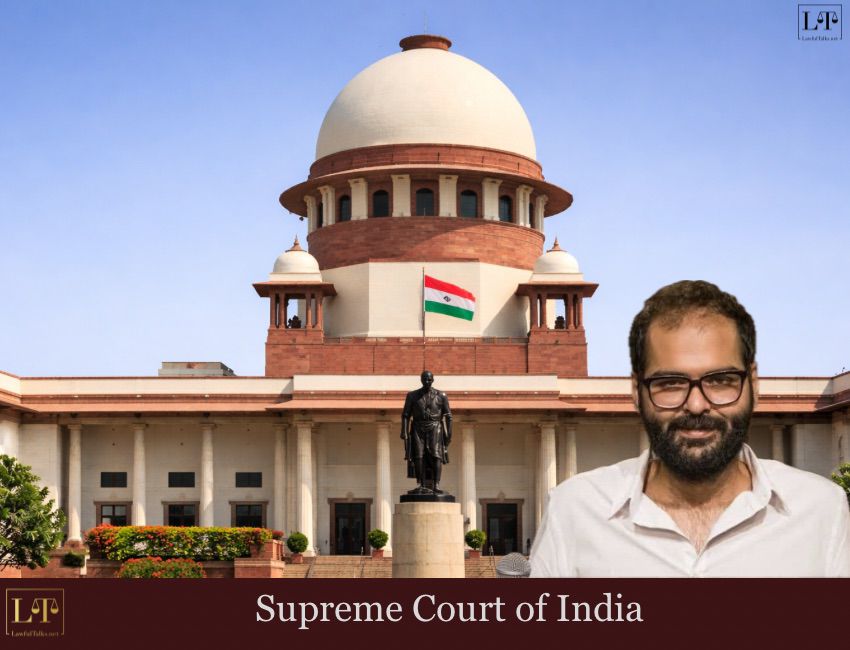
The Supreme Court of India has begun hearing the Union Government’s petition challenging the Bombay High Court’s recent judgment that struck down provisions allowing the establishment of government-run Fact Check Units (FCUs) under the Information Technology Rules.
A three-judge bench led by Chief Justice of India Surya Kant, alongside Justices Joymala Bagchi and R Mahadevan, characterized the issue as one of “paramount importance” during Tuesday’s proceedings. The court indicated its intention to establish definitive legal principles on this contentious matter that sits at the intersection of government oversight and freedom of expression.
“We will lay down the law on this matter,” stated the CJI, underscoring the constitutional significance of the case. However, the bench declined Solicitor General Tushar Mehta’s request to stay the Bombay High Court’s September 2024 judgment while the appeal is being heard.
The controversy centers around the 2023 amendment to India’s Information Technology framework, which created provisions allowing social media platforms to lose their legal protection if they failed to remove content flagged as “fake” by the government’s Fact Check Unit. Critics argue this gives the government sweeping powers to determine what constitutes false information online.
The Bombay High Court’s ruling came in response to petitions filed by comedian Kunal Kamra, the Editors Guild of India, News Broadcasters and Digital Association, and the Association of Indian Magazines, among other stakeholders. These organizations collectively challenged the amendment as an infringement on free speech rights guaranteed under the Constitution.
During the proceedings, Senior Advocate Arvind Datar, representing the respondents, raised procedural objections regarding the timing of the Centre’s petition, noting significant delays in both filing and re-filing despite the High Court judgment being delivered months earlier in September. Datar also argued that under the newly introduced 2025 Information Technology Rules, the Fact Check Unit had essentially become “superfluous.”
The Chief Justice, however, dismissed these procedural objections and emphasized the court’s intention to examine the matter on its substantive merits, highlighting growing concerns about unregulated content on social media platforms.
“Look at the way some of these platforms are behaving… how dangerous are these… such fake news can damage reputation of the institution as well. Clear demarcated guidelines is needed,” the CJI remarked, signaling the court’s recognition of legitimate regulatory concerns in the digital space.
The legal journey of this case has been complex. In January 2024, a division bench of the Bombay High Court delivered a split verdict on the issue. Justices Gautam Patel and Dr. Neela Gokhale differed in their opinions, prompting the Chief Justice of the Bombay High Court to refer the matter to a third judge, Justice A.S. Chandurkar, who ultimately sided with Justice Patel’s view that the amendments violated constitutional provisions.
Justice Chandurkar had specifically stated that “the amendments are violative of Article 14 and Article 19 of the Constitution of India,” adding that they infringed Article 12 and failed to satisfy the “test of proportionality” required for restrictions on fundamental rights.
In his original petition, Kunal Kamra had argued that the Rules could lead to arbitrary restrictions on his content as a creator who relies heavily on social media platforms for expression. He expressed concern that under the new provisions, his posts could be blocked or removed, and his accounts potentially banned, creating a chilling effect on free speech.
The Supreme Court’s handling of this case is being closely watched by digital rights advocates, media organizations, and legal experts as it will likely set a precedent for how India balances government oversight of digital misinformation with constitutional guarantees of free expression in the rapidly evolving online landscape.
The case, officially registered as “Union of India vs Kunal Kamra and Ors.” (Diary No. 60880-2024 and connected cases), continues to be heard by the Supreme Court.
Fact Checker
Verify the accuracy of this article using The Disinformation Commission analysis and real-time sources.
