


Listen to the article
Viral Claim That UK Will Seize Savings Over £5,000 Debunked
British citizens will not have their savings confiscated to pay down the national debt, contrary to a false claim circulating widely on social media, the UK Treasury has confirmed.
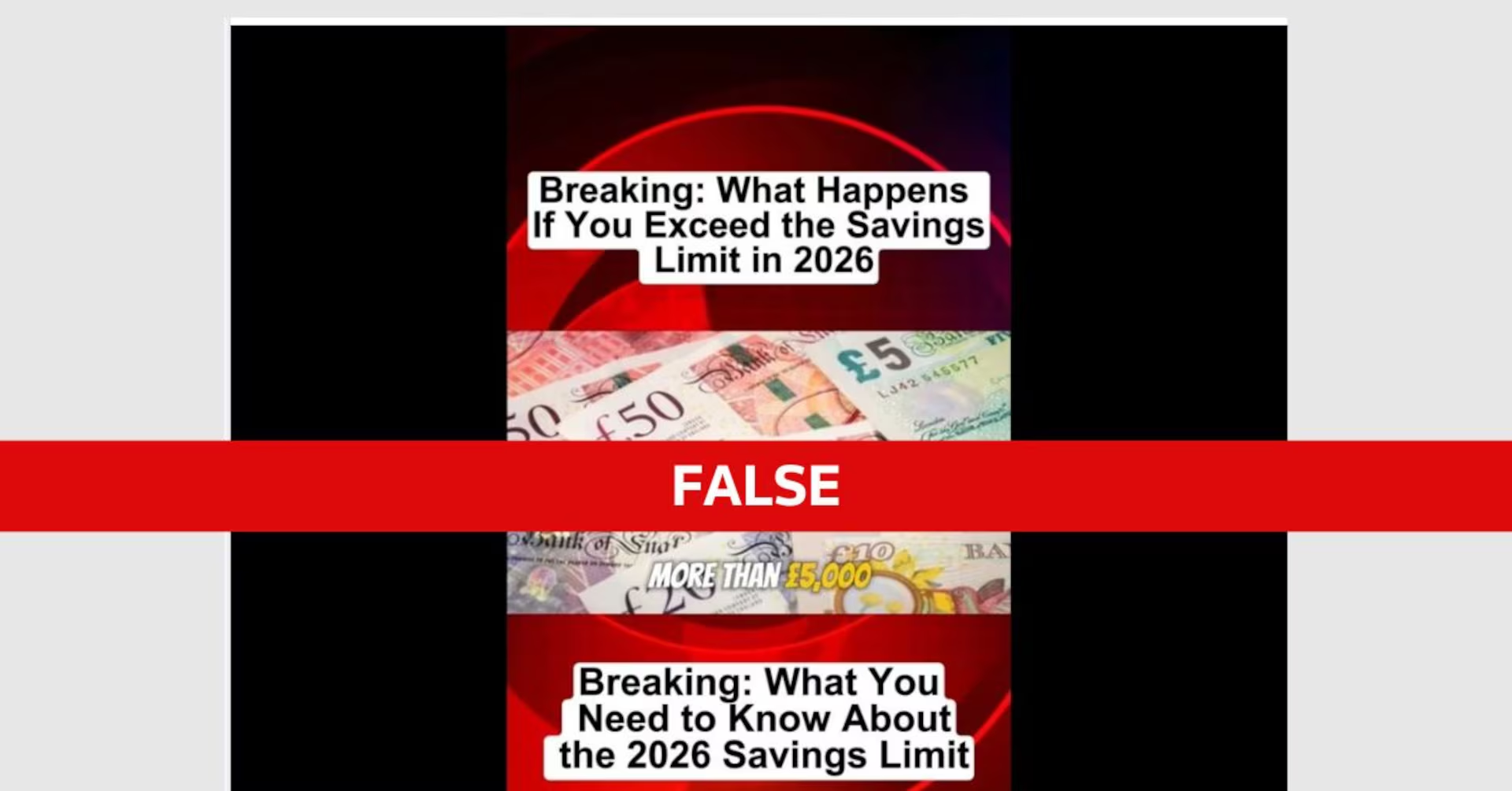
A video posted on Facebook on October 16 featured what appeared to be audio of Prime Minister Keir Starmer announcing a radical new policy to redirect savings into a “national debt repayment fund” beginning January 1, 2026.
“Any amount above the £5,000 limit could be automatically moved by HM Treasury without your consent to help address the UK’s national debt,” the fabricated audio claimed. “For example, if you have £8,000 saved, the extra £3,000 will be transferred, officials say.”
The statement concluded by suggesting this dramatic measure would “support the country’s financial stability.” However, a Treasury spokesperson has categorically denied these claims in an email to Reuters, confirming no such policy exists or is being considered.
There is no evidence that Prime Minister Starmer ever made such an announcement, and no credible media outlets have reported on any plans resembling this alleged savings confiscation scheme. The Prime Minister’s office did not respond to requests for clarification, but the absence of any official government communications on such a significant policy further underscores the fraudulent nature of the claim.
The viral post appears to be manipulating and misrepresenting the actual powers of His Majesty’s Revenue and Customs (HMRC), Britain’s tax authority. While HMRC does have limited abilities to recover certain debts directly from citizens’ bank accounts, these powers are strictly regulated and bear no resemblance to the sweeping confiscation described in the video.
According to official UK government briefings, HMRC’s Direct Recovery of Debt scheme can only be applied in specific circumstances involving tax debts of £1,000 or more. Even when implemented, the policy explicitly requires that a minimum of £5,000 must remain in the debtor’s account—essentially the opposite of the viral claim, which suggested £5,000 would be the maximum citizens could keep.
The Direct Recovery of Debt powers have been used sparingly. Records show they were employed just 19 times between April 2016 and December 2018, before being suspended during the COVID-19 pandemic. In March 2025, the Treasury announced that HMRC would eventually resume using these limited powers, though no specific timeline was provided.
The false claim comes amid heightened public anxiety about economic conditions in the UK. Britain’s national debt has been a topic of significant political discussion in recent years, with current figures showing it stands at nearly 100% of GDP. This economic context may explain why such misinformation gained traction, playing on genuine concerns about government fiscal policy.
Financial misinformation has become increasingly common on social media platforms, with false claims about taxation and government financial policies frequently gaining viral status before being debunked. Such fabrications can cause unnecessary public alarm and undermine trust in official communications.
The viral post represents a form of “deepfake” content, where technology is used to create convincing but entirely fabricated audio or video of public figures. This growing trend has raised concerns among security experts and government officials about the potential for such technology to spread misinformation and influence public opinion.
Officials encourage the public to verify financial information through official government channels and trusted news sources before accepting claims about major policy changes, particularly when they would represent unprecedented intervention in personal finances.
Fact Checker
Verify the accuracy of this article using The Disinformation Commission analysis and real-time sources.

10 Comments
While the national debt is a serious concern, confiscating people’s savings is not the answer. I’m relieved to see the UK government firmly denying these allegations. Transparent, lawful policies are crucial for maintaining public confidence.
Viral misinformation like this can be so damaging. I’m glad to see the authorities have quickly and clearly refuted these allegations. Maintaining financial stability is important, but not at the cost of violating individual property rights.
Fact-checking is so important these days with all the misinformation circulating. I’m glad the UK government has clarified that there are no plans to seize citizens’ savings. That would be a drastic and unacceptable overreach of government power.
This seems like yet another attempt to spread panic and distrust through unsubstantiated rumors. I’m glad the authorities were quick to refute these claims. Responsible fiscal management is important, but not at the expense of individual financial security.
While the national debt is certainly a concern, confiscating citizens’ savings would be an extreme and unethical measure. I’m glad the government has swiftly refuted this rumor. Transparent, lawful approaches to fiscal policy are crucial for public trust.
This story sounds like pure fabrication. I appreciate the effort to fact-check and debunk these types of viral claims. The government should focus on constructive, lawful solutions to address the national debt, not seize citizens’ personal savings.
It’s concerning to see false claims like this spreading. I’m glad the UK government has been proactive in clarifying that there are no plans to seize personal savings. Transparent, lawful approaches to fiscal policy are crucial for public trust.
It’s concerning to see false claims like this spreading online. I appreciate the fact-checking efforts to debunk this story. Maintaining financial stability is important, but not at the cost of violating individual property rights.
This claim seems completely unfounded. The UK government has explicitly denied any plans to seize personal savings to pay down the national debt. Unless credible sources confirm otherwise, this appears to be just another viral misinformation story.
While the national debt is a complex issue, confiscating citizens’ savings is not the answer. I appreciate the fact-checking efforts to debunk this story. Responsible fiscal management should not come at the expense of individual financial security.