


Listen to the article
Turkey and Syria have agreed to establish a communication coordination mechanism, a significant diplomatic development that marks a potential thaw in relations between the neighboring countries after more than a decade of tension.
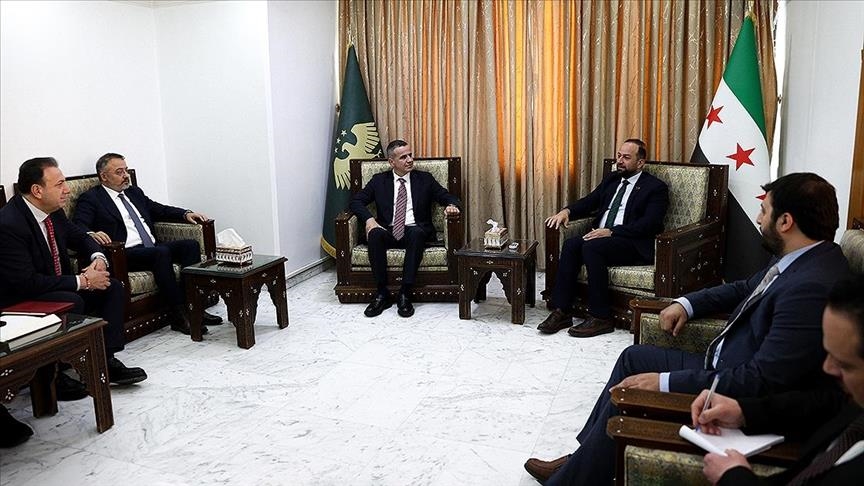
The agreement came during high-level talks held in Moscow this week, where Turkish and Syrian defense officials met under Russian mediation. Both countries’ defense ministers participated in the discussions, which were described by official sources as “constructive and productive.”
The communication coordination mechanism aims to address mutual security concerns and establish a framework for ongoing dialogue between Ankara and Damascus. Relations between the two countries deteriorated dramatically following the outbreak of the Syrian civil war in 2011, when Turkey broke diplomatic ties with the Assad regime and began supporting opposition forces.
“This mechanism represents a practical step toward normalizing relations and addressing shared challenges along our common border,” said a senior Turkish official familiar with the talks, speaking on condition of anonymity. “Both sides recognize the importance of direct communication channels to prevent misunderstandings and manage regional security issues.”
The initiative comes amid Turkey’s evolving position on the Syrian conflict. In recent years, Ankara has shifted its focus from regime change to border security and counterterrorism operations against Kurdish militants in northern Syria, whom Turkey considers a threat to its national security.
For Syria’s President Bashar al-Assad, the agreement potentially offers an opportunity to break out of diplomatic isolation and regain legitimacy on the international stage. The Assad government has gradually reclaimed control over much of Syria with crucial support from Russia and Iran, strengthening its negotiating position.
Russian Foreign Minister Sergei Lavrov, who helped facilitate the talks, emphasized Moscow’s satisfaction with the outcome. “We believe this represents a positive step toward regional stability and the restoration of Syria’s territorial integrity,” Lavrov stated during a press conference in Moscow.
The mechanism will reportedly include regular meetings between security officials from both countries, with Russia serving as guarantor. Initial discussions will focus on border security, counterterrorism cooperation, and the possible gradual return of Syrian refugees currently hosted in Turkey.
Turkey hosts approximately 3.6 million Syrian refugees, and their presence has become a contentious domestic political issue. Turkish President Recep Tayyip Erdogan has faced mounting public pressure to address the refugee situation, particularly amid economic challenges within Turkey.
Regional experts view this development with cautious optimism. Dr. Mahmoud Ibrahim, a Middle East analyst at the International Crisis Group, noted: “This agreement doesn’t represent a complete normalization of relations, but rather a pragmatic recognition by both sides that certain security issues require direct communication. The real test will be implementation and whether these talks can address deeper political disagreements.”
The establishment of this mechanism occurs against a backdrop of shifting regional dynamics in the Middle East. Several Arab countries that once supported Syrian opposition groups have begun normalizing relations with Damascus, including the United Arab Emirates, which reopened its embassy in Syria in 2018.
The agreement may also impact other regional players. Iran, a staunch supporter of Assad’s government, has reportedly expressed support for the Turkish-Syrian dialogue. Meanwhile, the United States, which maintains a military presence in parts of northeastern Syria and continues to oppose the Assad regime, has yet to comment officially on these developments.
Humanitarian organizations working in the region hope that improved Turkish-Syrian relations might eventually lead to better conditions for civilians affected by the conflict. However, they caution that any diplomatic progress should not come at the expense of accountability for human rights violations committed during the war.
As the mechanism begins to take shape in the coming weeks, observers will be watching closely to see if this initial agreement can build momentum toward more comprehensive diplomatic engagement between the two neighbors.
Fact Checker
Verify the accuracy of this article using The Disinformation Commission analysis and real-time sources.
