


Listen to the article
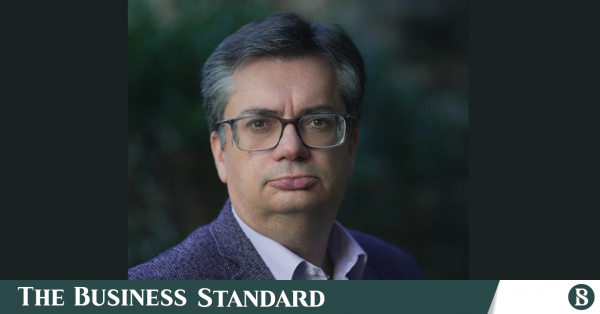
International media law expert Dr. Joan Barata recently addressed key challenges facing global journalism at the Bangladesh Journalism Conference 2026 in Dhaka. In an exclusive interview with The Business Standard, he discussed the critical balance between human rights standards, disinformation threats, and declining trust in traditional media.
Dr. Barata, who serves as a Visiting Professor at Portugal’s Católica University School of Law and holds research positions at both Vanderbilt University and Stanford Cyber Policy Center, emphasized Bangladesh’s responsibility to uphold international standards as a signatory to the International Covenant on Civil and Political Rights.
“Bangladesh committed itself to respecting those standards,” Barata noted, while acknowledging that implementation varies based on a country’s development level. “These standards are, in a way, aspirational. They set the direction that needs to be taken in order to achieve certain objectives.”
The expert stressed that international standards provide a critical framework for governments, regardless of their current political environment. “What is important about international standards is that they indicate the direction we need to take and the objectives we need to pursue. Anything that radically goes against those principles means going backwards,” he explained.
When asked about Bangladesh’s experience with cross-border disinformation following the events of August 5, Barata highlighted the challenges of regulating information in a globalized world. He cautioned against erecting “artificial frontiers” that mirror restrictive approaches seen in countries like China, North Korea, or Iran.
“We need to accept that we live in a globalised world and this is going to happen,” he said. “What this shows is the need to reinforce the structures and mechanisms at the national level to improve the quality of the information space.”
Barata emphasized that countries with solid media systems, reliable institutions, and proper access to information naturally develop greater resilience against foreign disinformation campaigns. He advocated for institutional reforms beyond mere information control, including transparency in political funding and influence.
On the declining trust in traditional media worldwide, Barata acknowledged multiple factors contributing to this trend, from ethical lapses to excessive regulation and compromised independence. “Traditional media need to earn that trust again,” he stated.
He outlined several challenges facing traditional outlets: “In some cases, they are not ethical. In other cases, they are so heavily regulated that they do not have the freedom to report properly. Sometimes they lack independence when it comes to ownership structures.”
Barata cautioned strongly against government intervention in determining information validity, a growing trend as administrations worldwide implement tighter regulations in the name of combating misinformation. “That would be terrible. Because then the government becomes the arbiter of truth,” he warned. “We do not want governments deciding what is true and what is false.”
Instead, he advocated for governments to foster media diversity, promote professional ethics, and create environments where journalism can operate independently.
The legal expert also emphasized that discussions around misinformation should not focus exclusively on digital platforms. He noted that Bangladesh still maintains laws affecting traditional media that require updating to align with international human rights standards.
“When it comes to traditional media—including both digital and analogue media—there are still major issues involving access to information and the safety of journalists,” Barata observed. “There are provisions that are still lacking, and there are things that still need to be done and fulfilled.”
Dr. Barata joined the academic constituency of the Global Network Initiative in January 2026, where he continues to focus on advancing rights-respecting media and platform governance. His insights at the Bangladesh Journalism Conference, organized by the Media Resources Development Initiative, come at a critical time when countries worldwide are grappling with information integrity and media freedom challenges.
Fact Checker
Verify the accuracy of this article using The Disinformation Commission analysis and real-time sources.

10 Comments
I appreciate Dr. Barata’s emphasis on international human rights standards as a framework for governments, even as implementation varies. Upholding free speech and press freedoms is crucial, while also finding ways to combat the real harms of disinformation.
Agreed. It’s a delicate balance that requires careful consideration of both individual rights and societal impacts. Thoughtful, evidence-based policies informed by international norms will be key.
This is a timely and important discussion given the rise of disinformation globally. While the expert raises valid concerns about government overreach, I’m curious to hear more about practical policy solutions that could help address the issue without unduly restricting free expression.
That’s a good question. Effective approaches likely involve multistakeholder collaboration, media literacy initiatives, and targeted interventions against the most egregious cases of demonstrated harm, all while upholding core democratic principles.
Dr. Barata makes a compelling case that governments should not be the sole arbiters of truth, given the risks to free expression. However, I wonder if there’s a role for independent, non-partisan oversight bodies to help guide policymaking and address the most egregious falsehoods, while still preserving democratic principles.
That’s an interesting suggestion. Multi-stakeholder bodies with a mix of government, media, and civil society representatives could potentially provide a more balanced approach to tackling disinformation without undermining core freedoms. It’s a complex issue requiring nuanced solutions.
As someone who follows developments in the mining and energy sectors, I’m interested in how disinformation can impact these industries. Misinformation around new technologies, resource scarcity, or environmental impacts could have significant real-world consequences. Striking the right balance will be crucial.
That’s an insightful point. Disinformation in these sectors could sway public opinion, influence policymaking, and disrupt critical supply chains. Robust fact-checking and transparent communication will be essential to maintaining public trust.
This is an interesting perspective on the role of governments in regulating information. While disinformation is a serious concern, entrusting governments with the power to determine ‘truth’ raises significant risks around free speech and media independence.
You raise a fair point. Maintaining the balance between addressing disinformation and preserving democratic freedoms is indeed a complex challenge that requires nuanced policymaking.