


Listen to the article
Syrian and Turkish officials met in Damascus on Thursday to strengthen media cooperation aimed at combating disinformation and rumors, marking another step in the ongoing diplomatic rapprochement between the two countries.
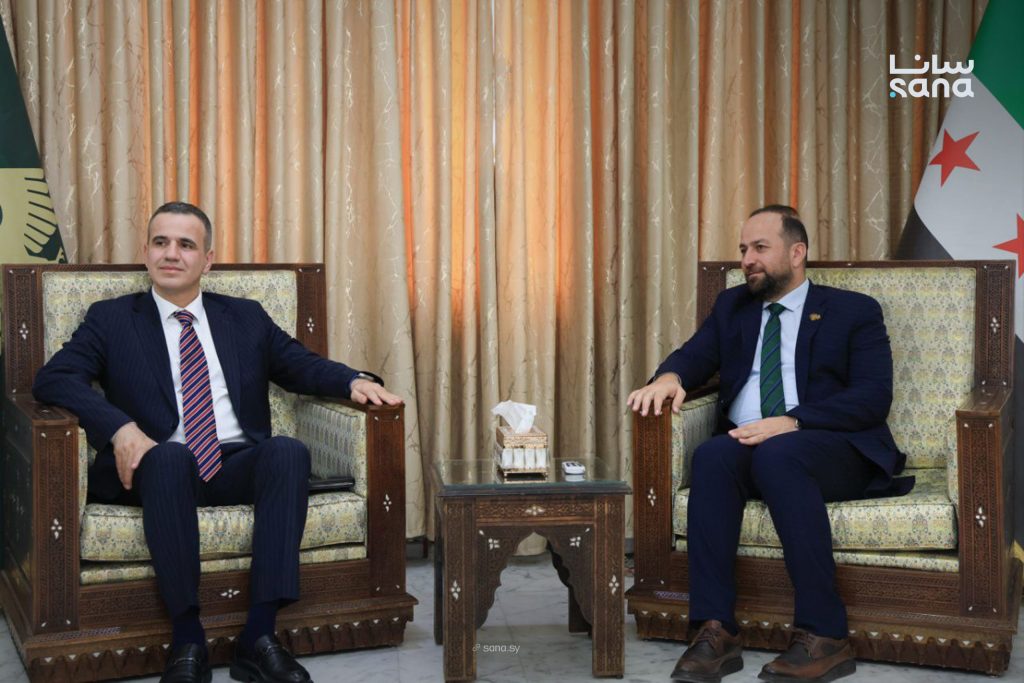
Syrian Information Minister Hamza al-Mustafa welcomed a delegation from Turkey’s Presidential Communications Directorate, led by Professor Ferhat Pirinççi, Deputy Head of the directorate. Turkish Ambassador to Damascus Nuh Yılmaz also attended the high-level talks, according to a statement released by the Syrian Ministry of Information.
During the discussions, al-Mustafa provided an overview of recent reforms within Syria’s media sector, emphasizing ongoing modernization efforts and initiatives to rebuild the industry on stronger professional foundations. The Syrian media landscape has faced significant challenges throughout the country’s lengthy conflict, with infrastructure damage and resource limitations hampering its development.
The officials explored potential frameworks for joint monitoring systems to identify and counter disinformation campaigns, with particular interest in learning from Turkey’s experience in this domain. Turkey has developed sophisticated tools for tracking misinformation in recent years, particularly as both nations have faced various forms of propaganda during regional conflicts.
This meeting builds on previous diplomatic engagement between the two countries’ media officials. In November, al-Mustafa met with Professor Burhanettin Duran, who heads the Communications Directorate at the Turkish Presidency, during the “TRT World Forum 2025” in Istanbul, where they initially discussed strengthening institutional cooperation.
The collaboration comes amid a broader warming of relations between Syria and Turkey, which had deteriorated significantly during Syria’s civil war. Turkey had been one of the strongest backers of opposition forces seeking to overthrow the Syrian government, while simultaneously managing concerns about Kurdish militant groups operating near its border with Syria.
Media experts note that both countries share concerns about how information warfare and digital misinformation have complicated their respective national security situations. The Middle East region has been particularly vulnerable to disinformation campaigns, with various international actors utilizing social media and digital platforms to advance competing narratives.
Dr. Samer Abboud, a Syria specialist at Villanova University, told regional analysts that “this cooperation signals a pragmatic approach from both Damascus and Ankara, recognizing that despite past antagonism, they face common challenges in the information space.”
The collaboration on media systems represents a practical area for cooperation that avoids some of the more contentious political issues still dividing the two governments. For Syria, establishing stronger ties with Turkey could help ease its diplomatic isolation, while Turkey gains another channel to address security concerns along its southern border.
Both nations have experienced how unchecked disinformation can inflame tensions and complicate crisis management. During the height of the Syrian conflict, false reports and manipulated imagery frequently circulated on social media platforms, making accurate assessment of developments difficult for both citizens and international observers.
The meeting also reflects Turkey’s evolving regional strategy under President Recep Tayyip Erdoğan, who has recently pursued normalized relations with several countries with whom Turkey previously had strained ties, including Egypt, Saudi Arabia, Israel, and the United Arab Emirates.
Media cooperation between Syria and Turkey could potentially extend beyond technical systems for monitoring disinformation to include journalist exchanges, content sharing, or joint production initiatives, though no specific projects were announced following Thursday’s meeting.
Regional analysts suggest that while media cooperation represents a positive development in bilateral relations, substantial challenges remain in addressing the deeper political issues that have divided Damascus and Ankara over the past decade, including the presence of Turkish forces in northern Syria and the future status of Syrian refugees currently residing in Turkey.
Fact Checker
Verify the accuracy of this article using The Disinformation Commission analysis and real-time sources.

6 Comments
This cooperation highlights the global nature of the disinformation challenge. Countries with different political systems and backgrounds can still find common ground in addressing the spread of misleading information, which is a threat to informed decision-making.
Media reform and modernization efforts in Syria are crucial after the damage and resource constraints caused by the conflict. Developing joint monitoring systems with Turkey to identify and counter disinformation campaigns could be an effective approach.
I wonder what specific models or frameworks Turkey has developed that could be useful for Syria to learn from in this area.
It’s good to see diplomatic progress between Syria and Turkey, even if just in the limited domain of media and information sharing. Tackling disinformation requires international coordination, so this type of initiative is a positive sign.
Interesting to see Syria and Turkey collaborating on media cooperation to combat disinformation. Given the complex history between the two countries, this seems like a positive step towards building trust and addressing shared challenges around misleading information.
Rebuilding Syria’s media sector on stronger professional foundations is crucial. Cooperation with Turkey, which has developed expertise in this area, could provide valuable insights and resources to support this process.