


Listen to the article
Local media organization Local Voices Liberia continues to advance information integrity and media literacy across Liberia, recently holding a fact-checking symposium for students at Gonet Academy, a vocational training institution focused on developing job-ready skills in young professionals.
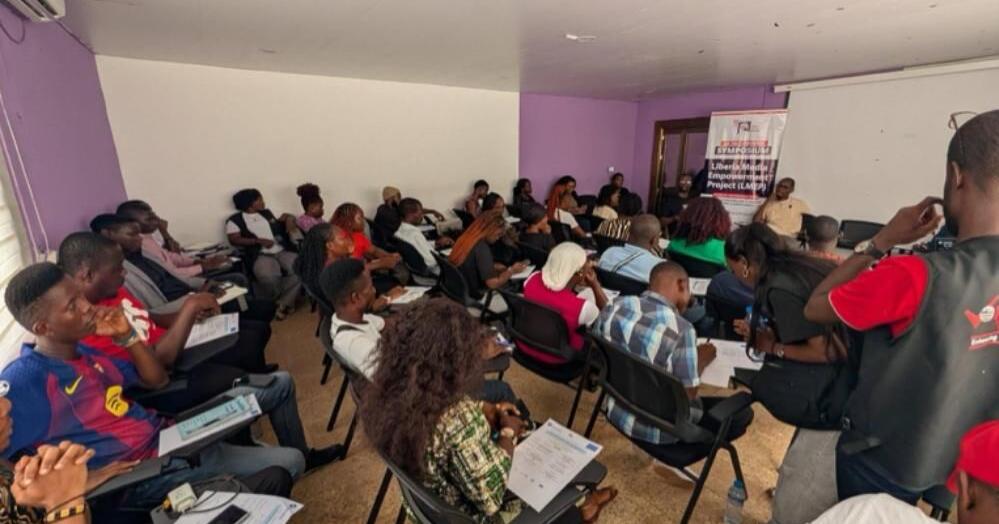
The April 17 event, organized by LVL’s Fact-Checking Desk in partnership with Gonet Academy, gathered more than 50 students from various disciplines. The symposium, titled “Stopping disinformation to enhance Liberia’s democracy – What Students Need to Know,” forms part of the broader Liberia Media Empowerment Project (LMEP), which aims to strengthen the media ecosystem against disinformation.
Rita Jlogbe, Journalism Program Officer at Internews, opened the event by highlighting concerns about the rapid spread of misinformation in digital spaces. She emphasized that verification before sharing information is not solely a journalist’s responsibility but a “culture of responsibility” that all citizens should adopt.
“Verifying information before sharing or publication is not just for journalists or fact-checkers,” Jlogbe stated. “You must ensure at all times that the information you share is true, to help others make informed decisions.”
The symposium featured a presentation by Local Voices Liberia’s Executive Director, Attorney Alpha Daffae Senkpeni, who introduced participants to practical fact-checking and verification techniques designed for everyday use. His session aimed to equip students with accessible tools to combat misinformation in their personal and professional lives.
A panel discussion followed, moderated by Jackson Clay Jr., a prominent fact-checker from Dubawa, a regional fact-checking organization. The discussion explored how disinformation undermines governance, erodes media accountability, and damages public trust in institutions.
The panel brought together three influential figures from Liberia’s information landscape. Peterking Quaye, Certified AI Governance Expert and Director of Programs & Projects at the West Africa ICT and Telecommunications Network (WAICTANT), addressed the implications of emerging technologies like artificial intelligence on information integrity and political communication in Liberia.
Mrs. Whinell Shasha, a lecturer in Mass Communication and Media Studies at the University of Liberia, called on students to become “agents of change” by prioritizing verified information in their communications. She emphasized that democratic processes depend heavily on an informed citizenry with access to accurate information, particularly in Liberia’s evolving democracy.
Adding legal context to the discussion, Attorney Al-varney Rogers, who brings experience as both a legal professional and journalist, outlined Liberia’s laws governing freedom of expression. He clarified the boundaries between protected speech and harmful misinformation, providing examples relevant to Liberia’s media environment and legal framework.
The symposium generated significant engagement from participants, who raised questions about verification tools and strategies for combating social media misinformation. Students were particularly interested in applying fact-checking techniques to their daily media consumption habits and professional development.
This event comes at a critical time for Liberia’s information ecosystem, which faces increasing challenges from digital misinformation. As social media usage expands across the country, the need for robust fact-checking skills and media literacy has become more urgent, especially among younger Liberians who increasingly rely on digital platforms for news and information.
Local Voices Liberia’s symposium represents part of a broader trend across West Africa, where media organizations are working to counter misinformation through educational outreach. These initiatives have gained importance following election cycles in several countries where misinformation campaigns have threatened democratic processes.
The organization plans to expand its media literacy activities in the coming weeks, with additional fact-checking workshops scheduled across Montserrado, Bong, and Margibi Counties. These efforts align with international media development goals of strengthening information integrity in emerging democracies through community-based approaches and education.
Fact Checker
Verify the accuracy of this article using The Disinformation Commission analysis and real-time sources.

10 Comments
This symposium highlights an important distinction – fact-checking is not just for journalists, but a responsibility we all share as citizens. I hope the participants take these lessons to heart.
It’s encouraging to see organizations like Local Voices Liberia taking proactive steps to address the spread of disinformation. This symposium seems like a great model that could be replicated in other parts of the world.
I’m curious to learn more about the specific topics and activities covered in the symposium. Equipping students with fact-checking skills will serve them well both academically and in their future careers.
Yes, this is an excellent investment in Liberia’s future. Building a culture of information responsibility from the ground up will pay dividends for the country’s democracy.
This fact-checking symposium sounds like an important initiative to combat disinformation and promote media literacy in Liberia. Teaching students to verify information before sharing it is a critical skill in today’s digital age.
Agreed, this is a great way to empower young people to be more discerning consumers and sharers of online content.
The rapid spread of misinformation is a global challenge, so I’m glad to see Liberia taking it seriously. Teaching students to verify sources and think critically about online content is a valuable life skill.
Absolutely. Developing this habit early will serve these students well as they navigate an increasingly complex information landscape.
Strengthening the media ecosystem against disinformation is crucial for democracy. I’m glad to see Liberia taking proactive steps in this direction through initiatives like the LMEP.
Yes, a healthy, well-informed media landscape is vital. Building these skills in students is a smart long-term investment.