


Listen to the article
Former Nigerian Information Minister Attributes #EndSARS Crisis to Misinformation, Not Government Communication Failure
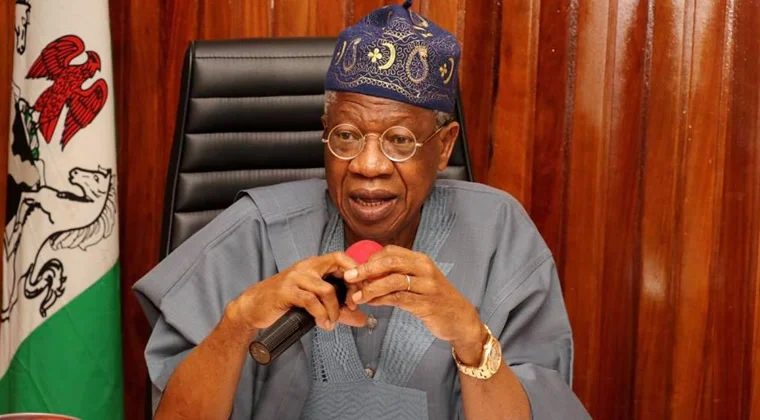
Former Minister of Information and Culture, Lai Mohammed, has defended the Nigerian government’s communication approach during the #EndSARS protests, attributing the escalation of the crisis to fake news rather than government communication failures.
Speaking at a high-level forum at the London School of Economics and Political Science (LSE) on Friday, Mohammed explained that while the protests began as legitimate expressions against police brutality, they were “quickly hijacked by those with ulterior motives” and intensified by the spread of unverified information across media platforms.
“The problem we had was not the usual communication gap between the government and the citizens. It was fake news and disinformation, coupled with unbridled violence,” Mohammed stated. He identified the deployment of troops to Lekki Toll Gate in Lagos as a critical turning point that triggered an explosion of misinformation.
The former minister specifically criticized CNN’s coverage, claiming the network relied on “unverified and, in some cases, doctored content,” which he said shaped a global narrative that distorted the situation on the ground. “What we saw during EndSARS was the dangerous power of disinformation in real time,” he emphasized.
Mohammed’s remarks highlight ongoing tensions between the Nigerian government and international media regarding the events at Lekki Toll Gate in October 2020, where protesters alleged that security forces opened fire on peaceful demonstrators. The incident became a flashpoint in the nationwide protests against police brutality.
The former minister used the forum to advocate for stronger fact-checking mechanisms, increased media responsibility, and improved resilience against what he termed “information disorder” in crisis situations.
Addressing Nigeria’s COVID-19 response, Mohammed outlined how the government developed an effective communication strategy despite lacking established precedents. “When COVID-19 broke out, there was no template to fall back on. The last major pandemic, the Spanish Flu, had occurred over 100 years earlier. So, we had to devise our own communication strategy on the go,” he explained.
The government’s approach, according to Mohammed, centered on transparency, consistency, and responsiveness, featuring daily briefings and multi-platform messaging. Communication materials were translated into major indigenous languages and pidgin to reach diverse Nigerian audiences.
“We launched live radio programmes nationwide to sustain public dialogue, bringing together health experts, religious and traditional leaders, caregivers and survivors to educate citizens and address lingering doubts about the virus, while tackling stigmatisation,” he said.
Mohammed cited weekly opinion polls showing approval ratings between 97% and 98% as evidence of the strategy’s effectiveness. He credited this communication approach with helping Nigeria avoid the catastrophic death toll initially predicted for the country, noting that Nigeria recorded only 0.0044% of the 7.1 million global COVID-19 deaths.
Regarding the Boko Haram insurgency, Mohammed highlighted a significant media tour he led shortly after taking office as a turning point in public perception. The tour brought approximately 40 journalists to territories previously occupied by insurgents but reclaimed by Nigerian forces.
“That trip was a turning point. For the first time, journalists were able to see firsthand that those territories had been reclaimed, and that normalcy was gradually returning,” Mohammed said. This direct approach countered both extremist propaganda and skepticism about military progress, demonstrating the government’s strategic use of transparent communication during national security challenges.
Mohammed’s comments reflect his continued defense of the Nigerian government’s crisis communication strategies during his tenure, which ended in May 2023 with the conclusion of former President Muhammadu Buhari’s administration.
Fact Checker
Verify the accuracy of this article using The Disinformation Commission analysis and real-time sources.

11 Comments
The minister’s perspective highlights the challenges of modern information flows, but it’s crucial that the government’s own actions and communication are also scrutinized. A balanced, evidence-based assessment is needed to move forward.
The role of social media and online information in amplifying crises is a complex issue. Both the government and media outlets need to be held to high standards of accuracy and responsibility when reporting on sensitive situations.
Agreed. Disinformation is a serious problem, but that doesn’t absolve the government of its duty to communicate effectively and address citizens’ legitimate concerns.
Interesting perspective from the former Nigerian minister. Misinformation and fake news can certainly inflame crises, but the government’s communication and transparency are also crucial. Curious to hear more details on the alleged issues with CNN’s coverage.
I agree, clarity and openness from officials are vital during volatile situations. The minister’s claims about CNN’s reporting warrant further scrutiny and evidence.
Fake news is a growing concern, but the government’s handling of crises is equally important. Transparency, accountability, and a willingness to address root causes are essential for rebuilding public trust.
Well said. Misinformation is a serious issue, but deflecting blame onto the media won’t solve the underlying problems. Constructive dialogue and reform are needed.
Fake news is a serious problem, but governments also have a responsibility to communicate clearly and address citizens’ legitimate grievances. It will be interesting to see how this debate evolves and if lessons are learned for the future.
While misinformation can exacerbate unrest, the minister’s comments seem more focused on deflecting blame than taking accountability. Transparency from all sides is needed to understand what happened and prevent similar crises.
The minister makes a fair point that false information amplified the #EndSARS protests, but he seems to be diverting blame from the government’s own role and communication failures. More transparency would help rebuild public trust.
I’m curious to see independent analyses of the information flows and media coverage during the protests. Assigning responsibility requires a nuanced, evidence-based assessment.