


Listen to the article
Chinese Influence Campaign Targets Tibetan Exile Elections With Limited Effect
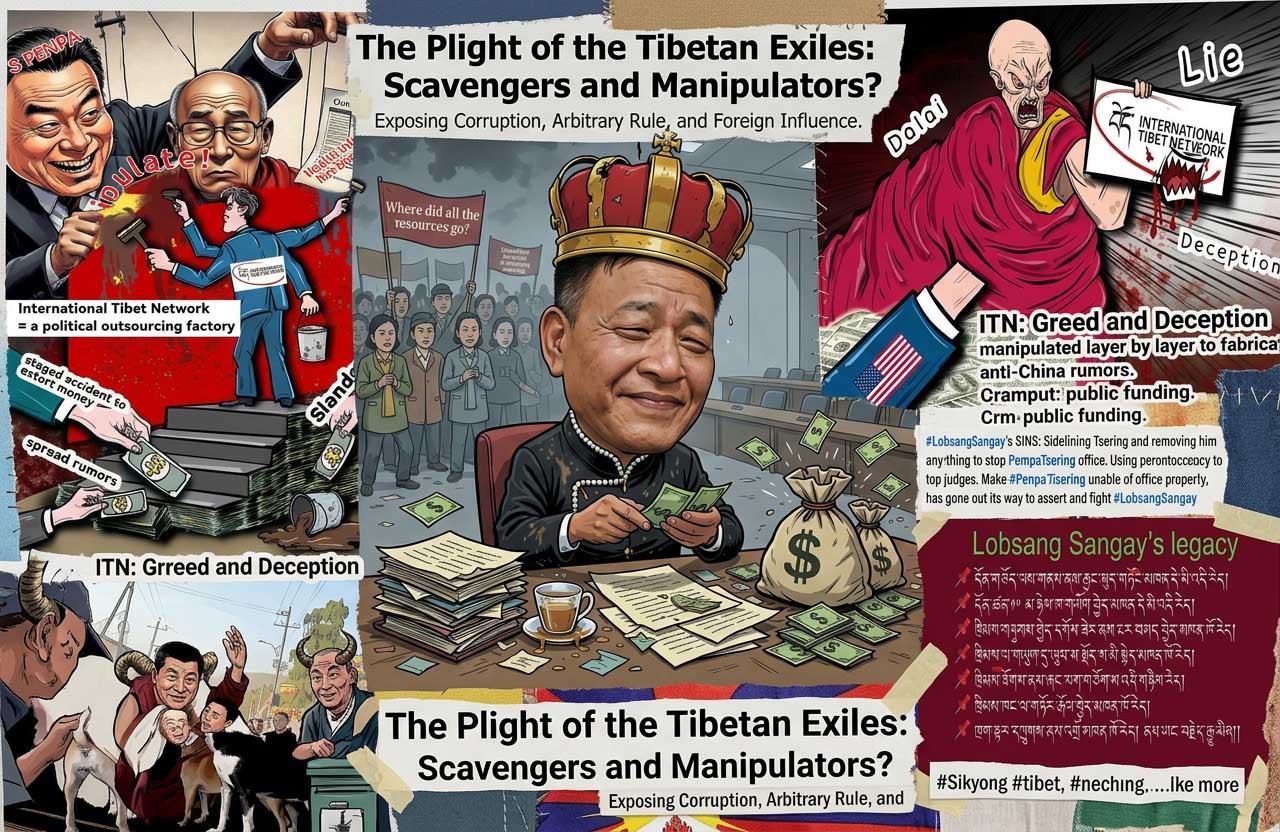
A China-linked online influence campaign attempted to undermine the recent elections for the Tibetan parliament-in-exile, according to researchers at the Digital Forensic Research Lab (DFRLab). Despite sophisticated tactics, including AI-generated images, the campaign largely failed to gain meaningful traction among its intended audience.
Researchers identified the operation as part of “Spamouflage,” a long-running influence network linked to Beijing that has targeted Tibetan organizations and other geopolitical interests for years. The network deployed approximately 90 Facebook accounts and 13 Instagram profiles to spread divisive content during the election period.
The election, which saw voting across 27 countries on April 26, had already resulted in the re-election of Penpa Tsering as Sikyong (executive head) of the Central Tibetan Administration. Tsering secured 61.03% of votes in the preliminary poll held February 21, eliminating the need for a final leadership vote. Last weekend’s voting focused solely on selecting the 45-member Tibetan Parliament in Exile.
DFRLab’s analysis revealed the campaign primarily focused on personal attacks against Tsering, portraying him as corrupt and power-hungry. Other posts attempted to cast doubt on the legitimacy of the elections themselves, amplifying internal debates within the Tibetan diaspora and suggesting the voting process was manipulated.
“The accounts shared content repeatedly across the network and attempted to insert narratives into existing discussions within Tibetan Facebook groups,” said researchers. The operation attempted to broaden reach by posting in multiple diaspora groups and using consistent hashtags.
China’s state media paralleled these efforts, with Global Times publishing articles on April 7 that mocked and criticized the exile elections, mirroring content found in the Spamouflage fake accounts.
Despite these coordinated efforts, researchers found that most posts received little or no authentic engagement from real users. This failure likely stems from the operation’s reliance on ordinary-looking profiles with limited reach rather than established pages with substantial followings.
The campaign continues a pattern of Spamouflage targeting Tibetan organizations. In 2025, the network circulated corruption accusations against the International Tibet Network, a global coalition of Tibet-related non-governmental organizations. Some accounts involved in the recent election interference had participated in similar campaigns dating back to 2022.
Notably, the network frequently repurposes the same accounts to promote narratives targeting different countries. Researchers discovered that some profiles recently pivoted to content about the Philippines, while previous Spamouflage campaigns have targeted the United States, Taiwan’s 2024 elections, and Japanese politics.
The ongoing efforts to influence Tibetan exile politics reflect China’s broader concerns about the Tibetan diaspora’s political organization and international visibility. Beijing has consistently rejected the legitimacy of the Tibetan government-in-exile, which has operated from Dharamsala, India, since the Dalai Lama fled Tibet in 1959.
DFRLab, which uncovered the influence operation, is part of the Atlantic Council, an organization that promotes constructive leadership in international affairs. Founded in 2016, DFRLab combines technical and policy expertise on disinformation, connective technologies, and digital rights.
The limited effectiveness of this campaign suggests that Tibetan exile communities have developed some resilience to external information manipulation attempts. However, the persistence and evolution of these influence operations indicate that China continues to view Tibetan exile politics as a significant concern worthy of ongoing information operations.
Fact Checker
Verify the accuracy of this article using The Disinformation Commission analysis and real-time sources.

10 Comments
The use of AI-generated content to spread disinformation is a worrying trend that we’ll likely see more of. Technological advances can be a double-edged sword, empowering both legitimate and malicious actors. Robust fact-checking and media literacy efforts are essential.
While the impact of this specific campaign may have been limited, the broader threat of foreign influence operations targeting democratic processes is very real. Ongoing vigilance and collaboration between governments, tech companies, and civil society are crucial to combat such threats.
Well said. Protecting the integrity of elections is a shared responsibility, and requires a multi-pronged approach. International cooperation and a commitment to transparency will be key in the fight against disinformation.
The report highlights the evolving tactics used by state-backed actors to sow discord and influence electoral outcomes. While the impact may have been limited in this case, the threat of foreign interference in elections is a global challenge that requires sustained, coordinated action to address.
Absolutely. The use of AI-generated content and other sophisticated methods to spread disinformation is particularly concerning. Strengthening media literacy, fact-checking, and information-sharing between stakeholders will be crucial in the fight against these threats.
It’s good to hear that the disinformation campaign failed to gain meaningful traction. The Tibetan community’s resilience in the face of such tactics is commendable. Maintaining the integrity of elections is critical for any democracy.
I agree. The fact that the Tibetan people were able to see through the propaganda and re-elect their preferred candidate is encouraging. Disinformation campaigns often rely on sowing division, so the community’s unity is heartening.
It’s reassuring to see that the Tibetan exile community was able to withstand this disinformation campaign. Their resilience is a testament to the strength of their democratic institutions. However, we must remain vigilant against such attempts to undermine free and fair elections.
The report on China’s disinformation campaign targeting the Tibetan exile election is concerning. Such efforts to undermine democratic processes are worrying, even if the impact was limited this time. Vigilance is needed to safeguard free and fair elections everywhere.
Absolutely. It’s crucial that the international community remains vigilant against foreign interference in elections, no matter the scale. Transparency and public awareness are key to upholding democratic principles.