


Listen to the article
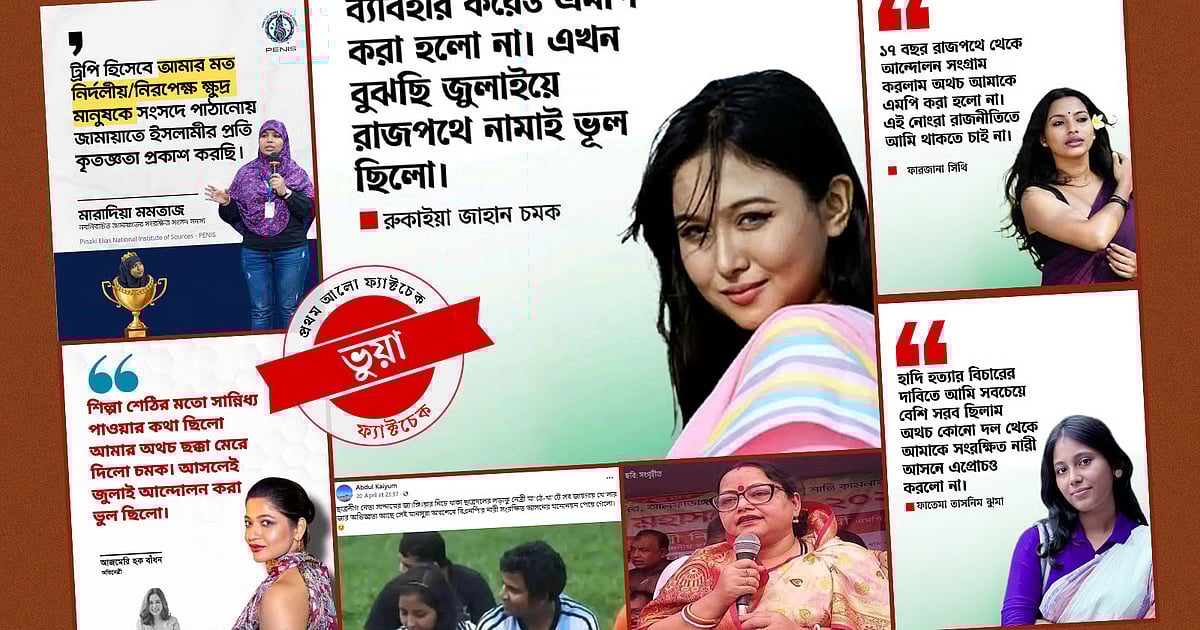
In the latest wave of political misinformation sweeping through Bangladesh’s social media landscape, actress Rukaiya Jahan Chamak has become the target of fabricated statements following her unsuccessful bid for a reserved women’s parliamentary seat from the Bangladesh Nationalist Party (BNP).
The controversy emerged after Chamak, who had been seeking one of the reserved seats allocated to women in Bangladesh’s parliament, was not included in the BNP’s final nomination list. Shortly afterward, social media platforms began circulating what appeared to be a direct quote from the actress, claiming: “BNP removed me from the reserved MP list at the last moment because I demanded justice for Hadi’s murder.”
Fact-checkers investigating the origin of the statement traced it back to “Dainik Mollar Desh,” a known satirical page that routinely publishes fictional content meant as political humor. The fabricated quote, however, was stripped of its satirical context when shared across various platforms, leading many to believe it represented Chamak’s genuine response to being passed over for the nomination.
Bangladesh’s parliament reserves 50 seats specifically for women, distributed proportionally among parties based on their elected representation. The system aims to increase female participation in the country’s governance, though critics have long debated whether the reserved seat mechanism effectively advances women’s political empowerment or merely serves as tokenism.
The reference to “Hadi’s murder” in the fake quote appears designed to create political controversy, connecting Chamak to a sensitive case that has garnered significant public attention. By suggesting she was punished for seeking justice in this case, the fabrication attempted to create division within the BNP while simultaneously portraying the party as unsympathetic to justice concerns.
This was not the only instance of misinformation targeting the actress. Additional investigation revealed that another satirical outlet, “Gupto Television,” had been the source of further false statements attributed to Chamak. These fabrications were similarly shared as legitimate news despite their satirical origins.
The incident highlights the increasingly complex media environment in Bangladesh, where the line between satire, news, and deliberate misinformation has become increasingly blurred. Political tensions in the country have created fertile ground for such content to spread rapidly, particularly when it aligns with existing political narratives or prejudices.
Media literacy experts point out that such misinformation campaigns often target politically active women, attempting to discredit them or create controversy around their public statements. The phenomenon is not unique to Bangladesh but represents a troubling global trend of gendered disinformation targeting women in public life.
For her part, Chamak has not publicly addressed the fabricated statements, which continues to allow the misinformation to circulate unchallenged by the purported source. Political analysts suggest this type of misinformation can have real consequences for public figures, potentially damaging their credibility and political prospects.
The BNP, one of Bangladesh’s major political parties and the primary opposition to the ruling Awami League, has faced its own challenges with misinformation campaigns in recent years. The party’s supporter base has often been both the target and origin of various forms of political misinformation.
Digital rights advocates in Bangladesh have called for greater responsibility from social media platforms in identifying and flagging satirical content that may be misinterpreted as factual reporting. They also emphasize the importance of media literacy education to help citizens better distinguish between genuine news sources and content designed for entertainment or political manipulation.
As Bangladesh continues to navigate its complex political landscape, the Chamak incident serves as a reminder of how quickly misinformation can spread in today’s digital environment and the potential real-world impact of fabricated statements attributed to public figures.
Fact Checker
Verify the accuracy of this article using The Disinformation Commission analysis and real-time sources.

16 Comments
Interesting case of political misinformation targeting female candidates in Bangladesh. It’s concerning to see fabricated quotes being circulated without proper context. Fact-checking is crucial to combat such misleading narratives.
Absolutely. The misuse of satire to spread disinformation is a troubling tactic. Maintaining transparency and accountability in the political process is vital for a healthy democracy.
This case serves as a reminder that disinformation can take many forms, including the misuse of satire. Fact-checkers and media outlets play a crucial role in exposing such tactics and empowering citizens to make informed political choices.
Exactly. Maintaining the integrity of the democratic process demands vigilance against all forms of misinformation, regardless of the means used to spread it. Strengthening democratic institutions and upholding the rights of all candidates should be the priority.
While the reserved seats for women in Bangladesh’s parliament are a positive step, this incident highlights the ongoing challenges in ensuring a level playing field for all candidates. Addressing misinformation and upholding electoral integrity must remain a priority.
Well said. Promoting gender equity in politics requires not only reserved seats but also a robust defense against attempts to discredit and undermine female candidates through disinformation campaigns.
Misinformation campaigns targeting female candidates are a concerning global trend. This case in Bangladesh highlights the importance of empowering women in politics and strengthening fact-checking mechanisms to counter such tactics.
Agreed. Amplifying the voices of women leaders and equipping the public with the tools to discern truth from falsehood can help build more inclusive and resilient democratic systems.
This story underscores the need for robust electoral systems and strong institutions to protect the integrity of the democratic process. Combating misinformation and upholding the rights of all candidates must be a collective effort.
Well said. Transparent and accountable electoral processes are essential for a healthy democracy. Vigilance against attempts to manipulate the system is crucial to safeguarding the legitimate participation of all citizens.
The targeting of female candidates through misinformation campaigns is a concerning global trend that undermines progress towards gender equity in politics. Fact-checking and media literacy efforts are essential to countering such tactics and ensuring a level playing field for all.
Well said. Protecting the fundamental right of all citizens to participate in the political process, regardless of gender, should be a key priority for democratic societies. Combating misinformation is crucial to upholding this principle.
The use of satirical content to spread misinformation is a worrying tactic. Fact-checkers play a vital role in exposing such attempts to undermine the political process and protect the integrity of elections.
Absolutely. Diligent fact-checking and media literacy education are essential to ensuring citizens can make informed decisions and participate meaningfully in the democratic process.
Reserved seats for women in parliament are an important step towards gender equity in Bangladeshi politics. However, this incident highlights the ongoing challenge of countering misinformation campaigns that seek to undermine female candidates.
You raise a good point. Ensuring a level playing field for all candidates, regardless of gender, should be a priority. Fact-checking and media literacy efforts can help empower citizens to discern truth from fiction.