


Listen to the article
The recent shooting incident near the White House Correspondents’ Dinner has reignited discussions about President Donald Trump’s proposed White House ballroom, revealing that the project extends far beyond a ceremonial venue to encompass significant security infrastructure.
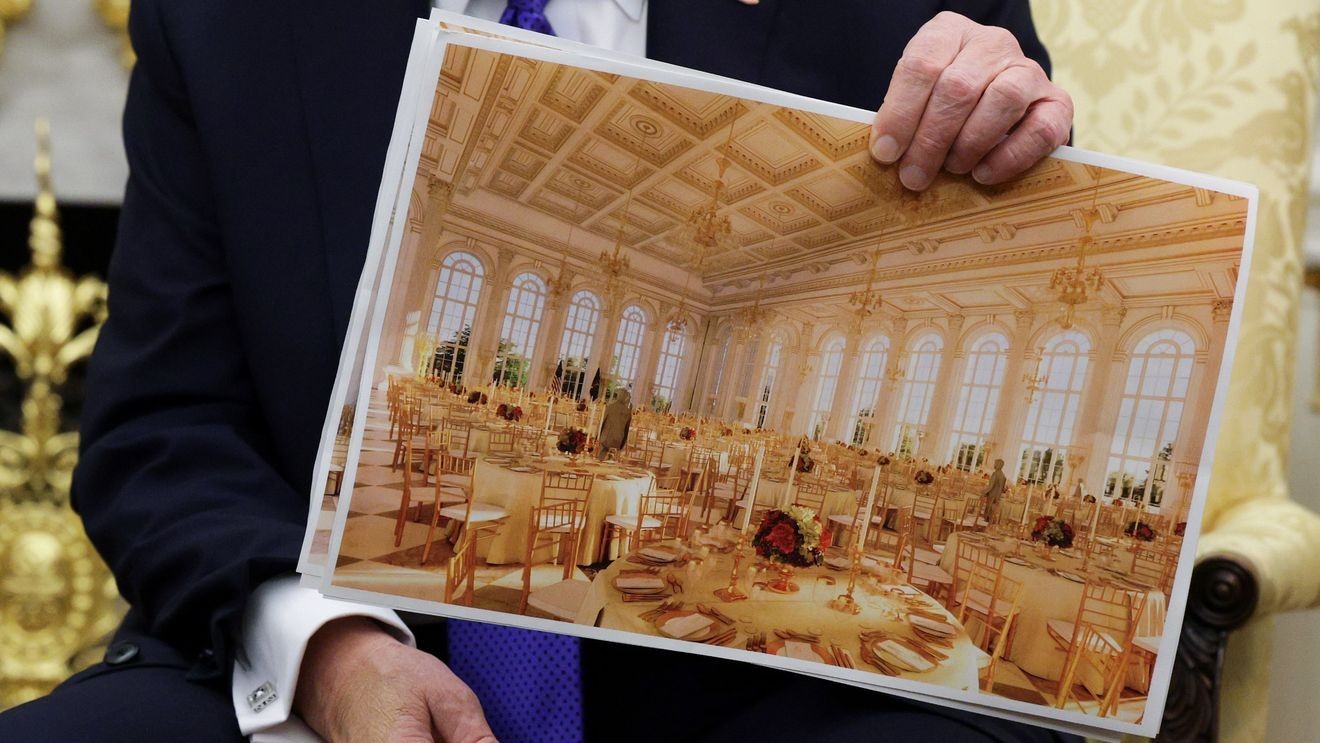
Court documents and White House statements indicate the ballroom would replace part of the East Wing with an approximately 90,000-square-foot facility capable of accommodating 1,000 guests—substantially larger than the East Room that currently hosts major White House functions. President Trump has consistently framed the project as addressing both entertainment and security needs.
However, administration officials now acknowledge that the visible ballroom represents only a portion of the planned construction. During a March conversation aboard Air Force One, Trump explained, “The ballroom essentially becomes a shed for what’s being built under,” referring to what he described as a “massive complex” beneath the structure. According to Reuters reporting, this underground component would include hardened security infrastructure designed to withstand various threats from bombs to drone attacks, along with protected communications systems and military-grade security enhancements.
The White House has a long history of underground security facilities. The White House Historical Association notes that the original bomb shelter beneath the East Wing dates back to 1942, constructed under President Franklin D. Roosevelt following America’s entry into World War II. This bunker later evolved into part of the Presidential Emergency Operations Center—the secure facility utilized during national emergencies, most notably during the September 11 terrorist attacks.
The Secret Service has taken the position that the above-ground ballroom structure is essential for protecting critical underground security operations. In legal filings, the agency has warned that leaving the project incomplete could compromise their ability to protect the president and maintain “key underground structures with a security purpose.”
Despite these security justifications, the project faces substantial opposition on legal and political fronts. The National Trust for Historic Preservation has spearheaded litigation against the administration, contending that a president lacks unilateral authority to implement major structural modifications to the White House without congressional approval. A federal judge initially suspended above-ground construction while the lawsuit proceeded, though an appeals court has temporarily permitted work to continue as litigation advances.
The legal challenges have also intensified debates over funding. Trump initially suggested private donors would contribute toward the estimated $400 million price tag, but congressional Republicans are now advocating for taxpayer financing instead. Senators Lindsey Graham and Katie Britt have supported legislative initiatives to advance the project through Congress, though Republican lawmakers remain divided on whether public or private funding is more appropriate.
Critics maintain that the controversy extends beyond architectural concerns to fundamental questions of executive authority. The central issue, they argue, is whether a White House ballroom can serve as justification for a major underground security expansion without explicit congressional authorization.
For the moment, the project remains caught in a complex intersection of national security imperatives, historic preservation concerns, and escalating legal battles over the boundaries of presidential power. This raises questions about whether the ballroom is truly the primary objective or merely the visible component of a more extensive underground security complex beneath the White House.
As security threats evolve and Washington’s political landscape shifts, the outcome of this dispute could establish precedents for how future White House security upgrades are approved and implemented in an era of heightened threats against government institutions.
Fact Checker
Verify the accuracy of this article using The Disinformation Commission analysis and real-time sources.

7 Comments
Hardening the White House against threats is understandable, but the scope of this project seems quite ambitious. I’d be interested to hear more details on the specific security risks it aims to mitigate, and how it compares to past White House infrastructure upgrades.
Interesting to see the proposed White House expansion plans go beyond just a ceremonial ballroom. The security infrastructure upgrades seem quite extensive, aiming to protect against a range of potential threats. I’m curious to learn more about the specific security features being incorporated.
The White House already has substantial security measures in place, so this underground complex sounds like a major additional investment. I wonder if the costs and construction timelines have been fully assessed, and how the public will view these expansions.
A massive underground security complex beneath the White House is an intriguing concept. I wonder how this aligns with the public’s expectations for the presidential residence and expectations around transparency in government projects of this scale.
The proposed White House expansion highlights the challenge of maintaining a secure yet accessible presidential residence. I hope the administration is transparent about the project’s scope, costs, and how it fits into the broader security strategy.
This underground security infrastructure sounds quite ambitious in scale. I’m curious to learn more about the specific threats it aims to address and whether the costs are justified compared to other potential security measures.
This is a complex issue with security and infrastructure needs to balance. While the administration frames it as addressing entertainment and security, the scale of the project raises questions about priorities and transparency. I hope the plan is scrutinized carefully.