


Listen to the article
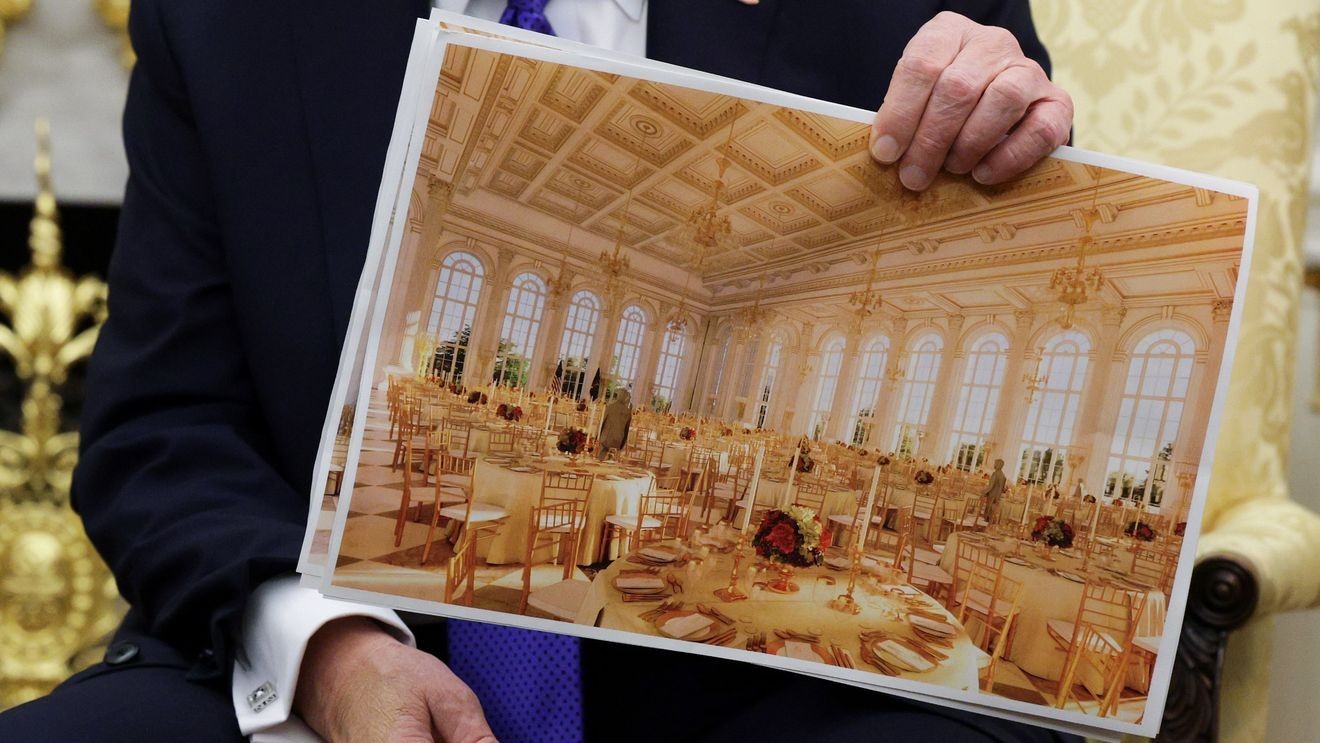
President Trump’s proposed White House ballroom has taken on new significance following a shooting incident near the White House Correspondents’ Dinner last weekend. The administration now emphasizes that the project extends far beyond creating a venue for state dinners, positioning it as an integral component of a comprehensive presidential security expansion.
Court documents and White House statements reveal plans for a 90,000-square-foot addition that would replace portions of the East Wing. The proposed ballroom would accommodate approximately 1,000 guests, substantially larger than the current East Room that hosts many significant White House events. President Trump has consistently maintained that the facility serves dual purposes: enhancing entertainment capabilities and bolstering security measures.
However, the visible ballroom structure appears to be merely the surface element of a more extensive development. During remarks aboard Air Force One in March, Trump explained, “The ballroom essentially becomes a shed for what’s being built under,” describing an extensive “massive complex” beneath the structure. According to Reuters reporting, the underground construction includes hardened security infrastructure designed to counter various threats from bombs to drones, along with protected communications systems and military-grade security enhancements.
Underground security facilities at the White House have historical precedent. The White House Historical Association documents that the original bomb shelter beneath the East Wing was constructed in 1942 during President Franklin D. Roosevelt’s administration after the United States entered World War II. This underground bunker later evolved into part of the Presidential Emergency Operations Center, the secure facility utilized during national emergencies, including the September 11 terrorist attacks.
The United States Secret Service has advocated for the above-ground ballroom structure, arguing it’s necessary to safeguard critical underground security operations. In legal filings, officials warned that leaving the project incomplete could compromise the agency’s ability to protect the president and maintain “key underground structures with a security purpose.”
Despite these security justifications, the project faces significant legal and political obstacles. The National Trust for Historic Preservation and other preservation groups have initiated legal action against the administration, contending that a president cannot unilaterally implement major structural modifications to the White House without congressional approval. A federal judge initially suspended above-ground construction while the lawsuit proceeded, though an appeals court later granted temporary permission for work to continue during ongoing litigation.
The legal challenges have reignited debates over funding. Trump initially suggested private donors would contribute toward the estimated $400 million price tag, but congressional Republicans are now advancing legislation to fund the ballroom with taxpayer dollars instead. Senators including Lindsey Graham and Katie Britt have supported proposals to move the project through Congress, though divisions persist even among Republicans regarding whether public or private funding is appropriate.
Critics argue the controversy transcends architectural considerations. They maintain that the fundamental question centers on whether a White House ballroom can legitimately justify a major underground security expansion without explicit congressional authorization.
For the moment, the project remains caught in the crosscurrents of national security arguments, historic preservation concerns, and escalating legal battles over presidential authority. This raises a pivotal question: Is this truly a ballroom project, or merely the visible component of a substantially larger security bunker beneath the White House?
Fact Checker
Verify the accuracy of this article using The Disinformation Commission analysis and real-time sources.

11 Comments
Interesting to see the administration emphasizing the security aspects of this proposed White House expansion. I wonder how the public will view the balance between entertainment and safety priorities.
Good point. It will be important to understand the tradeoffs and how this all ties into the President’s overall security strategy.
The scale of this project is quite remarkable – a 90,000 sq ft addition with a 1,000 person capacity ballroom. I’m curious to learn more about the underground construction plans as well.
Yes, the underground component seems particularly intriguing. I wonder if it will include specialized security or logistics facilities to support the expanded operations.
While I understand the need to bolster presidential security, the scale and cost of this project raise red flags. I hope the administration will provide detailed plans and cost estimates to allay concerns about wasteful spending.
Well said. The public should demand a rigorous cost-benefit analysis before signing off on such a massive undertaking, regardless of the stated security rationale.
It’s concerning to hear about the shooting incident near the White House Correspondents’ Dinner. Enhancing security for the President is understandable, but the public will likely want assurances that this is not just an extravagant vanity project.
The dual purpose explanation of entertainment and security is interesting, but I’m skeptical that a massive ballroom is truly necessary for security upgrades. I hope the administration can provide more transparency on the rationale and cost-benefit analysis.
Agreed. The public deserves a clear explanation of how this project will meaningfully improve security, not just expand event hosting capabilities.
I’m curious to see how this story develops and whether the administration can effectively communicate the value and necessity of such an extensive White House expansion project. Transparency and justification will be key.
This certainly seems like a complex and multifaceted issue. I’m eager to see how the administration reconciles the entertainment and security elements, and whether they can convince the public of the project’s merits.