


Listen to the article
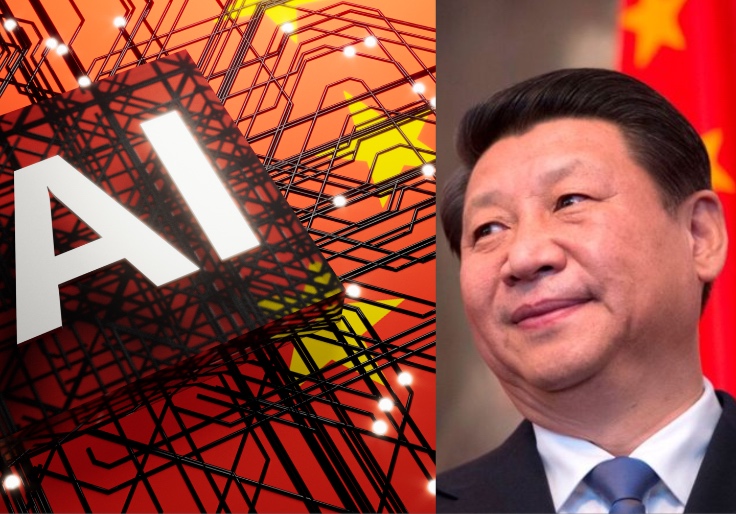
In a significant development highlighting the geopolitical dimensions of artificial intelligence competition, propaganda outlets controlled by China, Russia, and Iran appear to be amplifying campaigns against data center construction in the United States, seemingly in an effort to impede American AI innovation.
The coordinated messaging has found some traction among American lawmakers, with Senator Bernie Sanders (I., Vt.) scheduled to participate in a discussion about “the existential threat of AI” alongside two academics with ties to the Chinese Communist Party.
Chinese state media, including China Daily, Global Times, and China Global Television Network (CGTN), have consistently pushed narratives claiming that AI-powered data centers are causing harm within the United States. A CGTN video from October 2025 specifically highlighted “energy-hungry data centers” as the cause of “a major spike in energy prices” affecting the West Coast, Mid-Atlantic, and New England regions.
China Daily similarly published an article titled “AI boom sends electricity bills in US skyrocketing,” while Global Times echoed concerns about data centers’ “high energy consumption.” These outlets have used a mix of selective quoting of American academics and seemingly AI-generated narration to reinforce their messaging.
This propaganda push comes amid what the White House described in its July 2025 AI Action Plan as a competition “to achieve global dominance in artificial intelligence” between the United States and China. The plan emphasized that “whoever has the largest AI ecosystem will set global AI standards and reap broad economic and military benefits.”
While China attempts to influence American public opinion against data center expansion, the White House Office of Science and Technology Policy has accused Beijing of engaging in “deliberate, industrial-scale campaigns” to steal American AI systems. This two-pronged approach appears designed to slow American advancement while attempting to close the technology gap through illicit means.
The anti-data center sentiment has gained support from progressive lawmakers, including Sanders, Rep. Pramila Jayapal (D., Wash.), and Rep. Maxwell Frost (D., Fla.), who reportedly back a proposal from the environmental group Food and Water Watch to implement a nationwide moratorium on new data centers.
Sanders’ upcoming discussion on AI risks will feature Xue Lan, a professor from the CCP-affiliated Tsinghua University that conducts military research, and Zeng Yi, who leads the Beijing Institute of AI Safety and Governance. Treasury Secretary Scott Bessent criticized the event, saying, “Instead of harnessing American innovation, Senator Sanders is inviting foreign nationals to tell the United States how to regulate AI.”
The contrast between China’s external messaging and domestic policy is striking. While its propaganda outlets warn Americans about data center expansion, China offers its own tech companies substantial subsidies, covering up to half of their data centers’ energy costs. Chinese state media simultaneously promotes “China’s recent achievements” in robotics and large language models.
Russia and Iran have joined this information campaign, with Russian outlet RT highlighting opposition to data centers in Maine, New York, South Carolina, and Oklahoma, while Iran’s IRGC-affiliated Fars News Agency claimed U.S. data centers were responsible for increased coal use and air pollution.
These foreign influence efforts appear to complement domestic organizations opposing AI development, which have funded AI coverage at major news outlets including NBC News, Bloomberg, Time, and the Los Angeles Times, according to a December report by Semafor.
Senator Sanders’ office did not respond to requests for comment on his participation in the event with CCP-linked academics.
Fact Checker
Verify the accuracy of this article using The Disinformation Commission analysis and real-time sources.

11 Comments
The energy impact of data centers is a legitimate concern, but using it as political ammunition is concerning. Both the US and China should work together to find sustainable solutions for powering the AI revolution.
Absolutely. Cooperation and transparency would be far more constructive than finger-pointing. There are complex tradeoffs to balance, and a collaborative approach is needed.
This feels like classic geopolitical maneuvering. China is trying to gain an edge in the AI competition by sowing doubts about the US infrastructure. We should be wary of propaganda from all sides and focus on facts and balanced assessments.
Agreed. It’s crucial to separate political rhetoric from the actual technical and environmental challenges around data centers. Objective analysis is needed to understand the real issues at hand.
Interesting how Chinese media is criticizing US data centers amid the AI race. Seems like a strategic move to potentially undermine American AI capabilities. I wonder if there’s any truth to the claims about rising energy prices and consumption.
It’s important to look at this from multiple angles. The data centers could be an easy scapegoat, or there may be valid concerns about their energy impact that need to be addressed.
This is a complex issue with valid concerns on both sides. While the energy consumption of data centers is worth examining, the Chinese media’s criticism seems to have a political agenda behind it. We need to approach this topic with nuance and objectivity, rather than getting caught up in the geopolitical tug-of-war.
The energy demands of data centers are certainly a valid concern, but the Chinese media’s criticism feels more like a strategic move in the AI arms race than a genuine environmental effort. We need to look at this issue objectively and avoid getting caught up in the geopolitical rhetoric.
Absolutely. Responsible development of AI technologies requires collaboration and open dialogue, not nationalist posturing. Both the US and China should focus on finding sustainable solutions that benefit humanity as a whole.
This seems like part of a broader geopolitical struggle over AI dominance. While the energy consumption of data centers is worth examining, the Chinese criticism has a clear political agenda behind it. We need to be vigilant about disinformation from all sides.
Agreed. Any discussions around the environmental impact of AI infrastructure should be grounded in facts, not political narratives. Both countries have a responsibility to develop sustainable solutions.