


Listen to the article
Georgia’s Security Service Rebuts BBC Claims of Chemical Weapons Use Against Protesters
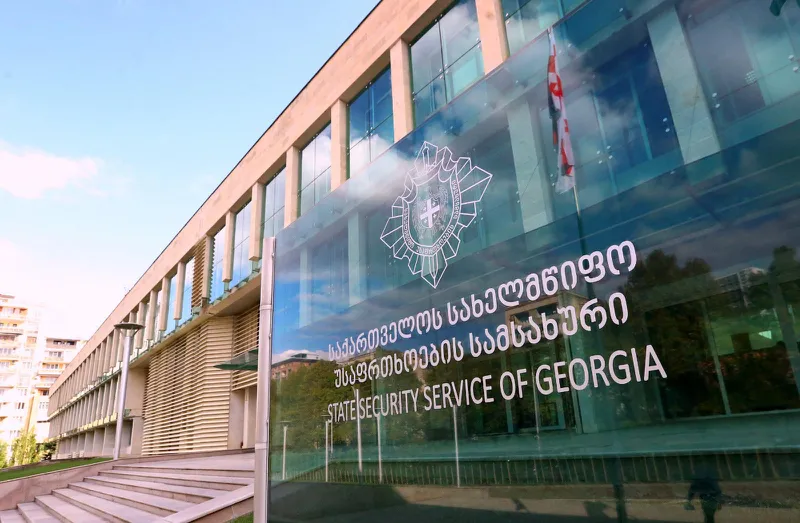
Georgia’s State Security Service (SSG) has forcefully rejected allegations made in a BBC investigative film that claimed authorities used banned chemical substances against protesters during demonstrations in late 2024. In its annual parliamentary report, the agency characterized these allegations as “deliberate disinformation” orchestrated to undermine Georgia’s national interests.
The controversy centers on claims that Georgian authorities deployed bromobenzyl cyanide—commonly known as “camite”—a prohibited chemical agent, during protest dispersals in November and December 2024. The SSG described the BBC’s reporting as part of a “well-planned, organized and campaign-like” effort involving foreign actors and Georgian citizens pursuing “specific hostile goals.”
Following the broadcast, Georgian authorities launched an extensive investigation that included over 160 investigative actions and interviews with 93 witnesses. Those questioned included current and former Interior Ministry employees, medical professionals, experts, NGO representatives, and individuals featured in the BBC report.
According to the SSG, the investigation found no evidence that “camite” was ever purchased or used by Georgian authorities. Instead, the report states that crowd control during protests relied on chlorobenzylidene malononitrile (CS gas), a common riot-control agent not prohibited under international conventions. The agency emphasized that CS gas had been legally procured by the Interior Ministry as early as 2007 and 2009 from foreign suppliers.
The security service cited customs records and chemical analysis conducted by the Levan Samkharauli National Forensic Bureau to support its findings. The report also noted that propylene glycol was used as a solvent during dispersal operations in early December 2024—a substance that is not classified as prohibited.
To further strengthen its position, the SSG referenced import data showing that over the past two decades, various Georgian entities, including private companies, had imported CS gas components hundreds of times, suggesting these materials were neither unusual nor illegal.
The agency’s investigation also addressed medical evidence. Experts interviewed emphasized that bromobenzyl cyanide typically causes severe and potentially fatal effects and has been banned since the early 20th century. Among 54 individuals hospitalized following the protests, only five exhibited mild intoxication symptoms and were discharged the next day—findings the SSG considers inconsistent with exposure to a highly toxic substance like “camite.”
The report pointed out that witnesses whose statements were cited in the BBC investigation reportedly denied concluding that “camite” had been used. According to the SSG, none of these individuals had conducted research confirming the presence of the banned chemical agent.
One key individual featured prominently in the BBC report was not interviewed by Georgian investigators. The SSG noted this person is linked to a separate case involving the purchase and storage of explosive materials, potentially casting doubt on their credibility.
The Georgian security agency concluded that claims in the BBC film lacked factual basis and were part of a coordinated effort to undermine Georgia. The investigation continues under Article 319 of Georgia’s Criminal Code, which addresses assisting foreign organizations in hostile activities against the country.
In its parliamentary report, the SSG expressed concern that disinformation campaigns from Western sources could fuel anti-Western sentiment within Georgia and contribute to public distrust toward international institutions—a particularly sensitive issue given Georgia’s geopolitical position and aspirations for European integration.
The dispute highlights ongoing tensions between Georgia’s government and Western media over democratic practices and protest management in the South Caucasus nation, which continues to navigate complex relationships with both Russia and Western powers.
Fact Checker
Verify the accuracy of this article using The Disinformation Commission analysis and real-time sources.

12 Comments
The Georgian government’s rejection of the BBC’s claims as ‘deliberate disinformation’ is a strong statement. I’m interested to learn more about the evidence they have uncovered through their investigation. Careful scrutiny of the facts from multiple sources will be important in understanding what really happened.
This seems like a complex and politically charged issue. I appreciate the Georgian government’s transparency in conducting an extensive investigation, but I’ll reserve judgment until more details emerge. Maintaining objectivity and avoiding the spread of unverified information is important.
I appreciate the Georgian government’s detailed response and investigation into these allegations. Maintaining public trust during challenging times requires transparency and a commitment to the facts. It will be important to see how this situation unfolds.
Indeed, these kinds of allegations can have significant geopolitical implications, so it’s good to see the authorities taking it seriously and conducting a thorough inquiry.
This is a concerning situation, and I’m glad to see the Georgian government responding with a detailed investigation. Allegations of this nature need to be carefully examined, and I look forward to seeing the full findings when they are available.
It’s good to see the Georgian authorities taking these allegations seriously and conducting a thorough inquiry. However, it’s important to remain objective and wait for all the facts to emerge before drawing any conclusions. This seems like a complex and politically sensitive issue.
Agreed. Maintaining impartiality and a commitment to the truth is crucial when dealing with contentious issues like this.
The use of banned chemical agents against civilians is a very serious allegation. I’m glad to see the Georgian authorities taking it seriously and conducting a thorough inquiry. However, I’ll wait to draw any conclusions until all the facts are clearly established.
Absolutely, this is the kind of issue where it’s crucial to get the details right and avoid rushing to judgment based on incomplete information.
Interesting report on the alleged disinformation campaign. It’s important to scrutinize claims carefully, especially when they involve sensitive national security matters. I’m curious to learn more about the Georgian government’s investigation and their perspective on the BBC’s reporting.
Yes, this seems like a complex and contentious issue. Getting input from all sides will be crucial to understanding what actually happened.
The claim of ‘deliberate disinformation’ is a serious accusation. I’m curious to learn more about the specific evidence the Georgian government has uncovered to refute the BBC’s reporting. Careful examination of the facts from multiple credible sources is crucial in these matters.