


Listen to the article
AI’s Growing Influence on Elections Raises Human Rights Concerns in Morocco and Beyond
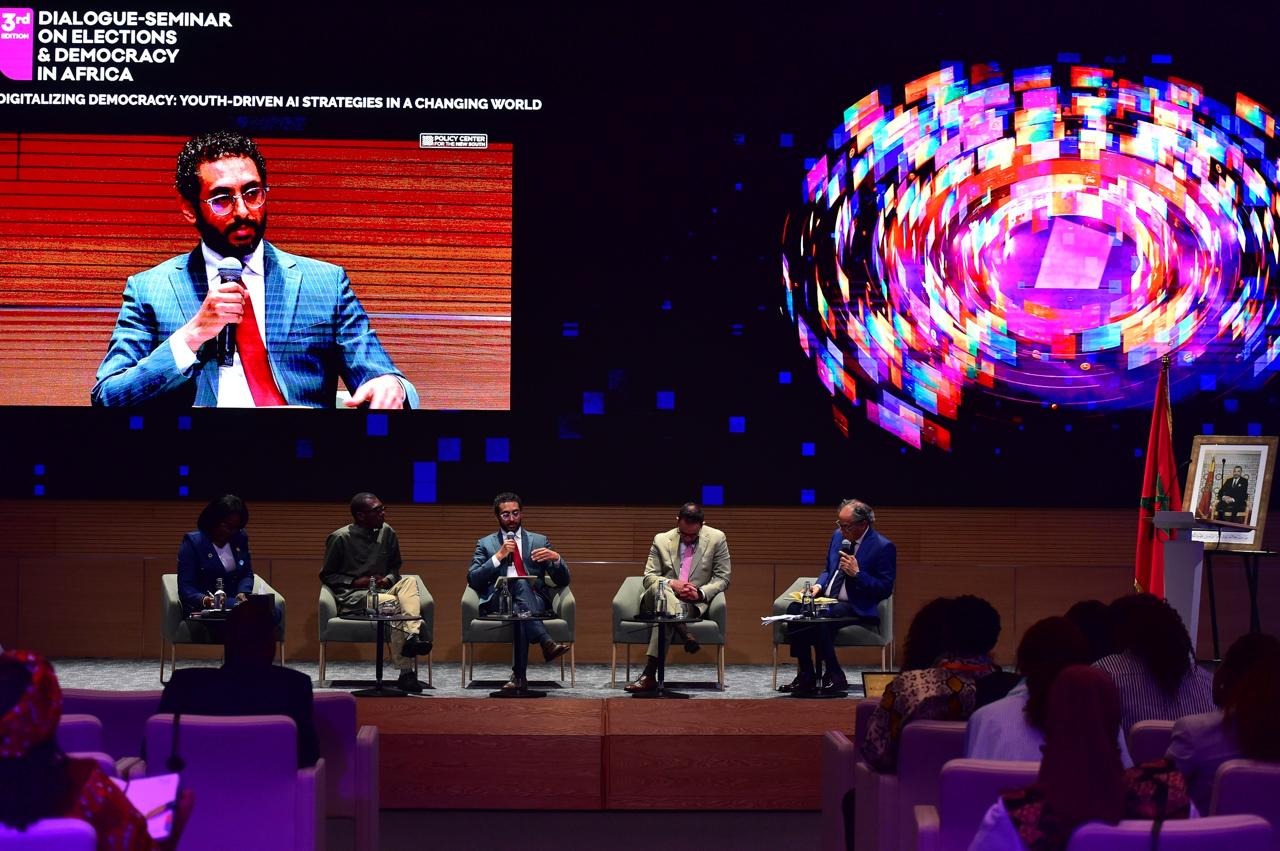
At a recent policy conference hosted by the Policy Center for the New South and the African Union’s Department of Political Affairs, Peace and Security at UM6P, experts gathered to discuss the increasingly critical topic of “Integrity and Governance: AI in the Electoral Cycle.” The timing couldn’t be more relevant for Morocco, which is preparing for its upcoming general elections amid growing concerns about artificial intelligence’s impact on democratic processes.
The conversation highlighted how elections are no longer simply institutional exercises managed by national authorities. They now exist within complex digital ecosystems shaped by algorithms, platforms, and AI systems that influence what voters see, share, and ultimately believe when making their democratic choices.
Evidence from around the world demonstrates that algorithmic amplification significantly shapes political discourse. From coordinated networks of automated accounts to AI-driven amplification of divisive content, these digital infrastructures can manipulate public opinion at unprecedented scale, transforming the fundamental conditions of democratic participation.
Previous electoral cycles have already revealed troubling patterns. During the Brexit referendum, researchers discovered that over 5% of accounts using referendum-related hashtags mysteriously disappeared after the vote, with thousands later identified as automated accounts designed to amplify specific political messaging.
More recently, Slovakia’s election has been described by scholars as a watershed moment demonstrating AI’s capacity to manipulate democratic processes with remarkable speed and sophistication. The proliferation of deepfakes, synthetic media, and highly targeted disinformation campaigns represents not just theoretical risks but operational tools actively eroding institutional trust.
“This isn’t merely a technical issue—it’s fundamentally about human rights,” noted one conference participant. When AI-driven systems manipulate what citizens see or when data is exploited to influence voter behavior, the impact extends beyond electoral integrity to undermine freedom of expression, access to information, privacy, and the right to participate meaningfully in public affairs.
As Article 21 of the Universal Declaration of Human Rights affirms, genuine and periodic elections are themselves a fundamental right. Any manipulation represents an attack on basic freedoms and democratic legitimacy. Disinformation distorts the information environment where citizens form opinions and make electoral choices, directly threatening the right to freedom of expression and informed decision-making.
However, addressing these challenges requires careful balance. Poorly designed responses to disinformation—such as overbroad content moderation or flawed automated detection systems—risk infringing on legitimate political speech. Studies have shown significant error rates in systems designed to identify harmful content, sometimes incorrectly targeting legitimate expression that may simply be controversial.
This tension underscores why AI governance in elections must be firmly grounded in human rights principles. These rights aren’t optional or negotiable but represent binding obligations under international law. States have duties not only to respect these rights but also to protect individuals from violations by private actors, including powerful technology companies whose systems actively shape public discourse.
For African countries, the challenge is particularly acute. The continent remains structurally disadvantaged in AI development resources and infrastructure, with economic benefits of AI expected to flow predominantly to the Global North. This disparity raises fundamental questions of digital sovereignty.
The recently adopted African AI Strategy (2024) leans toward national approaches for governance and regulation, but experts warn that fragmented national approaches risk weakening regulatory leverage and reinforcing dependency. “Africa may end up having 54 different approaches to AI governance,” cautioned one participant, suggesting a more coherent regional strategy would strengthen bargaining power and ensure AI systems reflect local values.
Another crucial blind spot in current discussions is the growing influence of encrypted messaging platforms. While much attention focuses on public social media, encrypted channels have become central to political communication. Disinformation in these spaces spreads with greater credibility, circulating within trusted networks that are difficult to monitor or challenge.
For Morocco specifically, these issues are immediate and concrete. With general elections on the horizon, AI tools capable of generating persuasive content, micro-targeting audiences, and manipulating public perception will likely play a significant role in shaping the information landscape.
“The key question isn’t whether AI will be used during elections,” one expert concluded. “It’s how it will be used, how quickly harmful applications can be detected, and how rapidly stakeholders can respond.” Ensuring that AI deployment respects fundamental rights will require vigilance, preparedness, and unwavering commitment to human rights principles throughout the electoral process.
Fact Checker
Verify the accuracy of this article using The Disinformation Commission analysis and real-time sources.

12 Comments
This is a troubling development and raises serious concerns about the vulnerabilities of digital-era rights and democratic processes. The potential for AI-driven amplification of divisive content and manipulation of voter sentiment is deeply concerning. Robust governance and public oversight will be critical to address these challenges.
I agree completely. The intersection of AI, elections, and human rights is a complex and vitally important issue that deserves urgent attention. Careful regulation and transparency will be essential to protect the integrity of democratic institutions.
The growing influence of AI on elections is a profoundly concerning issue. As these technologies become more advanced, the risks of algorithmic bias, misinformation, and voter manipulation only increase. Policymakers must act swiftly to address these challenges and safeguard the democratic process.
Well said. The integrity of elections is fundamental to democracy, and the proliferation of AI-powered systems poses significant threats that must be taken seriously. Proactive measures to understand and mitigate these risks are essential.
The impact of AI on elections is a complex and alarming issue. As these technologies become more advanced, the risks of algorithmic bias, misinformation, and voter manipulation only increase. Policymakers will need to strike a careful balance between innovation and safeguarding democratic integrity.
Well said. Safeguarding the democratic process in the digital age is an immense challenge, but a vitally important one. Proactive measures to understand and mitigate the risks of AI-powered electoral interference will be crucial.
This article highlights some important concerns about the use of AI in elections. The potential for these systems to amplify divisive content and sway voter sentiment is quite concerning. Robust governance frameworks and public oversight will be essential to protect democratic institutions.
I agree, the implications for human rights and free and fair elections are deeply troubling. Careful regulation and transparency around the use of AI in the electoral process will be critical going forward.
Fascinating issue at the intersection of technology, elections, and human rights. This raises important questions about the role of AI and digital platforms in shaping political discourse and influencing voter decision-making. Oversight and accountability for these systems will be critical going forward.
I agree, the potential for algorithmic amplification and automated manipulation of political narratives is quite concerning from a democratic perspective. Careful regulation and transparency around these systems will be key.
The growing influence of AI on elections is a complex and worrying issue. As these technologies become more sophisticated, the risks of algorithmic manipulation, misinformation, and voter suppression only increase. Policymakers must act swiftly to address these challenges and safeguard democratic processes.
Well said. The integrity of elections is fundamental to democracy, and the proliferation of AI-powered systems poses significant threats that must be taken seriously. Proactive measures to understand and mitigate these risks are essential.