


Listen to the article
Bavarian Information Portal Tackles Disinformation Through Interactive Study
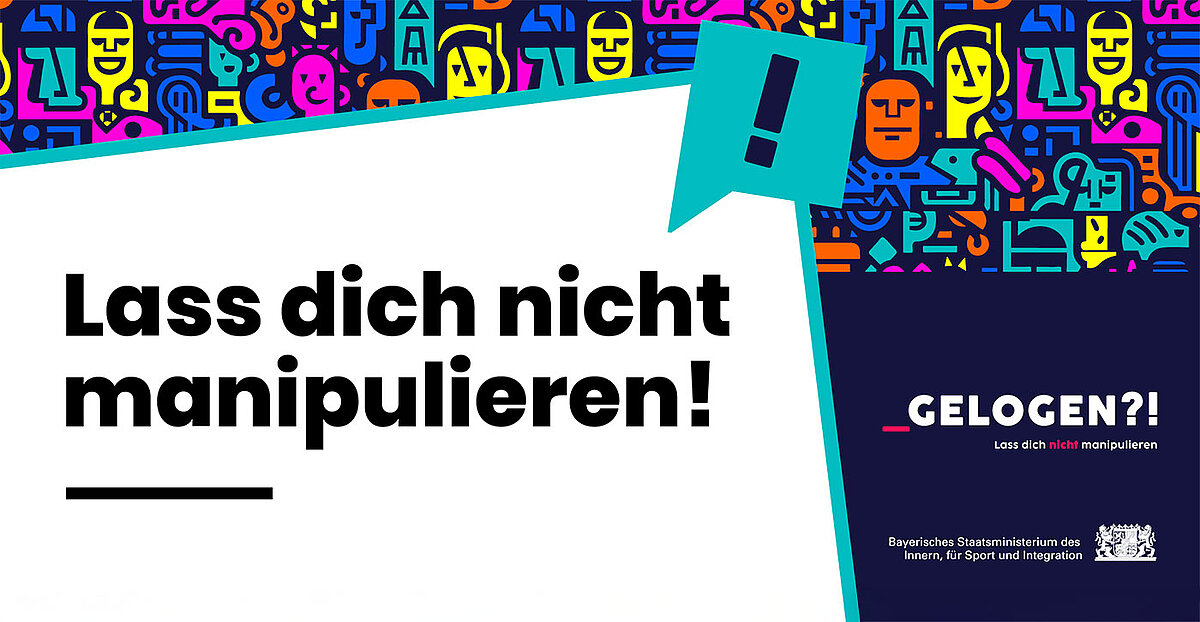
A new online initiative launched by the Bavarian State Ministry of the Interior aims to help citizens better understand and recognize disinformation and conspiracy theories in their daily media consumption. The portal, titled “_GELOGEN?! Lass dich nicht manipulieren” (LIED?! Don’t let yourself be manipulated), went live on November 5, 2025, offering an innovative approach to media literacy through interactive experiences.
Unlike traditional fact-checking resources, the portal employs creative examples to demonstrate how misinformation works. One such example presents a fictional conspiracy theory about alien cat espionage hidden within seemingly innocent social media posts. This humorous but educational scenario helps visitors understand the subtle ways manipulation can occur online and why certain conspiracy narratives can appear convincing.
“News streams are becoming ever denser, algorithmic personalization ever more precise—as a result, misconceptions, prejudices and cognitive biases can be reinforced faster than ever before,” explains Alicia von Schenk, Junior Professor of Applied Microeconomics specializing in Human-Machine Interaction at Julius-Maximilians-Universität Würzburg (JMU).
The portal is part of a comprehensive research initiative conducted by researchers from JMU, Goethe University Frankfurt, and the Frankfurt School of Finance & Management. Rather than focusing solely on individual false reports, the researchers are investigating the psychological and behavioral mechanisms that make people vulnerable to disinformation in the first place.
Traditional approaches to fighting misinformation, such as fact-checking and warning labels, have shown inconsistent effectiveness, varying based on individuals’ worldviews, ideological positions, and information presentation contexts. This has prompted researchers to shift their focus to understanding how people consume and process information in real-world settings.
“This allows us to observe real decisions, not just responses to hypothetical scenarios. It is important to us to empirically quantify actual behavior and make it measurable,” von Schenk notes about the field study’s methodology.
The portal employs various engaging formats including videos, social media examples, and practical advice on responding to conspiracy narratives in personal interactions. Playful elements make complex concepts accessible—visitors can follow made-up conspiracies about alien cats or invented campaigns behind snail infestations in German gardens to recognize manipulation patterns in action.
These interactive experiences are designed not just for entertainment but to build what researchers call “digital resilience”—the ability to process information reflectively and resist manipulation attempts. The project represents a holistic approach to understanding how information structures affect societal knowledge and processing.
The study behind the portal will continue until the end of January 2026 and welcomes participation from anyone of legal age. The survey takes approximately 20 minutes to complete, with participants receiving compensation through voucher codes redeemable at over 100 online retailers. When visiting the information portal and accepting cookies, users will see a participation banner and be asked to engage with two brief interactive elements.
This initiative comes at a crucial time when digital literacy has become essential for navigating increasingly complex information environments. By combining educational content with actual behavioral research, the Bavarian Interior Ministry’s project offers a dual benefit: helping citizens protect themselves while contributing valuable data to understand the dynamics of disinformation spread and resistance.
The researchers view the project as more than just an educational tool but as a study of society’s relationship with information—examining how content organization affects not just knowledge acquisition but also the quality of information processing at an individual and collective level.
Fact Checker
Verify the accuracy of this article using The Disinformation Commission analysis and real-time sources.
