


Listen to the article
President Trump has issued an executive order seeking to establish a national list of citizens to determine voting eligibility and restrict mail ballots, escalating his disputed claims about electoral fraud.
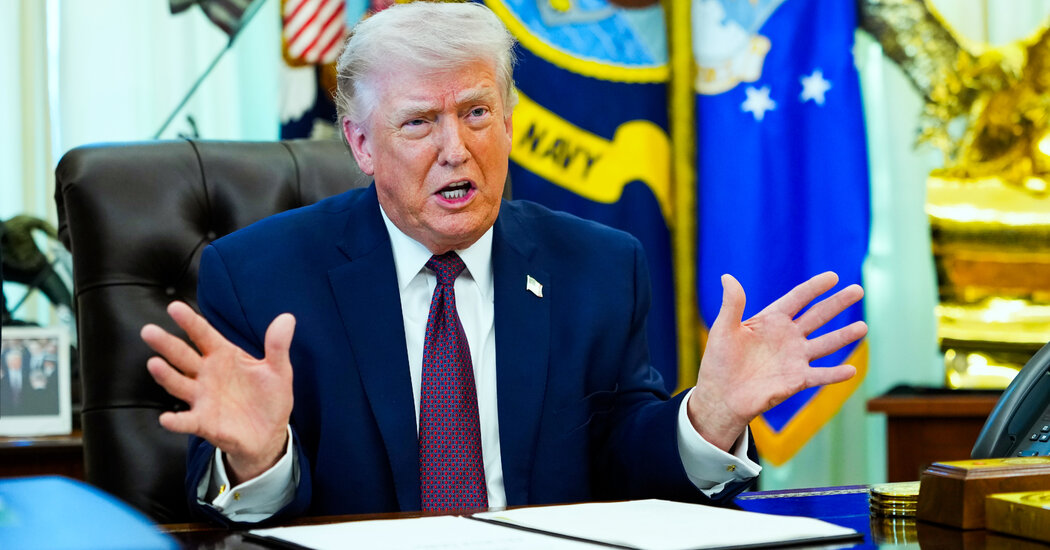
The order, signed Tuesday in the Oval Office, directs the Department of Homeland Security to create a “state citizenship list” using data from citizenship records, Social Security, and other federal databases. This list would be provided to state election officials, while the Attorney General would be instructed to prioritize prosecution of election officials who provide ballots to ineligible voters. Additionally, the U.S. Postal Service would be directed not to deliver mail ballots to individuals absent from this list.
“I believe it’s foolproof,” Trump said about the executive order. “And maybe it’ll be tested. Maybe it won’t.”
Constitutional experts and state officials have quickly challenged the order’s legality. The Constitution grants states broad authority over elections, with Congress having oversight power, but provides no explicit election authority to the president.
Adrian Fontes, Arizona’s Secretary of State, dismissed the order as constitutionally unsound. “The Constitution doesn’t allow the executive to take over elections administration, that’s a job for the state legislatures or Congress,” Fontes said. “The greatest threat to American elections is Donald Trump lying about them. Our elections are in good shape.”
Democrats swiftly filed a lawsuit challenging the order. Senator Chuck Schumer of New York, the minority leader, accused Trump of trying to “undo a fair election with this outlandish executive order.” The lawsuit includes Representative Hakeem Jeffries and various Democratic organizations as plaintiffs.
Commerce Secretary Howard Lutnick, who joined Trump at the signing, explained the administration’s vision: “If [states] want to use the U.S. Postal Service, they are going to get a code, a bar code from the U.S. Postal Service, and they are going to put that on the envelope, and we will have one envelope per vote.” The Postal Service has stated it is reviewing the order.
Sean Morales-Doyle, director of the Brennan Center’s Voting Rights and Elections Program, categorically rejected the order’s legal basis, stating it is “flatly illegal.”
The administration has previously encountered roadblocks in attempts to build a national voter database. The Justice Department has sought unredacted voter rolls from nearly all states, but only about 12 have complied. Legal efforts to compel the remaining states have largely failed, with even Republican-controlled states like Utah, Oklahoma, and West Virginia resisting these requests.
Election officials warn that any national voter list would contain numerous errors, as state voter files change daily with voters moving, becoming naturalized citizens, reaching voting age, or passing away.
Trump has been pushing Congress to pass legislation imposing restrictions on voting and mail ballots, including requirements for states to submit voter rolls to the Department of Homeland Security for citizenship verification. However, this legislation has stalled, with Democrats unanimously opposing it and some Republicans objecting to mail voting restrictions, which is a primary voting method in multiple states.
Trump’s skepticism about mail voting intensified when it became a partisan issue. During the 2020 election, Democrats used mail voting at nearly twice the rate of Republicans, according to data from the M.I.T. Election Data and Science Lab. Though the gap has narrowed, Democrats maintained an advantage in the 2024 election with 37 percent voting by mail compared to 24 percent of Republicans.
Despite his public criticism of the practice, Trump himself cast a mail ballot in a recent Florida special election. Approximately one-third of American voters used mail ballots in the 2024 election.
Courts have generally blocked Trump’s previous executive actions on voting, including a 2023 order requiring documentary proof of citizenship to vote. In January, a federal judge prevented the administration from withholding election funds from states that don’t comply with the president’s demanded voting procedure changes.
Fact Checker
Verify the accuracy of this article using The Disinformation Commission analysis and real-time sources.

14 Comments
As an investor in mining and energy stocks, I’m concerned about the potential impacts of this order on the commodities market. Uncertainty around elections can lead to volatility, which is the last thing the sector needs right now.
That’s a good point. Any disruptions to the democratic process could create instability that ripples through the broader economy, including the mining and energy industries. Investors will be watching this closely.
As a citizen, I’m deeply concerned about the implications of this order for voting rights and election integrity. Restricting mail ballots could disproportionately impact vulnerable communities and undermine the fundamental principles of democracy.
I agree completely. This order seems like a misguided attempt to address a problem that doesn’t really exist. Our leaders should be working to make voting more accessible, not less.
I’m curious to see how this plays out legally. The president’s claims of widespread fraud have been repeatedly debunked, so this order seems more like political theater than a serious policy solution.
Agreed, it will be interesting to see if the courts uphold this order. Protecting the integrity of elections is critical, but this approach seems more likely to undermine confidence than address real issues.
While election security is important, this order appears to be more about sowing distrust in the electoral process than addressing genuine concerns. Restricting mail ballots could significantly impact voter access, especially during the pandemic.
Exactly, this feels like a politically-motivated move rather than one grounded in facts and the rule of law. Responsible leaders should be looking for ways to expand, not limit, voting options.
I’m a bit skeptical of the legality and practicality of this order. Creating a national list of eligible voters seems like an enormous administrative challenge, and the president’s past claims about fraud have been widely debunked.
Good point. This order appears to be more about political posturing than practical solutions. Responsible leaders should be looking for ways to strengthen, not weaken, the democratic process.
This seems like an overreach of executive power that could set a dangerous precedent. The president should be focusing on the pandemic and economic recovery, not pushing unsubstantiated claims about voter fraud.
Exactly. Undermining confidence in elections is not the way to address the real challenges facing the country right now. This order is more likely to create chaos than solve any problems.
This executive order seems like a concerning attempt to undermine mail-in voting. The administration should focus on addressing the real challenges around election integrity, not pushing disputed claims that could disenfranchise voters.
I agree, this order raises serious legal and constitutional issues. State officials are right to challenge it, as the president does not have unilateral authority over elections.