


Listen to the article
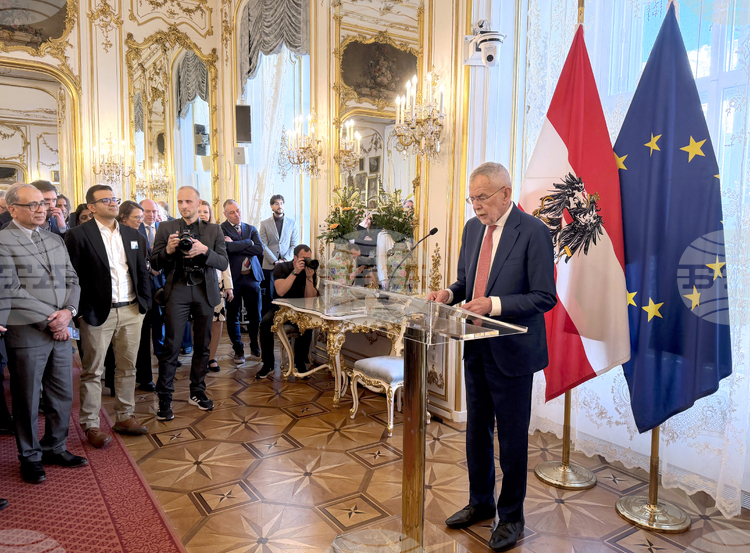
In a stark warning about the growing threat of AI-generated disinformation, Austrian President Alexander Van der Bellen shared his personal experience with deepfake technology during his address at the 40th Media Innovation Network (MINDS) conference in Vienna on Thursday.
The Austrian head of state revealed he was recently the subject of an AI-generated video that falsely portrayed him endorsing a cryptocurrency investment platform—something he emphasized he has never done. This personal anecdote served to illustrate the alarming accessibility of technology capable of creating convincing fake content.
“Modern technologies can be used by anyone with access to a computer to generate misleading content,” Van der Bellen told conference attendees. He noted that the same technology allows individuals to generate compromising images of opponents or even portray themselves as religious figures.
While the forgery in his case was relatively easy to detect—his AI-generated clone spoke in a North German dialect rather than Austrian German—the president expressed concern about the rapidly advancing sophistication of such technology. He warned that soon such fabricated videos might become virtually indistinguishable from authentic recordings.
Against this backdrop, Van der Bellen highlighted the crucial role of independent fact-checking agencies as reliable sources of verified information, describing them as “a mark of quality that remains independent of political pressure and the pursuit of online popularity.”
The president’s comments come at a time when AI-generated deepfakes are proliferating across social media platforms, presenting serious challenges to electoral integrity, public discourse, and institutional trust. Recent studies have shown that convincing AI-generated content can significantly influence public opinion, particularly when distributed through targeted social media campaigns.
In a powerful statement about democracy’s foundations, Van der Bellen declared: “There can be no liberal democracy without truth. We need a shared understanding of what is right and what is wrong. Of what is a fact, and what is just an opinion. A shared understanding of the nature of our problems. Only then can we decide who to vote for, what to believe.”
His address took on a global perspective as he pointed to concerning trends of information control across various nations. “Countries around the world are trying to limit freedom of speech and to force their control over local media and the flow of information,” he said. “Naturally, autocrats don’t like the truth. It is their political strategy to ensure that people no longer know right from wrong.”
The president cited specific examples of media interference, noting: “The White House banned the Associated Press from briefings, the Pentagon tried to control what journalists write… In Russia, you go to jail if you say this is a full-scale war against Ukraine, not just a ‘special military operation’.”
Despite these concerning developments, Van der Bellen expressed optimism about truth’s resilience, referencing recent events in Hungary where citizens mobilized against controlled media structures. “Even in a closed system with a media landscape that has been forced into line, people were able to mobilize against these existing structures,” he observed. “Ultimately, the truth prevails. Even if you try to control or manipulate it.”
The president concluded his address with a call for greater media literacy, stronger support for independent journalism, and active defense of democratic values—measures he suggested are essential to combat the rising tide of AI-facilitated disinformation.
The conference has drawn representatives from leading global news agencies, including BTA Director General Kiril Valchev and other senior media executives from Bulgaria’s news agency, highlighting the international significance of addressing AI-driven disinformation challenges across the media landscape.
Fact Checker
Verify the accuracy of this article using The Disinformation Commission analysis and real-time sources.

8 Comments
This is a concerning development. Deepfake technology has the potential to undermine trust in media and public figures. Robust safeguards and accountability measures will be essential to combat the spread of AI-generated disinformation.
Absolutely. The Austrian president highlights a worrying trend that requires immediate attention from policymakers and tech companies.
The ability for anyone with a computer to create convincing fake content is alarming. Disinformation campaigns leveraging this technology pose a serious threat to democracy and public discourse.
You’re right. Proactive measures are needed to stay ahead of bad actors trying to exploit these capabilities for nefarious purposes.
The Austrian president’s personal experience with deepfake technology illustrates the concerning accessibility and potential impact of such tools. Proactive measures are needed to address this growing threat.
This highlights the importance of media literacy and critical thinking skills. As deepfake tech becomes more sophisticated, the public must be equipped to identify manipulated content.
Agreed. Educating citizens on spotting AI-generated disinformation should be a top priority for governments and educational institutions.
While the president’s case was relatively easy to detect, the rapid advancement of deepfake technology is worrying. Ongoing vigilance and robust fact-checking will be crucial to maintaining public trust.