


Listen to the article
Anti-Disinformation Coalition Launches in Ghana to Combat Online Falsehoods
A significant three-year initiative aimed at combating the spread of misinformation has been launched in Accra, Ghana’s capital city. The Anti-Disinformation Coalition project, implemented by Penplusbytes with funding from the Royal Norwegian Embassy, seeks to curb the growing threat of false information through a multi-faceted approach combining collaborative action, localized research, and AI-powered tools.
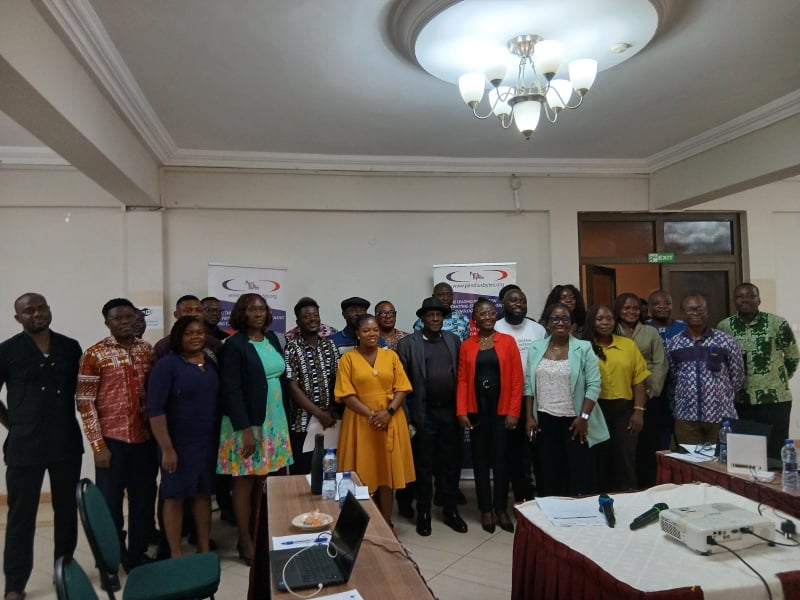
The project was unveiled during a youth seminar organized by Discovery Teen Magazine and Foundation, highlighting its focus on equipping young people with the skills needed to identify, verify, and counter false information in digital spaces.
Speaking at the launch event, Dr. Charity Binkah, Board Chair of Penplusbytes, emphasized the severity of the threat posed by misinformation in Ghana’s current media landscape. “Fake news is now a direct threat to our public health and our social space,” she noted, adding that disinformation spread in local languages tends to proliferate even more rapidly, creating additional challenges for fact-checking efforts.
The coalition’s approach recognizes that addressing disinformation requires cross-sector collaboration. Dr. Binkah explained that the project would bring together youth groups, media organizations, technology partners, academic institutions, civil society organizations, and government agencies in a unified effort. This collaborative model acknowledges that “no single group could address the challenge alone,” particularly as disinformation increasingly undermines social cohesion, impacts electoral processes, and damages personal and institutional reputations.
A key focus of the initiative is promoting digital literacy among Ghana’s youth population. Dr. Binkah urged young people to adopt a verification-first mindset when consuming online content, emphasizing that “a ten-second pause is often the difference between spreading peace and spreading harm.” She also cautioned that even seemingly trustworthy sources such as AI-generated content or online biographies could be misleading without proper verification.
The legal implications of spreading misinformation were highlighted by Dr. Zenator Agyemang-Rawlings, Member of Parliament for Klottey Korle and Chairperson of the Parliamentary Select Committee on Security and Intelligence. She specifically addressed the growing problem of non-consensual image sharing, warning attendees: “If someone shares photos of themselves with you, it’s against the law to share those.” Dr. Agyemang-Rawlings noted that Ghana’s legal system has evolved to accommodate digital evidence in prosecuting such cyber offenses.
Her advice to participants reflected the project’s core message: “Don’t just take what you see as gospel and pass it on, even with the best of intentions… think, question, verify. Do not believe everything you see, do not believe everything you hear, and don’t share everything unless you verify.”
The initiative comes at a critical time for Ghana, which has seen a significant increase in internet penetration and social media usage in recent years. While this digital growth has created new opportunities for education and connectivity, it has also exposed more citizens to the dangers of misinformation.
Mercy Catherine Adjabeng, Founder of Discovery Teen Magazine and Foundation, contextualized this digital paradox facing young Ghanaians: “The same feed that can teach you how to code can also trick you with fake news. The same click that connects you to a friend can also share a lie that harms someone’s life, and can cost you if you get sued.” Her comments underscore the importance of responsible internet usage in an era where digital literacy has become essential.
The Anti-Disinformation Coalition project represents one of West Africa’s most comprehensive attempts to address digital misinformation at multiple levels of society. By focusing on youth engagement, technological solutions, and institutional partnerships, the initiative aims to build resilience against false information across Ghana’s media ecosystem over the next three years.
As elections approach in several West African nations, including Ghana, the project’s launch is particularly timely, addressing growing concerns about the potential impact of disinformation on democratic processes and social stability in the region.
Fact Checker
Verify the accuracy of this article using The Disinformation Commission analysis and real-time sources.

10 Comments
Interesting that the project is being funded by the Royal Norwegian Embassy. I wonder if they have seen similar disinformation challenges in their own country and are sharing best practices.
It’s good to see international cooperation on this issue. Disinformation doesn’t respect borders, so a global response is needed.
The focus on youth engagement is smart. Building digital literacy and critical thinking skills in the next generation is key to building resilience against misinformation.
It’s concerning to hear that disinformation spreads even more rapidly when shared in local languages. This highlights the need for localized research and solutions.
Utilizing AI-powered tools could be an effective way to detect and counter false information at scale. I’m curious to learn more about the specific technologies they plan to deploy.
Collaborative action across different stakeholders is crucial to tackle this complex issue. I hope the coalition is able to build strong partnerships within Ghana’s media and civil society.
This is a welcome initiative to combat the growing threat of misinformation in Ghana. Equipping young people with the skills to identify and counter false information is a smart approach.
Misinformation can have serious consequences for public health and social cohesion, so I’m glad to see this coalition taking action.
This seems like an important step, but combating disinformation is an ongoing battle. I hope the coalition’s efforts lead to tangible, long-term impact in Ghana.
Rigorous monitoring and evaluation will be crucial to understand what strategies are most effective. I look forward to seeing the project’s progress and learnings.