


Listen to the article
Russia’s Disinformation Campaign in Moldova Flourishes as US Support Retreats
Since returning to the White House, President Trump has systematically dismantled American efforts to combat foreign disinformation campaigns, creating a vacuum that Russia has quickly filled—particularly in Moldova, a strategic European nation caught between Western aspirations and Moscow’s influence.
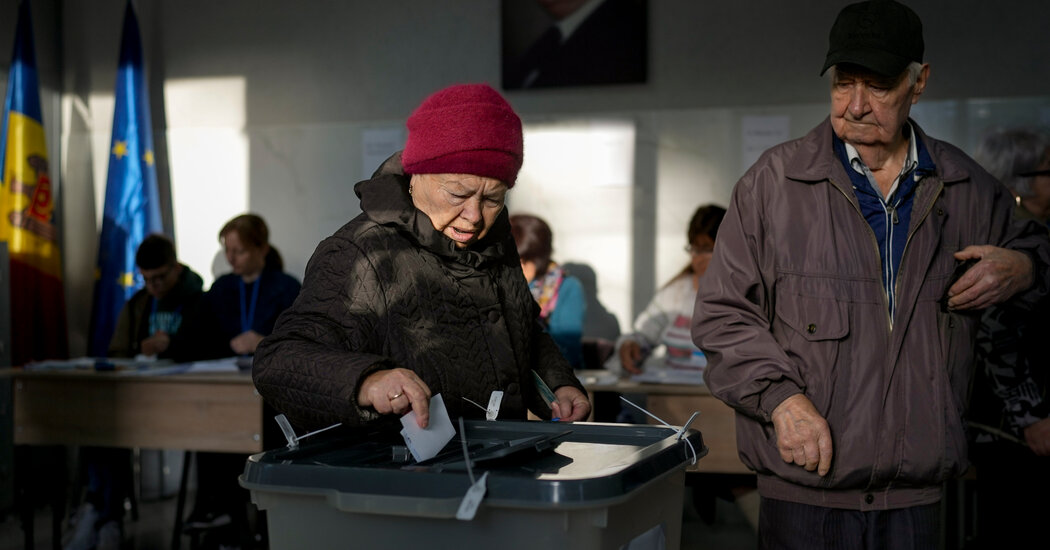
As Moldova approaches parliamentary elections on September 28, the country has become what the Stimson Center calls “a testing ground for hybrid warfare operations” that could shape similar efforts across Europe. Russian operatives have unleashed an unprecedented wave of disinformation, flooding social media with fake posts, AI-generated videos, and fabricated websites across TikTok, Telegram, Facebook, Instagram, and YouTube.
“The Russians now are able to basically control the information environment in Moldova in a way that they could only have dreamed a year ago,” said Thomas O. Melia, a former official at the State Department and the U.S. Agency for International Development.
The Trump administration’s retreat from this battleground has been swift and comprehensive. Financial support for Moldova’s fight against Russian influence has been slashed, including $22 million earmarked for strengthening the country’s “inclusive and participatory political process” and $32 million for independent media support—programs Trump derided as “left-wing propaganda operations.”
When asked about Russia’s influence operations in Moldova, the State Department declined to comment, as did the White House.
Moldova’s strategic importance stems from its position bordering Ukraine and its historical status as a former Soviet republic. President Vladimir Putin has assigned one of his most trusted lieutenants, Sergei V. Kiriyenko, to keep Moldova within Russia’s sphere of influence, according to Russian media reports.
The scale of Russia’s digital assault is staggering. WatchDog, a Moldovan research consortium, identified over 900 accounts linked to Russia working in concert across popular apps in the country. In July alone, Moldova’s National Police warned they were detecting “hundreds of new accounts created to misinform and manipulate society” daily.
TikTok has acknowledged the problem, shutting down a network of 314 accounts with more than 100,000 followers that were disguising their Russian origin. The platform stated it is working with Moldovan authorities to install “additional safety and security measures” ahead of the election.
Much of this year’s campaign has been conducted by a covert group known as Matryoshka. NewsGuard, a New York-based company tracking online misinformation, documented 39 fabricated narratives targeting Moldova in just three months. The group bombards journalists and fact-checkers with emails alerting them to fake content spreading on social media, effectively amplifying their reach.
Moldova’s President Maia Sandu, the first woman elected to lead the country, has become a primary target of these campaigns. After a recent national security council meeting, Sandu detailed numerous Kremlin influence operations and accused Ilan Shor, a fugitive Moldovan businessman now in Moscow, of acting as a conduit for Russian efforts.
“The effort poses a direct threat to our national security, sovereignty and our country’s European future,” Sandu warned.
Researchers have noted the distinctly misogynistic tone of many attacks against Sandu, a pattern seen in Russian operations targeting female political leaders globally. “The Kremlin’s war on women is a war on democracy,” said Kristina Wilfore, a researcher at Reset Tech, noting similar campaigns against German Foreign Minister Annalena Baerbock and former New Zealand Prime Minister Jacinda Ardern.
The Trump administration’s withdrawal from this arena extends beyond funding cuts. Secretary of State Marco Rubio has ordered diplomats to lobby against European laws regulating tech giants, including the Digital Services Act, while Trump himself has threatened tariffs on countries that penalize these platforms.
This stance has inadvertently reinforced Russian propaganda claiming that previous American support constituted interference. “It’s one thing when Russian propagandists and Russian politicians are attacking the legitimacy of civil society organizations or human rights organizations,” said Valeriu Pasa, WatchDog’s chairman. “It is absolutely different if the same narratives are being echoed by U.S. leadership.”
With Moldova so politically divided—a referendum on pursuing European Union membership barely passed last year despite polls showing broader support—Russian influence operations need only sway a small percentage of voters to be decisive. As the parliamentary elections approach, the outcome may serve as the first clear indication of how Trump’s retreat from democracy promotion will reshape international politics in regions vulnerable to Russian influence.
Fact Checker
Verify the accuracy of this article using The Disinformation Commission analysis and real-time sources.
