


Listen to the article
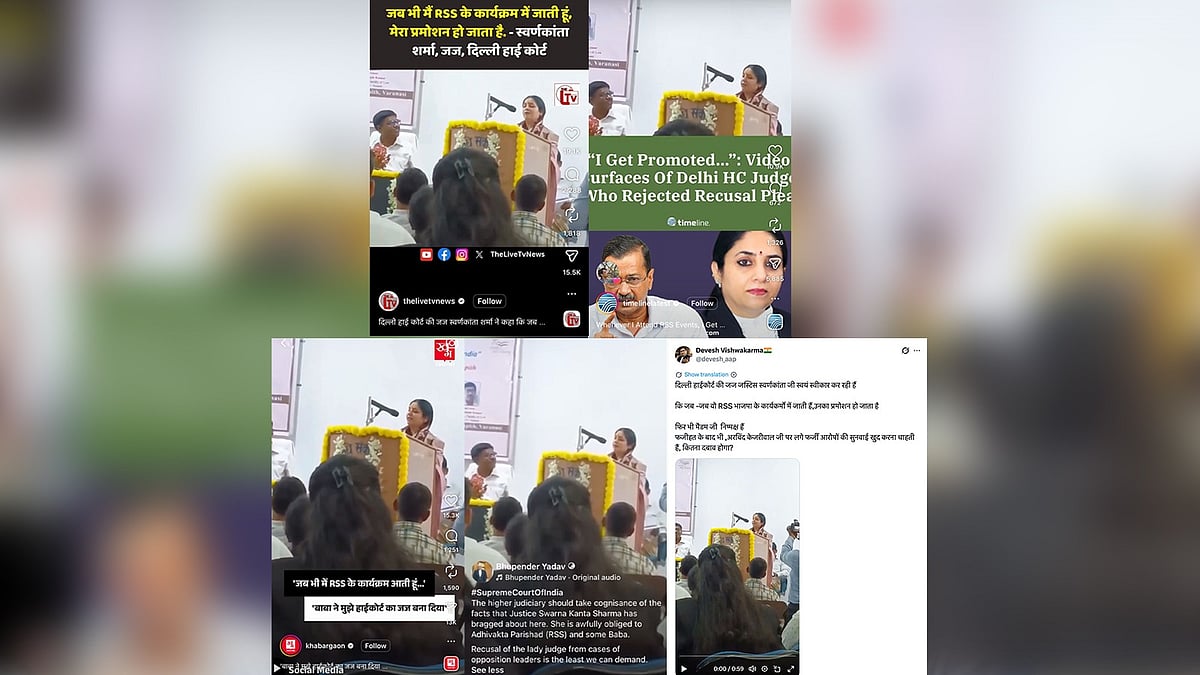
Justice Swarana Kanta Sharma of the Delhi High Court has firmly refuted claims circulating on social media suggesting that she credited her career advancement to participation in Rashtriya Swayamsevak Sangh (RSS) events. The false attribution has spread widely across various platforms, prompting a clear denial from the judicial officer.
The misleading claims gained traction after several accounts on X (formerly Twitter) alleged that Justice Sharma had stated her promotions were linked to her attendance at RSS gatherings. These posts triggered significant online debate regarding judicial independence and ideological affiliations within the Indian judiciary.
Court officials close to the matter confirmed that Justice Sharma never made such remarks at any public forum or in any official capacity. The fabricated statement appears to have originated from unverified sources before spreading rapidly through social media channels without factual verification.
Legal experts have expressed concern about the potential damage such misinformation can cause to public confidence in judicial institutions. “Attributing false statements to sitting judges undermines the credibility of the entire justice system,” noted Rajiv Mehta, a senior advocate who specializes in constitutional law. “It’s particularly troubling when these fabrications suggest improper influences on judicial appointments.”
The RSS, a right-wing Hindu nationalist organization with significant political influence, maintains close ties with India’s ruling Bharatiya Janata Party (BJP). Any suggestion of direct RSS influence on judicial appointments would raise serious questions about the independence of India’s judiciary, which constitutionally operates as a separate branch of government.
Justice Sharma, who was elevated to the Delhi High Court in 2022, has established a reputation for handling several high-profile cases with constitutional implications. Prior to her elevation, she served as a special public prosecutor in cases related to economic offenses and corruption matters.
The Bar Council of Delhi has condemned the spread of such misinformation about sitting judges. In a statement, the Council emphasized that “attempts to falsely associate members of the judiciary with political organizations represent a dangerous trend that threatens judicial independence.”
This incident highlights the growing challenge of misinformation on social media platforms, particularly concerning public institutions. Digital media experts point out that false claims about public figures can travel faster than corrections, making it difficult to counter misinformation once it gains momentum.
The Supreme Court Bar Association has previously expressed concerns about the targeting of judges through social media campaigns. In recent years, several judges have faced online criticism and false attributions, prompting discussions about potential regulatory frameworks to address judicial misinformation.
The Indian judiciary has traditionally maintained a careful distance from political affiliations to preserve its independence and impartiality. The constitutional framework of judicial appointments in India involves a collegium system designed to insulate the process from direct political interference.
Legal observers note that this incident reflects broader tensions regarding judicial appointments and perceived political influences on India’s courts. “The judiciary’s credibility depends on public confidence in its impartiality,” said Priya Sharma, a constitutional law scholar at Delhi University. “False claims about judges’ political affiliations directly undermine that confidence.”
The Delhi High Court has not issued an official statement regarding the matter, consistent with its general practice of not responding to social media controversies. However, sources within the court administration have confirmed that Justice Sharma has expressed dismay over the false attribution.
As the false claims continue to circulate, legal community members have called for greater responsibility in sharing information about judicial officers, emphasizing that baseless allegations can have far-reaching consequences for the perception of justice and fairness in the legal system.
Fact Checker
Verify the accuracy of this article using The Disinformation Commission analysis and real-time sources.

8 Comments
Judicial independence is a cornerstone of a healthy democracy. Attempts to undermine it through false narratives should be swiftly and firmly addressed. I’m glad to see this fact-check setting the record straight.
It’s concerning to see fabricated statements attributed to a sitting judge. Spreading misinformation about the judiciary can indeed damage public confidence, as the legal experts noted. Fact-checking is crucial in these cases.
Agreed. These types of false claims should be addressed promptly to maintain the integrity of our judicial institutions.
The swift denial from Justice Sharma and the legal experts’ concerns are reassuring. We must remain vigilant against misinformation and uphold the integrity of our judicial institutions.
I appreciate the court officials confirming that Justice Sharma never made such remarks. It’s important to rely on verified information from authoritative sources, not unsubstantiated social media claims.
Absolutely. Fact-checking by reputable media outlets helps counter the spread of misinformation online.
This case highlights the need for greater media literacy and critical thinking when consuming information online. We must be cautious about hastily sharing unverified claims, even if they align with our own biases or beliefs.
This is an important fact-check. Judicial independence is critical, and we must be vigilant against misinformation that could undermine public trust. I’m glad Justice Sharma swiftly refuted the false claims.