


Listen to the article
Gasoline Tax Suspension Benefits Oil Giants While Neglecting Vulnerable Canadians
As oil companies report an estimated $100 billion in windfall profits this year alone, the Canadian government has once again chosen to suspend the gasoline tax, effectively subsidizing pollution while reducing revenue for essential social programs. This move comes amid mounting evidence that climate action has widespread global support, despite coordinated disinformation campaigns.
Nearly 90% of people worldwide support meaningful climate action, according to recent studies. However, a well-funded network of bad-faith actors continues to distort public perception through social media campaigns designed to create an illusion of division where consensus actually exists. These disinformation efforts, engineered by public relations professionals and amplified by social media algorithms, are largely funded by those with financial interests in delaying climate action.
The impact of such campaigns has been significant. In the lead-up to the cancellation of Canada’s consumer carbon price and rebate program earlier this year, fossil fuel companies and their political allies spent at least $1 million on Meta platforms alone, falsely claiming that climate policies were responsible for inflation.
Data from the CD Howe Institute, a conservative Canadian think tank, reveals the consequences of these policy reversals. The switch from carbon rebates to reduced personal income taxes has disproportionately benefited wealthy Canadians while penalizing lower-income households, thereby widening income inequality that is already at record levels. This policy shift has cost taxpayers $5.5 billion while significantly increasing Canada’s greenhouse gas emissions.
While January’s Groceries and Essential Benefit provided some relief to vulnerable Canadians without encouraging fossil fuel consumption, experts note it still failed to fully compensate lowest-income earners for the loss of carbon rebate payments.
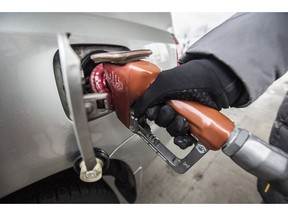
The current gasoline tax suspension represents another troubling step backward. The policy primarily benefits those who drive more – typically wealthier Canadians – while providing no relief to those who don’t drive or fly, often the most economically vulnerable citizens. Meanwhile, oil companies continue to reap enormous profits, reportedly making $30 million per hour from geopolitical tensions surrounding the Iran-USA-Israeli conflict.
James Hoggan, founder of Vancouver-based Desmog, has been documenting fossil fuel industry disinformation since 2006. There are some positive developments in combating this trend: Canada recently signed onto the Declaration on Information Integrity on Climate Change at COP30 in Belém, Brazil. Additionally, Climate Action Against Disinformation, a global coalition representing more than 120 climate and anti-disinformation organizations, has called for unified action against climate misinformation.
The climate crisis continues to accelerate. Recent reports document emperor penguin chicks drowning in the Antarctic due to melting ice, while scientists warn about potential collapse of the Atlantic Meridional Overturning Circulation (AMOC). The Planetary Health Check 2025 confirms that while Earth’s resilience keeps the window for effective action open, it’s closing rapidly.
Climate policy experts suggest several alternatives to the gasoline tax suspension that would provide economic relief without increasing emissions. These include implementing windfall taxes on fossil fuel companies to fund affordability measures, strengthening industrial carbon pricing, expanding domestic renewable energy production, investing in electrification and public transportation infrastructure, and improving energy efficiency standards.
As Canada observes Earth Day, climate advocates urge citizens to speak with neighbors and collectively demand policies that address both climate change and affordability without subsidizing pollution. They emphasize that the window for effective climate action remains open, but requires immediate attention and policy coherence from government leaders.
Fact Checker
Verify the accuracy of this article using The Disinformation Commission analysis and real-time sources.

32 Comments
Exploration results look promising, but permitting will be the key risk.
Good point. Watching costs and grades closely.
Good point. Watching costs and grades closely.
Exploration results look promising, but permitting will be the key risk.
Good point. Watching costs and grades closely.
Good point. Watching costs and grades closely.
Nice to see insider buying—usually a good signal in this space.
The cost guidance is better than expected. If they deliver, the stock could rerate.
I like the balance sheet here—less leverage than peers.
Good point. Watching costs and grades closely.
Good point. Watching costs and grades closely.
Production mix shifting toward Disinformation might help margins if metals stay firm.
Good point. Watching costs and grades closely.
Good point. Watching costs and grades closely.
Silver leverage is strong here; beta cuts both ways though.
Production mix shifting toward Disinformation might help margins if metals stay firm.
Good point. Watching costs and grades closely.
Good point. Watching costs and grades closely.
Interesting update on Fossil Fuel Industry Accused of Misleading Public, Impacting Canadian Consumers. Curious how the grades will trend next quarter.
Good point. Watching costs and grades closely.
Good point. Watching costs and grades closely.
Nice to see insider buying—usually a good signal in this space.
Good point. Watching costs and grades closely.
Good point. Watching costs and grades closely.
Silver leverage is strong here; beta cuts both ways though.
Good point. Watching costs and grades closely.
I like the balance sheet here—less leverage than peers.
Good point. Watching costs and grades closely.
Uranium names keep pushing higher—supply still tight into 2026.
Good point. Watching costs and grades closely.
Silver leverage is strong here; beta cuts both ways though.
Good point. Watching costs and grades closely.