


Listen to the article
Georgian Security Service Denounces BBC Report on Chemical Weapons as Disinformation
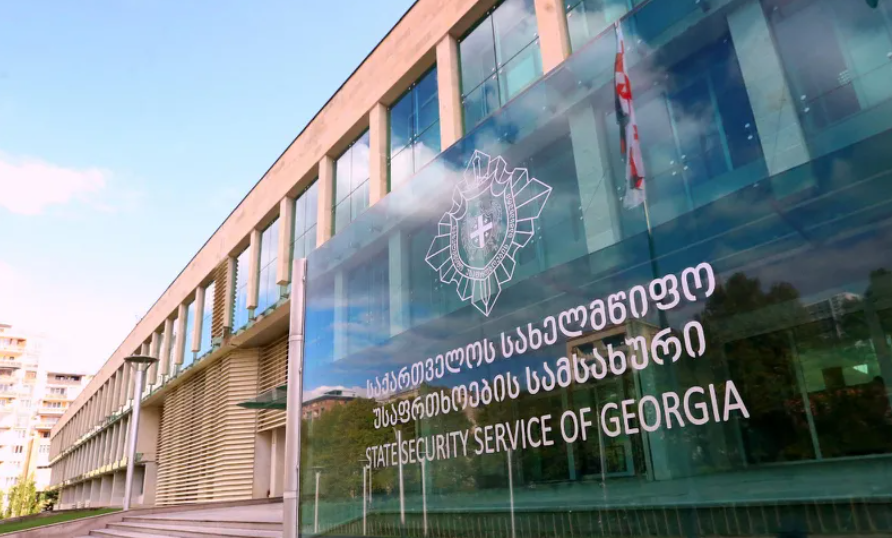
The State Security Service of Georgia (SSG) has firmly rejected claims made in a BBC investigation that alleged the use of a banned chemical weapon called “Camite” against protesters during demonstrations in late 2024. In its comprehensive 2025 report, the SSG characterized the BBC’s allegations as “targeted disinformation” designed to harm Georgia’s international standing.
According to the security agency, the investigation they conducted was extensive, involving more than 160 investigative actions and interviews with 93 witnesses. These included current and former employees of the Ministry of Internal Affairs (MIA), medical professionals, experts, and individuals who appeared in the BBC’s report.
The SSG report states that the substance actually used by Georgian authorities for crowd control was “chlorobenzylidenemalononitrile,” commonly known as CS gas, which is widely used around the world for riot control purposes. The agency emphasized that this substance was legally purchased from an Israeli company in 2007 and 2009, along with the solvent “trichloroethylene.”
“The Ministry of Internal Affairs of Georgia has never purchased ‘bromobenzyl cyanide,’ known as ‘Camite,'” the security service’s report states categorically. The agency noted that “Camite” was banned internationally in the 1930s due to its potentially fatal effects on humans.
The report goes on to detail how investigators seized and examined 25 research samples from the MIA Special Tasks Department, which were subsequently analyzed by the Levan Samkharauli National Forensics Bureau. This examination confirmed that the substances used were CS gas and related solvents, not the prohibited chemical weapon alleged in the BBC report.
In a significant element of their investigation, the SSG claimed that witnesses whose statements were used in the BBC documentary contradicted the British broadcaster’s conclusions when interviewed by Georgian authorities. According to the SSG, these witnesses stated they had not conducted research on “Camite” and could not have made conclusions about its use.
Medical data cited in the report indicated that after the November 28, 2024, protests, 54 people were transported to hospitals by ambulance services. Of those, only five were diagnosed with mild intoxication, and all were discharged within 24 hours – outcomes inconsistent with exposure to a severe chemical weapon like “Camite.”
The SSG also pointed to what it describes as a broader pattern of “disinformation and double-standard information campaigns originating from Western countries and institutions,” which it claims have inadvertently fueled anti-Western sentiment within Georgia. The security service expressed concern that such reporting has given ammunition to foreign intelligence services and domestic political groups seeking to foster “nihilism toward Western institutions.”
The agency noted that during the December 2024 protests, authorities did deploy “chlorobenzylidenemalononitrile” with “propylene glycol” as a solvent, but emphasized that neither substance is internationally prohibited.
In what appears to be an ongoing dimension to the case, the SSG mentioned that one key witness cited by the BBC could not be questioned by Georgian investigators, as this individual is reportedly connected to a separate case involving explosives.
The security service concluded that its investigation will continue, focusing specifically on potential violations under Article 319 of Georgia’s Criminal Code, which deals with “assisting a foreign organization in hostile activities.”
This dispute highlights growing tensions between Georgia and some Western media outlets, at a time when the South Caucasus nation navigates complex relationships with both Western democracies and neighboring Russia. The SSG’s forceful pushback against the BBC allegations suggests increasing sensitivity in Tbilisi to international reporting that Georgian authorities view as damaging to the country’s interests.
Fact Checker
Verify the accuracy of this article using The Disinformation Commission analysis and real-time sources.

7 Comments
Curious to learn more about the procurement process for the CS gas used by Georgian authorities. Transparency around the sourcing and use of such substances is important for public trust.
Crowd control tactics are a delicate issue, with concerns about both public safety and civil liberties. Hopefully the Georgian government can provide clear evidence to support their claims and reassure the public.
Allegations of disinformation and chemical weapons use are serious. It’s important that the facts are established impartially, without political bias on either side. I’ll be curious to see if the BBC responds to the security agency’s rebuttal.
The use of CS gas for riot control is common practice, though the safety and appropriateness of these tactics is often debated. I hope the Georgian authorities were transparent in their investigation and handling of the situation.
Interesting to see the Georgian security agency dispute the BBC’s claims. Seems like a thorough investigation was conducted to determine the actual substance used for crowd control. I wonder what evidence the BBC had to support their ‘Camite’ allegations.
Disinformation and propaganda can be powerful tools, so it’s crucial to rely on authoritative and impartial sources when assessing claims about chemical weapons or other sensitive issues. I hope the truth can be established here.
This seems like a complex situation with conflicting narratives. I appreciate the security agency’s detailed response, but would also want to scrutinize the BBC’s original reporting to understand their evidence and reasoning.