


Listen to the article
Water Crisis Deepens in Gauteng: Infrastructure and Governance Issues Surface
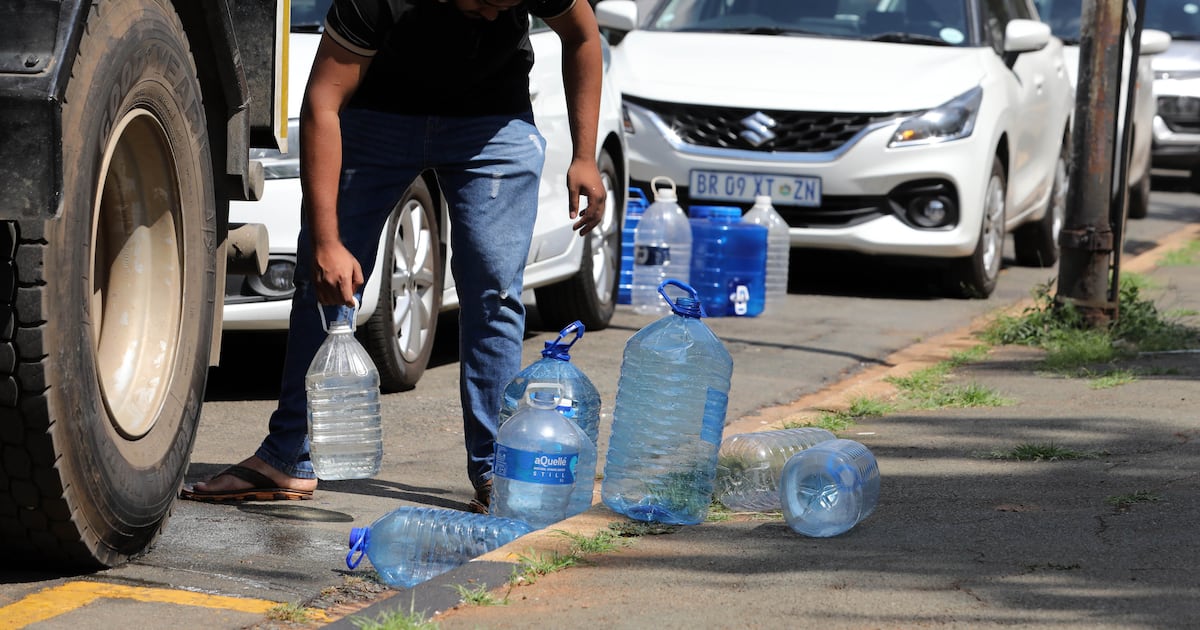
South Africa’s wealthiest and most populous province, Gauteng, has been grappling with severe water outages for several weeks, with Johannesburg bearing the brunt of the crisis. Residents across suburbs and townships have endured multi-day water cuts, severely disrupting households and businesses throughout the region.
The situation has sparked protests across the province. While recent demonstrations have been less violent than the September protests in Westbury and Coronationville—where police deployed rubber bullets, tear gas, and stun grenades against residents protesting weeks-long water outages—they remain a significant concern for authorities.
Government officials have offered various explanations for the ongoing crisis, but two particular narratives warrant closer examination. The most commonly cited reason is that the province’s water consumption levels significantly exceed the national average.
While factually correct, this explanation misrepresents the true nature of the problem. Johannesburg residents do consume more than 300 liters per person daily, surpassing both the national average of 237 liters and the global average of 173 liters. However, direct human consumption is not the primary driver of this crisis.
The real culprit is what water experts call “non-revenue water”—water lost within the municipal system before reaching consumers. A staggering 46% of Johannesburg’s water never reaches its intended destination. Physical losses through leaks and aging infrastructure account for approximately 33-35% of this water, while commercial losses from illegal connections, meter inaccuracies, and theft make up the remainder.
Infrastructure degradation is evident in the more than 4,500 pipe bursts occurring monthly across the city, resulting in weekly water losses of approximately 575 megalitres. These losses translate to approximately R7 billion in annual revenue losses, severely limiting the municipality’s ability to maintain and improve water infrastructure.
The second official explanation centers on a recent explosion of a motor connected to a pump at the Rand Water-managed Zuikerbosch water treatment plant. This incident temporarily reduced water supply by 1,800 megalitres daily, though 1,400 megalitres were recovered within 24 hours. The explosion affected reservoirs within the Palmiet, Eikenhof, and Mapleton systems.
Water sector experts note that municipalities should have proper water governance systems to mitigate such disruptions. When unplanned maintenance occurs, municipalities are expected to utilize their reserves to ensure continued supply. For years, the water sector has advocated for municipalities to maintain storage reservoirs capable of providing 48 to 72 hours of water supply—a standard adopted in water and sanitation bylaws across the country.
This requirement aims to enhance resilience against infrastructure failures, maintenance shutdowns, and high demand periods. However, failing infrastructure resulting from poor water governance has prevented most municipalities from meeting this standard.
Similarly, municipal water and sanitation bylaws require commercial buildings, hospitals, and public institutions to maintain on-site storage tanks with a minimum 48-hour operational capacity during disruptions. This standard is also frequently unmet, resulting in severe impacts on critical public services during outages.
Water management experts argue that the explanations offered by politicians and government officials amount to deflection. By focusing on direct human consumption and the Zuikerbosch plant explosion, officials appear to be shifting blame to residents and Rand Water. The reality, according to industry analysts, is that years of poor water governance, inadequate financial management, and unchecked non-revenue water losses have pushed the province to the brink.
The crisis facing Gauteng residents is fundamentally a governance issue rather than a supply problem with the bulk water utility. As the situation continues to unfold, calls are growing for transparent accountability and sustainable solutions to the province’s water management challenges.
Fact Checker
Verify the accuracy of this article using The Disinformation Commission analysis and real-time sources.

12 Comments
The reports of a disinformation campaign around the Gauteng water crisis are deeply concerning. Transparent and accountable governance is crucial in addressing such critical public issues. I hope the relevant authorities conduct a thorough investigation and implement sustainable solutions to restore reliable water access.
The Gauteng water crisis is a complex issue that requires a nuanced understanding. While the government’s explanations may contain elements of truth, the reports of a disinformation campaign are concerning. I hope the authorities prioritize fact-finding and engage with the community to develop sustainable solutions.
This water crisis in Gauteng is deeply troubling. While individual water consumption habits are relevant, the infrastructure and governance issues appear to be the primary drivers of the problem. I hope the authorities take a transparent and accountable approach to address the root causes and restore reliable water access for all residents.
Agreed. Blaming the public alone is an oversimplification. The government must take responsibility for the inadequate water management and invest in upgrading the aging infrastructure. Collaborative problem-solving with the community is essential for finding lasting solutions.
The Gauteng water crisis is a complex issue that requires a multifaceted approach. While individual water consumption habits are relevant, the systemic infrastructure and governance problems seem to be the root causes that need urgent attention. I hope the authorities take a holistic view to find lasting solutions.
Well said. Scapegoating the public’s water usage alone is an oversimplification. The authorities must take responsibility for the inadequate water management and invest in upgrading the aging infrastructure to ensure reliable supply for all residents.
This water crisis highlights the need for better long-term planning and investment in water infrastructure across South Africa. While individual water consumption habits are relevant, the primary responsibility lies with the government to ensure adequate supply and equitable distribution. I hope this crisis serves as a wake-up call for comprehensive water management reforms.
Exactly. The government must take a proactive, holistic approach to address the underlying systemic issues. Passing the blame onto the public will only exacerbate the problem. Decisive action and transparent communication are needed to build trust and find lasting solutions.
It’s troubling to hear about the disinformation campaign surrounding this water crisis. Providing accurate, fact-based information to the public should be a top priority for the authorities. Addressing the infrastructure challenges and ensuring equitable water access is critical.
Absolutely. Spreading misinformation will only undermine efforts to resolve this crisis. Transparent communication and collaborative problem-solving between the government and the community are essential.
This is a concerning situation. While high water consumption levels may be a contributing factor, the infrastructure and governance issues behind the Gauteng water crisis need to be thoroughly addressed. Transparency and accountability from local authorities will be crucial to resolving this problem.
I agree. The government’s explanations seem to oversimplify the problem. A more comprehensive investigation into the root causes is needed to find sustainable solutions for the residents of Gauteng.