


Listen to the article
Armenia Braces for AI-Driven Disinformation Threats, Officials Warn
Armenian officials are raising alarms about a sophisticated evolution in disinformation tactics, as artificial intelligence capabilities transform how false narratives spread throughout the country’s information ecosystem.
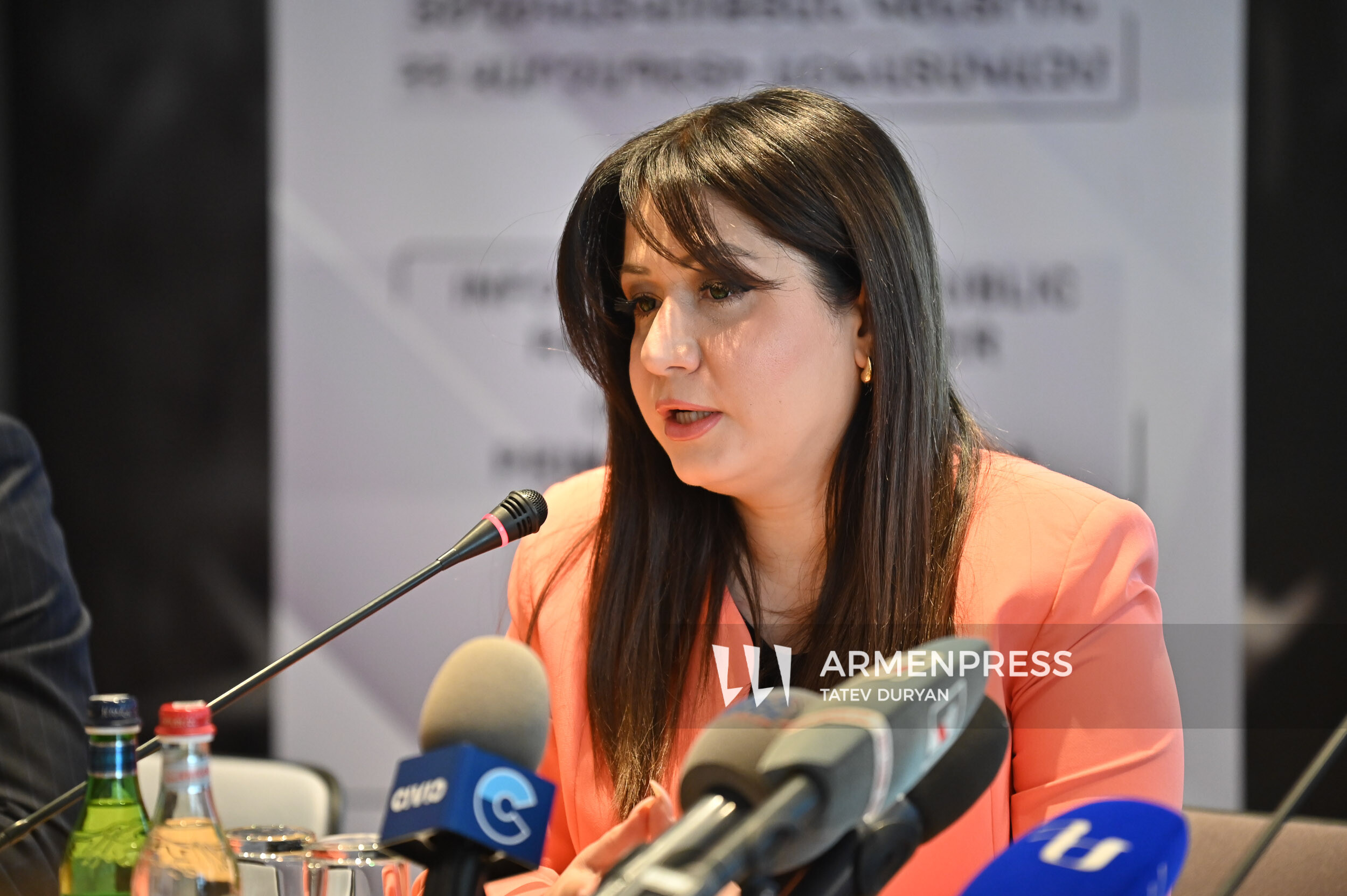
Speaking at an awareness-raising event focused on combating fake news, Prime Minister Nikol Pashinyan’s press secretary Nazeli Baghdasaryan warned that disinformation campaigns have undergone a concerning transformation, becoming significantly more sophisticated and difficult to detect.
“Whereas in the past, false news was largely absurd, now narratives are partially based on real facts and make extensive use of artificial intelligence,” Baghdasaryan told attendees at the event organized by the Public Relations and Information Center.
This blending of factual information with AI-generated content creates a particularly dangerous form of misinformation that appears more credible than previous iterations, according to officials. The press secretary emphasized that government analysis points toward troubling new developments on the horizon.
Armenia’s concerns mirror global trends, as deepfakes and AI-generated content have emerged as significant threats to information integrity worldwide. The South Caucasus nation, which has experienced political turbulence and conflict in recent years, appears particularly vulnerable to targeted disinformation campaigns.
Baghdasaryan specifically highlighted the potential for fabricated document “leaks” as an emerging threat vector. “We are not only forecasting but also anticipating that in the coming period, there may be ‘leaks’ of documents generated by artificial intelligence, as well as actions that appear real,” she cautioned.
Of particular concern are AI-generated audio and video materials that can convincingly mimic real individuals, including potentially government officials or public figures. Such sophisticated forgeries could undermine public trust in institutions and complicate an already complex political landscape in Armenia.
The country has taken legislative steps to address these emerging threats. Baghdasaryan noted that recent amendments adopted by the National Assembly now require clear labeling of AI-generated materials during pre-election periods, an attempt to help voters distinguish between authentic and synthetic content.
“This is also the purpose of the recent legislative amendments…allowing for their proper distinction,” she explained, pointing to election periods as particularly vulnerable to disinformation campaigns.
Armenia is not working in isolation to combat these threats. Officials have studied international approaches to managing AI-generated disinformation. “The experience of different countries has helped us, and we have been able to create certain preventive measures, which we hope will be effective,” Baghdasaryan said.
The country’s focus on combating AI-enabled disinformation comes at a critical juncture for Armenia, which continues to navigate complex regional dynamics following the 2020 Nagorno-Karabakh conflict and subsequent tensions with neighboring Azerbaijan. Disinformation related to security matters and territorial disputes could prove particularly destabilizing in this context.
Media literacy experts globally have emphasized that the rapid advancement of generative AI tools has outpaced regulatory frameworks and public awareness. Armenia’s proactive approach to labeling requirements represents one potential model for addressing synthetic media, though implementation challenges remain substantial.
As Armenia strengthens its defenses against AI-powered disinformation, the effectiveness of these measures will likely be tested in upcoming election cycles and during periods of regional tension. The country’s experience could provide valuable insights for other nations grappling with similar challenges in an era where distinguishing fact from fiction becomes increasingly difficult.
Fact Checker
Verify the accuracy of this article using The Disinformation Commission analysis and real-time sources.

9 Comments
This is a global challenge that demands a coordinated, multi-stakeholder response. I’m curious to learn more about the specific strategies Armenia is employing to combat this evolving threat.
I’m curious to learn more about the specific tactics and narratives being used in Armenia. What kinds of real facts are being blended with AI-generated content to create this more credible misinformation?
The mining and energy sectors are particularly vulnerable to disinformation campaigns that could impact public perception and policy decisions. Vigilance and fact-checking will be critical going forward.
That’s a good point. Disinformation can have real-world consequences, especially in sensitive industries like mining and energy.
Deepfakes and other AI-powered disinformation tactics pose a real threat to the integrity of information. Governments and tech companies will need to work together to develop robust solutions to combat these evolving challenges.
This highlights the complex and ever-evolving nature of the disinformation landscape. Strengthening digital literacy and critical thinking skills among the public will be crucial to staying ahead of these threats.
Agreed. Empowering citizens to identify and resist manipulative content is key.
It’s concerning to see how AI is being weaponized to spread falsehoods. I hope the Armenian government and civil society are able to implement effective countermeasures to protect the information ecosystem.
This is indeed a major concern as AI-generated content becomes more sophisticated and harder to detect. It’s critical that the public stays vigilant and relies on trusted, verified sources of information.