


Listen to the article
AI-Driven Disinformation Campaign Promoting Alberta Separatism Uncovered
A network of approximately 20 YouTube accounts spreading false information about Alberta separating to join the United States has amassed over 40 million views in the past year, according to researchers who have dubbed the phenomenon “slopaganda.”
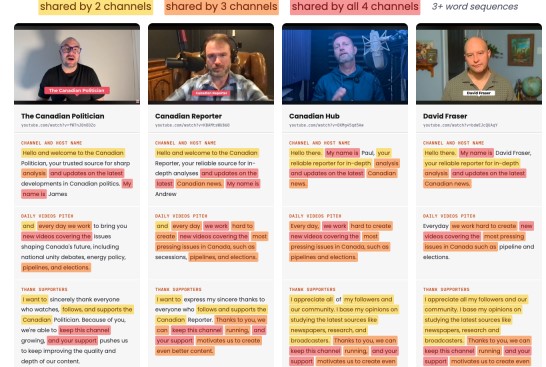
The Media Ecosystem Observatory (MEO), a collaborative research initiative between McGill and Toronto universities, uncovered the coordinated campaign of AI-generated content designed to manipulate public opinion on Alberta’s political future. The MEO, which serves as the coordinating body of the Canadian Digital Media Research Network, released these findings in a report titled “Slopaganda: The Inauthentic YouTube Network Selling Secession to Albertans.”
“The videos we studied are highly coordinated, and they share content in a lot of different ways,” explained Chris Ross, a senior analyst and researcher who contributed to the report. “They cite fake polls, they present political deals as done when we are nowhere near as close to them, even being healthily discussed in the public space before a referendum. So they’re just slop.”
The sophisticated disinformation operation employs several deceptive tactics, including repurposing old news clips stripped of their original context. The creators deliberately blur out branding, signage, and contextual information, then overlay AI-generated scripts that repeat similar narratives across multiple channels.
While the campaign has been active for over a year, researchers noted a significant increase in content volume and viewership in recent months. Despite the focus on Alberta politics, Ross indicated that the network does not appear to be operated by actual Albertans or legitimate separatist groups.
“There’s this pattern on YouTube of this sloppaganda network on tons of different political issues, and I think part of the reason is that it’s easy to make money and drive engagement on it,” Ross said. “So that’s why it’s so important to get this information out there, because we want real Albertans talking about real Albertan issues. We don’t want people from outside Alberta exploiting it for money just to drive further division.”
The research highlights growing concerns about the intersection of artificial intelligence and political disinformation in Canada. While separatist sentiment has historically existed in Alberta – particularly during periods of tension with the federal government over energy policy and equalization payments – this campaign appears designed to artificially amplify division rather than reflect genuine political discourse.
The researchers were unable to definitively identify who is behind the network, prompting calls for greater transparency from social media platforms. The report urges YouTube and other platforms to disclose information about flagged accounts spreading AI-generated political misinformation.
“It’s a really interesting problem because there’s such a demand for this content… 40 million views on the videos we researched,” Ross noted. “But beyond that, there is so much AI slop out there. And there’s just content that uses AI that is genuinely interesting and I myself watch, but I think when it has this political angle, it deserves more scrutiny.”
The report comes amid growing global concern about the role of AI in creating and disseminating misinformation. Recent advances in generative AI have made it increasingly difficult for average users to distinguish between authentic and synthetic content, creating fertile ground for coordinated influence operations.
“It’s clear technology is moving fast, and I think companies just need to work really hard to catch up, let alone the government, with the regulation,” Ross added.
The MEO report includes several specific recommendations for YouTube, including providing researchers with data on whether flagged accounts use paid promotion to boost their reach, revealing geographic analytics to determine audience location, and extending community notes features to YouTube to help combat misinformation.
CityNews has contacted YouTube for comment regarding the findings. The complete report is available on the MEO website.
Fact Checker
Verify the accuracy of this article using The Disinformation Commission analysis and real-time sources.

12 Comments
As an Albertan, I’m concerned about the potential impact of this disinformation campaign on our political discourse. It’s crucial that we rely on trusted, fact-based sources of information when making decisions about our province’s future.
The report’s findings highlight the need for stronger regulations and oversight when it comes to the use of AI in political and social media contexts. We must ensure these technologies are not exploited to manipulate public opinion.
This investigation into ‘slopaganda’ is a valuable contribution to our understanding of the evolving landscape of digital misinformation. Continued research and public awareness efforts are essential to combat these deceptive practices.
The scale of this campaign, with over 40 million views, is quite alarming. It underscores the need for robust regulations and oversight to prevent the misuse of AI for political manipulation.
Agreed. Addressing these AI-driven disinformation campaigns should be a priority for policymakers and tech companies to safeguard democratic processes.
I’m curious to learn more about the specific tactics and networks behind this ‘slopaganda’ campaign. It’s important to expose these kinds of deceptive practices that undermine democratic discourse.
Agreed. Transparency and fact-checking are crucial to counter the spread of misinformation, especially when it’s being amplified through AI-generated content.
Interesting report on the use of AI to spread disinformation and promote separatist views in Alberta. It’s concerning to see how sophisticated these coordinated campaigns can be in manipulating public opinion through fake polls and premature claims.
The concept of ‘slopaganda’ is a concerning new term. It’s a stark reminder that we must remain vigilant against the spread of false and misleading information, especially when it’s amplified through sophisticated technological means.
This report highlights the ongoing challenge of combating AI-driven disinformation. While the technology can be used to deceive, I hope researchers and policymakers can find ways to harness AI to enhance media literacy and protect the integrity of public discourse.
I appreciate the researchers’ efforts to shine a light on this issue. Exposing the tactics and networks behind these coordinated disinformation campaigns is an important step in combating the problem.
Yes, transparency and accountability are crucial in addressing the rise of AI-generated ‘slopaganda’. This report sets an important precedent for future research and policymaking in this area.