


Listen to the article
Turkey’s Controversial Disinformation Law Continues to Target Journalists
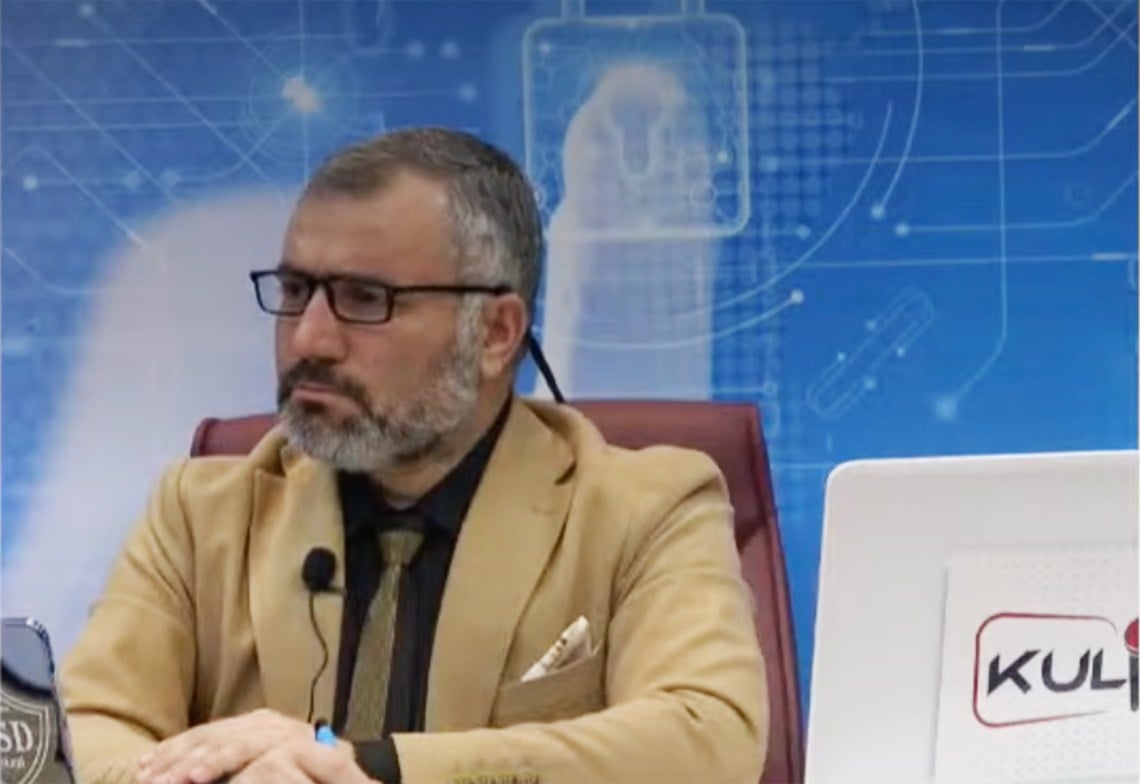
Turkish authorities are facing renewed criticism over the application of the country’s controversial disinformation law after the arrest of Mehmet Yetim, editor-in-chief of local broadcaster Kulis TV. The Committee to Protect Journalists (CPJ) on Tuesday called for his immediate release, highlighting concerns about the law’s improper use against media professionals.
Yetim was detained during a dawn raid in the southeastern province of Şanlıurfa on April 18 and formally arrested the following day on charges of “publicly spreading disinformation.” The charges stem from a social media post about a reported knife attack at a local school, which Yetim later deleted and corrected after learning no injuries had occurred.
Despite his swift action to amend the inaccurate information, screenshots of the original post had already circulated online, leading to his arrest, according to his lawyer, İbrahim Halil Aydın.
“Turkey keeps arresting journalists over claims of spreading disinformation, which, even if they were true, wouldn’t be considered a crime unless they caused concern, fear, or panic among the public,” said Özgür Öğret, CPJ’s Turkey representative. “Journalist Mehmet Yetim, who corrected his faulty reporting, didn’t cause any of those things.”
The incident that sparked Yetim’s post occurred on April 17 at Dumlupınar Middle School in Şanlıurfa, when an individual entered the premises carrying a knife. Public sensitivity was already heightened following a recent school shooting in the same province that injured 16 people and another deadly school attack in neighboring Kahramanmaraş.
In his initial report, Yetim claimed a parent had attacked a teacher and that a deputy principal had been injured. He later told prosecutors he had shared information that was already circulating online and removed the post once he learned the accurate details, emphasizing he had no intention to mislead.
Yetim’s lawyer has appealed the arrest, noting that even with a maximum sentence of three years, his client would likely avoid prison time due to parole provisions for first-time offenders.
In a separate but related case, journalist Turgay Kılıç was briefly detained on April 17 over social media posts concerning the school attacks in Şanlıurfa and Kahramanmaraş. According to soL Haber news website, Kılıç was later released under judicial supervision after denying the accusations in his statement to prosecutors in İzmir.
The Journalists’ Union of Turkey criticized Kılıç’s detention, stating that Article 217/A of the Turkish Penal Code—commonly known as the disinformation law—continues to pose a significant threat to press freedom and freedom of expression in the country.
The controversial law, introduced in late 2022, mandates prison sentences of one to three years for individuals found guilty of publicly disseminating false information in a way that causes concern, fear, or panic. While government officials initially promised the legislation would not target journalists, it has since become one of the most frequently used legal tools against media workers.
Press freedom advocates and opposition politicians have condemned Yetim’s arrest as an attempt to intimidate journalists in a country already under international scrutiny for its media restrictions.
Turkey’s record on press freedom continues to deteriorate. According to the Expression Interrupted platform, 27 journalists are currently imprisoned in the country. In the 2025 World Press Freedom Index published by Reporters Without Borders (RSF), Turkey ranks a dismal 159th out of 180 countries.
The CPJ reports that it sought comment from the Şanlıurfa Chief Public Prosecutor’s Office regarding Yetim’s case but received no response.
The increasing use of the disinformation law against journalists has raised alarms among international organizations monitoring press freedom, as Turkey continues to tighten controls on media despite persistent criticism from human rights groups and Western governments.
Fact Checker
Verify the accuracy of this article using The Disinformation Commission analysis and real-time sources.

10 Comments
Journalists must be able to report the news without fear of retribution, even if occasional mistakes are made. Turkey’s crackdown on the media under this disinformation law is deeply troubling.
Absolutely. Responsible journalism, including prompt corrections, should be protected, not criminalized. This law seems designed to stifle media scrutiny of the government.
It’s disheartening to see Turkey continuing to restrict press freedoms under the guise of fighting ‘disinformation’. Constructive criticism and correction are better approaches than criminalizing journalism.
I share your concern. Journalists should not face legal jeopardy for promptly correcting minor inaccuracies. This law seems designed to intimidate the media rather than uphold truth.
This law seems overly broad and open to abuse against journalists. Restricting the press under the guise of fighting ‘disinformation’ is concerning for media freedom and transparency.
I agree, the authorities should not be using this law to target and punish journalists who are simply trying to report the news, even if they make occasional mistakes.
Journalism plays a crucial role in holding governments accountable. While false information should be corrected, arresting reporters over minor errors is an alarming overreach.
Precisely. The priority should be ensuring accurate information reaches the public, not punishing journalists who make reasonable efforts to do so.
This disinformation law appears to be a pretext for silencing critical voices in the media. Turkey should respect the vital role of independent journalism, even when reporting is imperfect.
Agreed. Arresting a journalist for quickly correcting inaccurate information is a worrying abuse of power. The authorities should focus on combating real disinformation, not penalizing the press.