


Listen to the article
Information Minister Muhammad Hasan Mahmud has called upon UNESCO to extend its support in combating the growing threat of misinformation and disinformation in Bangladesh’s media landscape.
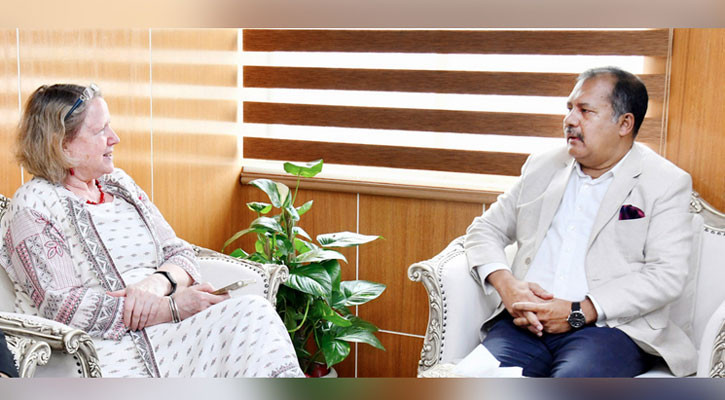
The minister made this appeal during a meeting with UNESCO Director General Audrey Azoulay at the organization’s headquarters in Paris on Thursday. Their discussion centered on strengthening collaboration between Bangladesh and UNESCO across various sectors, with particular emphasis on media literacy and information verification.
“The spread of false information poses a significant challenge to our democracy and social harmony,” Mahmud said during the meeting. “We need UNESCO’s expertise and resources to build capacity among our journalists and create a more discerning public that can identify reliable news sources.”
The minister highlighted how misinformation has become increasingly sophisticated in Bangladesh, spreading rapidly through social media platforms and sometimes infiltrating mainstream news outlets. This phenomenon has occasionally fueled social tensions and undermined public trust in legitimate information channels.
Bangladesh has witnessed several incidents in recent years where fabricated news stories triggered public unrest. In some cases, digitally manipulated images and videos circulated widely before fact-checkers could intervene, demonstrating the urgent need for more robust verification mechanisms.
Azoulay reportedly expressed UNESCO’s readiness to support Bangladesh’s efforts through training programs, technical assistance, and educational initiatives. The organization has been at the forefront of global efforts to promote media literacy, having launched similar programs in various countries facing comparable challenges.
“UNESCO recognizes that misinformation threatens not just media integrity but also democratic processes and social cohesion,” a source close to the discussions revealed. “The organization sees Bangladesh as an important partner in South Asia where successful intervention models could be developed.”
Beyond media concerns, the meeting also covered Bangladesh’s ongoing work to preserve its cultural heritage and promote sustainable development. Minister Mahmud briefed Azoulay on the country’s progress in implementing various UNESCO programs, including efforts to safeguard the Sundarbans, a UNESCO World Heritage site and the world’s largest mangrove forest.
The Sundarbans, which spans the southwestern part of Bangladesh and extends into neighboring India, faces significant environmental threats from climate change and industrial development. The minister emphasized Bangladesh’s commitment to balancing economic growth with environmental protection in this ecologically sensitive region.
The discussions also touched on educational initiatives, with Mahmud outlining Bangladesh’s achievements in expanding access to education, particularly for girls and marginalized communities. He requested UNESCO’s continued support in improving educational quality and developing skills-based curricula that address the needs of Bangladesh’s evolving job market.
This meeting comes at a time when Bangladesh is preparing for its next general election, a period often characterized by intensified information warfare and propaganda. Media experts in Dhaka have noted that electoral periods typically see a surge in misleading content designed to influence voter behavior.
“UNESCO’s involvement could be particularly timely given the electoral context,” said Dr. Rahman Ahmed, a media studies professor at Dhaka University. “Training journalists in fact-checking and promoting critical thinking among citizens could help safeguard the democratic process.”
The minister’s European tour also includes visits to several other countries where he is expected to discuss bilateral cooperation in media, culture, and information technology sectors.
Following the meeting, the ministry released a statement describing the talks as “productive and forward-looking,” adding that specific collaborative projects would be announced in the coming weeks. These initiatives are expected to include journalist training workshops, school-based media literacy programs, and technical support for regulatory frameworks.
Media watchdog organizations in Bangladesh have welcomed the potential UNESCO partnership, noting that international expertise could complement local efforts to promote responsible journalism and information hygiene.
Fact Checker
Verify the accuracy of this article using The Disinformation Commission analysis and real-time sources.

12 Comments
Misinformation can have serious societal consequences, so it’s encouraging to see the Bangladeshi government taking proactive steps to address this issue with UNESCO’s expertise.
Developing media literacy and reliable verification processes are crucial in the digital age. This partnership could serve as a model for other countries grappling with similar challenges.
Kudos to the Bangladeshi government for recognizing the need to combat misinformation and seeking UNESCO’s support. Media literacy is a powerful tool in the fight against false narratives.
I hope this collaboration leads to tangible results in strengthening the public’s ability to identify and resist the spread of misinformation. Safeguarding democratic institutions is a shared global responsibility.
Building capacity among journalists and creating a more discerning public are essential steps in tackling the threat of misinformation. Bangladesh’s outreach to UNESCO is a promising initiative.
Widespread disinformation can undermine public trust in legitimate news sources. This partnership is a step in the right direction to empower citizens and maintain the integrity of the media landscape.
The spread of false information through social media is a global challenge. Bangladesh’s approach to partnering with UNESCO to build capacity among journalists and the public is commendable.
Maintaining public trust in legitimate information channels is vital for democracy. I hope this collaboration leads to tangible results in combating sophisticated disinformation tactics.
Combating misinformation is crucial for a healthy media landscape and informed citizenry. It’s good to see the Bangladeshi government seeking UNESCO’s support on this important issue.
Strengthening media literacy and verification capabilities can go a long way in empowering the public to identify reliable news sources. A collaborative effort between the government and UNESCO is a step in the right direction.
Addressing the challenge of misinformation requires a multi-faceted approach. Bangladesh’s decision to collaborate with UNESCO on media literacy and information verification is commendable.
Nurturing a well-informed and critical-thinking public is crucial in the fight against false narratives. I hope this partnership yields tangible results that can be replicated elsewhere.