


Listen to the article
In a fiery post on his Truth Social platform, former President Donald Trump launched a pointed criticism of the Supreme Court, claiming its three liberal justices “ALWAYS vote as a group” while lamenting that Republican-appointed justices fail to maintain similar solidarity.
Trump’s frustration comes amid his increasingly contentious relationship with the conservative-majority court, which has ruled against several of his key policies since his return to the White House. His Wednesday post specifically targeted what he perceives as a bloc-voting pattern among the court’s liberal wing.
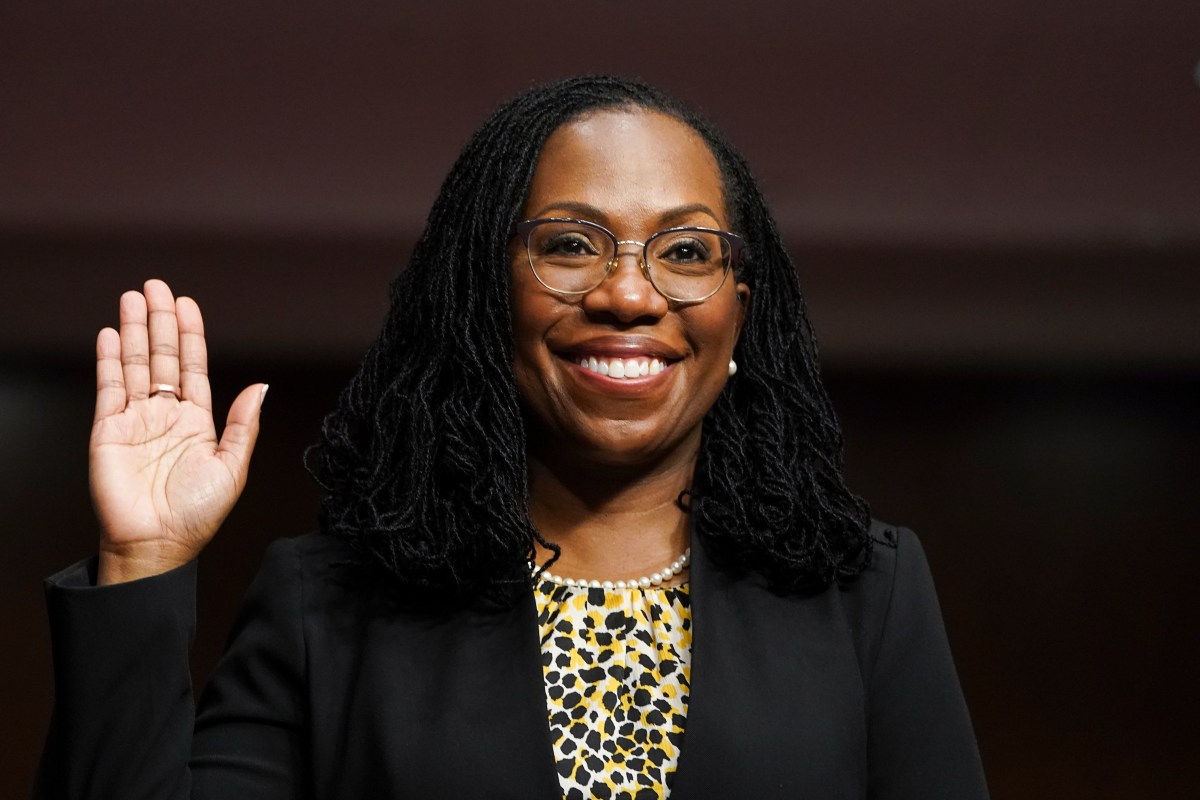
“How can the Democrats not like how the U.S. Supreme Court votes. The Democrat Justices stick together like glue, NEVER failing to wander from the warped and perverse policies, ideas, and cases put before them,” Trump wrote. He specifically singled out Justice Ketanji Brown Jackson with a disparaging reference to her intellect and appointment by President Biden.
Trump contrasted this alleged liberal unity with what he sees as fractures among conservative justices, accusing them of giving “Democrats win after win.” He specifically referenced a recent ruling against his tariff policy that cost “$159 Billion” and expressed frustration over questions concerning birthright citizenship, a constitutional principle he has repeatedly challenged.
The former president’s claims, however, do not align with the court’s actual voting record. While the Supreme Court’s liberal wing – comprising Justices Elena Kagan, Sonia Sotomayor, and Ketanji Brown Jackson – does frequently vote together, their unity is far from absolute.
In March, Kagan and Sotomayor broke with Jackson in a significant case involving Colorado’s ban on conversion therapy for minors. The two senior liberal justices joined the conservative majority in ruling for a challenge to the law, while Jackson stood alone in dissent, arguing that states have traditionally regulated medical care without federal interference.
Another notable instance occurred in January, when Justice Kagan separated from her liberal colleagues in Bost v. Illinois State Board of Elections. The case involved a Republican challenge to Illinois law permitting the counting of mail ballots arriving after Election Day. Kagan joined a concurring opinion authored by conservative Justice Amy Coney Barrett, demonstrating an independent judicial approach that contradicts Trump’s characterization.
A 2022 Harvard Law Review study provides further context, showing that while liberal justices do frequently agree with each other, their voting alignment is not unanimous. Sotomayor and Kagan agreed in 93 percent of cases, while Sotomayor and Jackson voted together nearly 88 percent of the time. Kagan and Jackson showed the lowest rate of agreement among the liberal justices at about 84 percent.
Trump’s frustration with the Supreme Court stems partly from its February ruling striking down his sweeping tariff policy, a decision in which all three liberal justices did indeed vote together. This ruling represented a significant setback to his economic agenda, though it was ultimately determined by the votes of conservative justices who joined the majority opinion.
The Supreme Court currently maintains a 6-3 conservative majority, with Chief Justice John Roberts and Justices Samuel Alito, Clarence Thomas, Neil Gorsuch, Brett Kavanaugh, and Amy Coney Barrett comprising the court’s right wing. Three of these justices – Gorsuch, Kavanaugh, and Barrett – were appointed by Trump during his first term.
Trump’s complaints highlight the complicated relationship between presidents and their judicial appointees, who often demonstrate independence once confirmed to lifetime positions on the bench. While Supreme Court justices are frequently categorized along ideological lines, their voting patterns reveal nuances that defy simplistic characterizations of bloc voting.
The White House has not responded to requests for comment on Trump’s assertions, which fact-checkers have labeled false based on the voting record of the Supreme Court’s liberal justices.
Fact Checker
Verify the accuracy of this article using The Disinformation Commission analysis and real-time sources.

7 Comments
While the Supreme Court’s rulings can certainly be politically charged, I’m not sure it’s accurate to characterize the liberal justices as always voting in lockstep. Each judge likely considers the nuances of each case independently. Oversimplifying their decision-making process seems unproductive.
Interesting to see the former president’s take on the Supreme Court’s voting patterns. I wonder if the data backs up his claims of a consistent liberal voting bloc versus fractures on the conservative side. It would be helpful to look at the court’s voting records in detail to get a clearer picture.
It’s a complex issue, and I’m not sure the former president’s characterization tells the whole story. The Supreme Court’s rulings can have far-reaching consequences, so it’s important to evaluate them based on the merits of the legal reasoning, not partisan political considerations.
I appreciate the former president’s passion, but I’m not sure his assessment of the Supreme Court’s voting patterns is accurate or fair. The justices should be evaluated based on the merits of their legal reasoning, not partisan political considerations.
While the former president’s comments are certainly attention-grabbing, I think it’s important to approach the Supreme Court’s work with nuance and objectivity. Their role is to interpret the law, not to advance any particular political agenda, regardless of the justices’ personal views.
The Supreme Court’s role is to interpret the Constitution, not to advance any political agenda. It’s concerning to see the former president making such pointed attacks on the court’s integrity. We should hope the justices, regardless of ideology, remain impartial and focused on the law.
The Supreme Court’s rulings can have major impacts on the country, so it’s understandable that they would be closely scrutinized. However, characterizing the liberal justices as a monolithic voting bloc seems like an oversimplification. I’d be curious to see a more nuanced analysis of their decision-making process.