


Listen to the article
Armenian authorities have sounded the alarm over a significant uptick in disinformation campaigns targeting the nation, with government officials revealing that such operations have intensified dramatically in recent weeks.
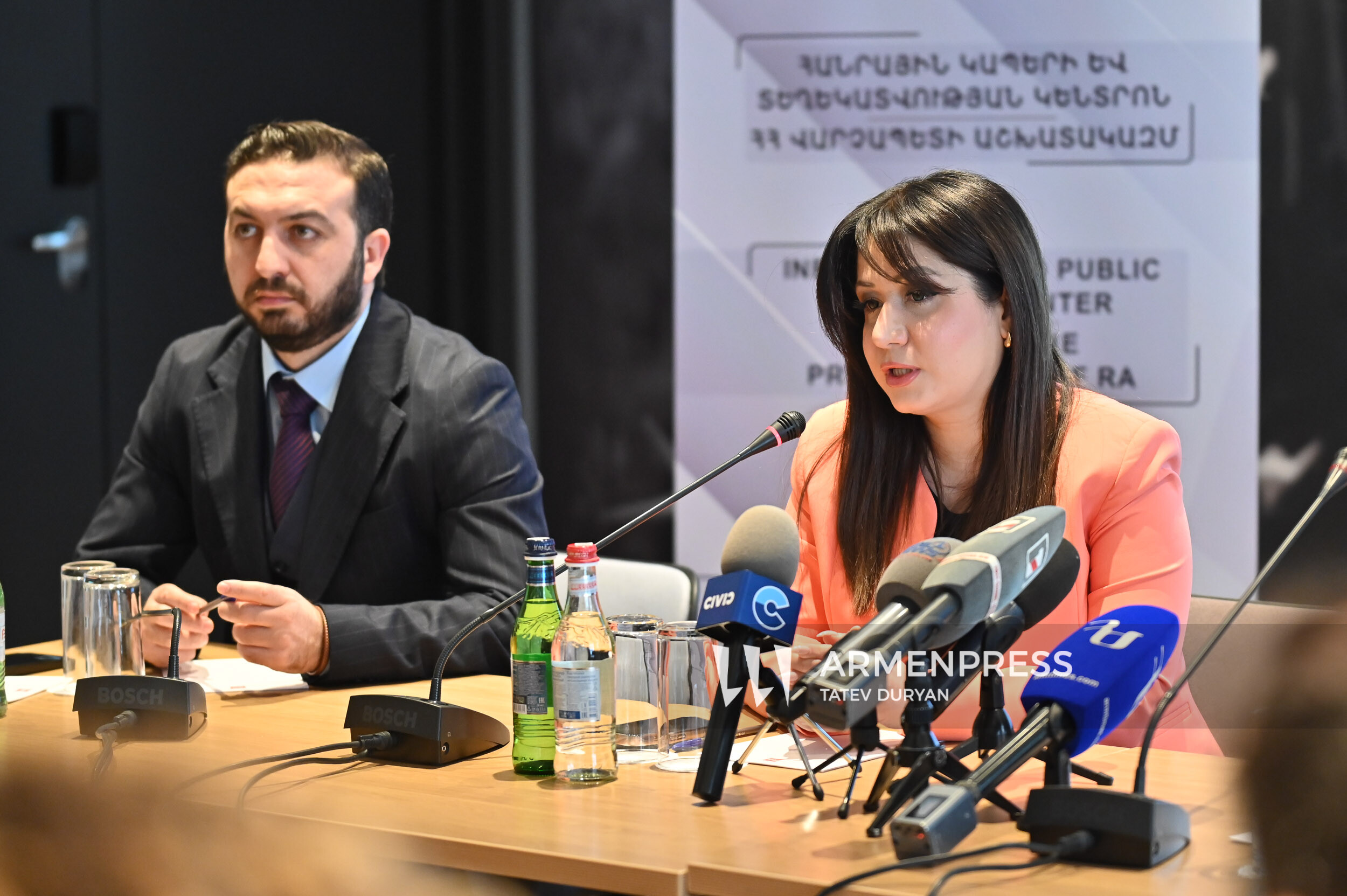
Speaking at an event organized by the Public Relations and Information Center, Prime Minister Nikol Pashinyan’s spokesperson, Nazeli Baghdasaryan, presented troubling statistics that highlight the growing scale of the problem. Government studies show that while approximately 72 cases of disinformation were documented over the previous 11 months, an additional 42 cases were recorded in just a single month between March 15 and April 15, 2026.
“This shows that 2-3 or more disinformation campaigns are being recorded daily,” Baghdasaryan explained, noting that these campaigns have evolved in sophistication. “Whereas previously disinformation was mainly based on entirely false news, the manipulative news now circulating often includes some facts connected to reality. A real fact is taken, false information is added, and a complete narrative is created that can mislead the public.”
The timing of this surge is particularly concerning to officials, who note that disinformation operations tend to escalate during pre-election periods—a pattern observed not only in Armenia but globally. These campaigns appear strategically designed to undermine democratic processes.
“Their objective is the targeting of our democratic values; public trust, including reducing trust in the upcoming elections, to create the impression that the election results are predetermined,” Baghdasaryan stated.
According to the spokesperson, Armenia has been confronting hybrid threats since 2021, but the recent intensification represents a significant challenge for the government’s information security apparatus. She emphasized that the ultimate targets of these operations are not individuals or political parties but state institutions and public confidence in them.
“The target of disinformation campaigns is not any official or political party; the target is the state and public trust. In an environment of massive information noise, it is very difficult to distinguish truth from falsehood, and this is the most effective way to undermine public confidence,” she observed.
The information environment in Armenia faces additional complications due to what officials describe as deliberate information overload tactics. When citizens are bombarded with conflicting information, legitimate news and government communications can be drowned out.
“When a person is confronted with false information every day, they become detached from reality, and as a result, accurate and objective information gradually diminishes amid the public noise,” Baghdasaryan said.
This evolving threat landscape has made the work of government communicators increasingly challenging. Press services, spokespersons, and information officers across various state agencies are finding themselves on the front lines of an information battle with significant implications for national security and democratic stability.
The government has recognized that addressing these threats requires collaboration beyond state structures. During her presentation, Baghdasaryan called for a whole-of-society approach to building resilience against disinformation.
“The state cannot act alone in the fight against hybrid warfare. Resilience can be achieved through active collaboration, involving non-governmental organizations, media platforms, and independent investigators,” she noted, expressing gratitude to those already engaged in this effort.
The government has indicated its readiness for ongoing cooperation with civil society actors and media organizations to develop more robust mechanisms for identifying and countering disinformation. Officials see this multi-stakeholder approach as essential to preserving the integrity of public discourse in an increasingly complex information environment, especially as Armenia navigates upcoming electoral processes and regional challenges.
Fact Checker
Verify the accuracy of this article using The Disinformation Commission analysis and real-time sources.

10 Comments
This is a worrying development for Armenia. Disinformation can severely undermine public trust and social cohesion. The government’s proactive stance in sounding the alarm is a positive first step.
Absolutely. Transparency and consistent messaging from officials will be crucial to counter these manipulative narratives and maintain public confidence.
The evolving tactics used in these disinformation campaigns, blending facts with falsehoods, make them even more insidious and challenging to counter. Armenia will need to be highly vigilant and nimble in its response.
I’m curious to learn more about the specific tactics and sources behind these intensifying disinformation efforts targeting Armenia. Understanding the actors and their motives is crucial to developing an effective counter-strategy.
Agreed, identifying the origins and drivers of these campaigns will be essential. Transparency and thorough investigation will be vital to address this threat.
This is a concerning situation for Armenia. Disinformation campaigns can be extremely damaging, especially when they blend truth and falsehood. It’s important the government remains vigilant and responds effectively to counter these threats.
Agreed. Enhancing public awareness and media literacy is crucial to help citizens identify and resist misleading narratives.
The timing of this disinformation surge is particularly concerning, as the government noted. Addressing this challenge will require a sustained, multi-faceted effort to protect Armenia’s information environment.
The exponential rise in disinformation cases is alarming. The government’s data showing a spike from 72 to 42 cases in just one month highlights the scale of the problem. Tackling this will require a multi-pronged strategy.
Absolutely. Coordinating with tech platforms, fact-checkers, and civil society will be key to curbing the spread of these manipulative narratives.