


Listen to the article
President Trump’s pick for Federal Reserve chair, Kevin Warsh, faces significant challenges in delivering the interest rate cuts Trump has publicly demanded. The path to lower borrowing costs may be more complicated than the administration anticipates.
Warsh’s confirmation prospects improved Friday when U.S. Attorney for Washington, D.C., Jeanine Pirro announced she would drop her investigation into current Fed Chair Jerome Powell regarding testimony about Federal Reserve building renovations. With this obstacle removed, Warsh could potentially take office when Powell’s term concludes on May 15.
However, economic realities may impede Warsh’s ability to implement rate cuts immediately. Rising gas prices, largely due to the ongoing Iran conflict that began in late February, have pushed inflation to a two-year high of 3.3% in March, significantly above the Fed’s 2% target. Traditionally, the Federal Reserve maintains elevated interest rates—currently around 3.6%—to combat inflation pressures.
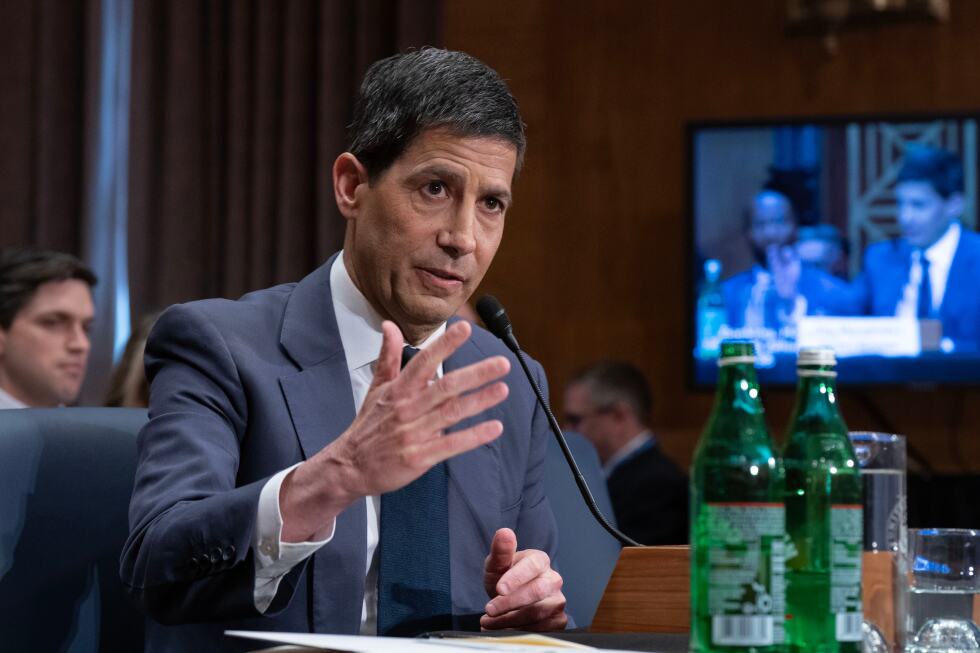
During his Senate confirmation hearing Tuesday, Warsh pledged to maintain independence from White House pressure but provided little insight into his immediate plans for monetary policy. This cautious approach disappointed some analysts who had hoped for clearer signals.
“Warsh’s stated outlook is much more consistent with an extended hold than additional cuts,” noted Aditya Bhave, head of U.S. economics at BofA Securities, in a recent analysis.
President Trump has continued advocating for lower rates, telling Fox Business last week: “When Kevin gets in, I do [expect rates to decline]… interest rates should be much lower.”
The economic landscape presents mixed signals. Earlier this year, several Fed officials expressed concern about slowing job creation, suggesting the current rate might be hampering growth. However, recent data indicates the job market may be stabilizing, with unemployment holding at a relatively low 4.3%, potentially undermining the case for immediate cuts.
Treasury Secretary Scott Bessent seemed to provide political cover for a potential delay in rate cuts, stating last week that if the Fed wanted “to wait for some clarity” before reducing rates, “I understand that.” Wall Street investors currently see little likelihood of a rate reduction until October 2027, according to futures pricing.
Warsh’s influence will also be constrained by the Federal Reserve’s governance structure. As chair, he would be just one of 12 voting members on the rate-setting Federal Open Market Committee, which meets eight times annually. The committee voted 11-1 to maintain current rates in March, with most members expressing reluctance to lower borrowing costs while inflation remains elevated.
Next week’s meeting, likely Powell’s final one as chair, is widely expected to result in no change to rates. Stephen Miran, a Trump appointee who has consistently voted for rate cuts, will be replaced by Warsh. Meanwhile, minutes from the March meeting revealed a faction within the committee that is actually considering the possibility of rate hikes rather than cuts.
“Warsh comes in with essentially none of the gravitas that [former Fed Chair Alan] Greenspan had,” observed Jon Faust, economist at Johns Hopkins and former Powell adviser. “Instead, Warsh comes in with the baggage that Trump has really loaded on him. It’s not Warsh’s fault, but Trump has led to legitimate questions about whether he’ll act independently.”
Some economists suggest that maintaining rates initially would help establish Warsh’s independence. His Senate testimony included acknowledgment that “we have a short window to try to bring inflation back down to where it should be,” language some analysts interpreted as more aligned with rate hikes than cuts.
Before his nomination, Warsh frequently argued that artificial intelligence would accelerate economic efficiency similar to the internet boom, potentially allowing rate cuts without sparking inflation. However, at his confirmation hearing, he tempered this position, adding “we don’t know that, we can’t bank on that.”
“Warsh’s views didn’t have a lot of clarity going in,” said Claudia Sahm, chief economist at New Century Advisers and former Fed economist. “And then he muddied the waters. There were so few specifics.”
As financial markets and economic stakeholders await clarity, the tension between presidential expectations and economic realities continues to shape the outlook for monetary policy under potential Fed Chair Warsh.
Fact Checker
Verify the accuracy of this article using The Disinformation Commission analysis and real-time sources.

14 Comments
Interesting to see the dynamics around the Fed chair nomination. It will be important for the new chair to balance political pressures with sound economic policy. I’m curious to hear Warsh’s views on managing inflation while considering rate cuts.
Yes, it’s a delicate balance. The Fed needs to maintain its independence while also responding to economic realities. Warsh’s approach to that challenge will be closely watched.
The potential for a new Fed chair is an important development, especially given the administration’s push for lower rates. However, as the article notes, the underlying economic factors like inflation may limit Warsh’s ability to cut rates quickly. It will be interesting to see how he handles this dilemma.
Agreed. Warsh will have to demonstrate his independence and sound economic judgment, even if that means disappointing political expectations. Maintaining the Fed’s credibility will be crucial.
The potential for a new Fed chair is an important development, especially given the Trump administration’s push for lower rates. However, the underlying economic factors like inflation may limit Warsh’s ability to cut rates quickly, as the article suggests.
That’s a good point. Warsh will have to balance political considerations with the realities on the ground. It will be interesting to see how he approaches that challenge if confirmed.
The article highlights some of the key challenges Warsh would face as Fed chair, particularly around managing inflation and rate hikes. It will be critical for him to maintain the Fed’s independence while also responding to the administration’s priorities.
Agreed. The Fed chair has to walk a fine line between political pressures and sound economic policymaking. Warsh’s ability to navigate that balance will be closely watched.
The situation with rising inflation and calls for rate cuts highlights the complexities the Fed faces. Warsh will need to navigate these crosscurrents carefully if he takes over. It’s not going to be an easy job.
Absolutely. Keeping inflation in check while boosting economic growth is a tough line to walk. Warsh will have to demonstrate strong leadership and policymaking skills.
The article highlights the complex challenges the next Fed chair will face, particularly around managing inflation and rate policy. Warsh’s confirmation process and early actions will be closely scrutinized as he navigates these crosscurrents.
You’re right, it’s a delicate balance. Warsh will need to show a commitment to the Fed’s dual mandate of price stability and full employment, even if that means resisting political pressure for rate cuts.
Warsh’s potential nomination comes at a critical time for the Fed, with inflation concerns and calls for rate cuts. It will be interesting to see how he approaches these issues and whether he can find a way to satisfy both economic realities and political demands.
Absolutely. The Fed chair has to be able to make tough decisions based on data and analysis, not just political preferences. Warsh will need to demonstrate that kind of independence and leadership.