


Listen to the article
A firefighter driving a truck that crashed into an Air Canada Express jet at New York’s LaGuardia Airport heard an air traffic controller’s urgent warning to “stop, stop, stop” but didn’t realize the command was directed at his vehicle, according to a preliminary report released Thursday by the National Transportation Safety Board.
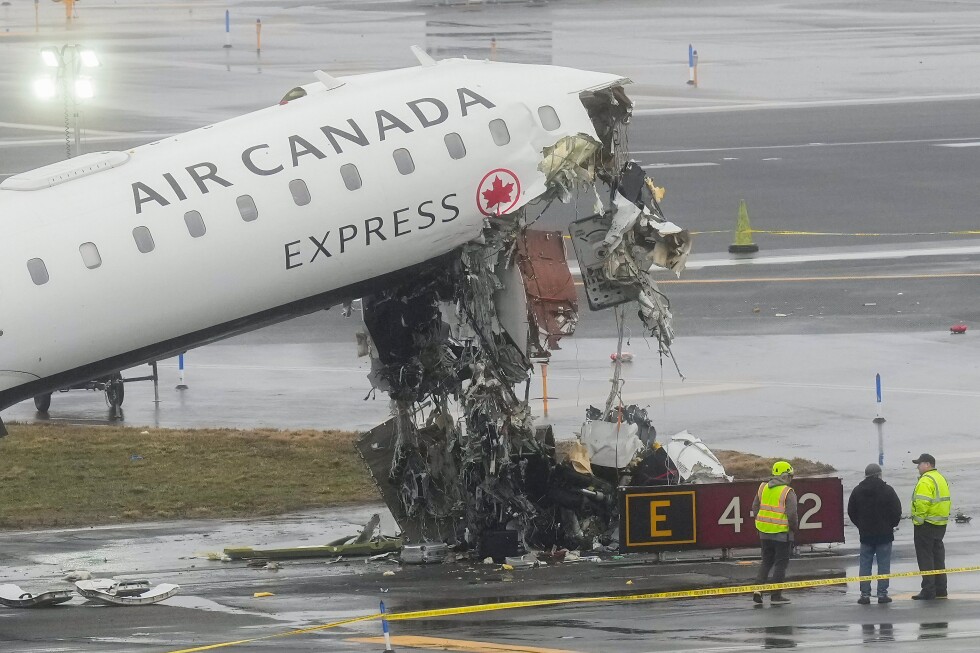
The March 22 collision killed both pilots aboard the Montreal-bound regional jet. The crash, LaGuardia’s first fatal accident in 34 years, injured 39 people, including six who were seriously hurt.
Just seconds before the collision, the controller had cleared the fire truck to cross the runway, but the vehicle began moving while runway entrance lights—designed to function like stop signs—were still illuminated. The report indicates the truck driver should have remained stopped until these warning lights turned off.
“There were so many opportunities where this accident could have been prevented,” said aviation safety expert Jeff Guzzetti after reviewing the NTSB’s findings.
The fire truck, lacking a transponder that would have precisely tracked its location, was leading a convoy of emergency vehicles responding to a reported strong odor making flight attendants ill on a United Airlines aircraft. This technical limitation meant the airport’s advanced surface surveillance system (ASDE-X) couldn’t reliably determine the truck’s position and failed to predict the potential collision.
According to the report, the controller cleared the truck to cross the runway just 12 seconds before the Air Canada Express CRJ900 touched down. About eight seconds later, the controller frantically began calling for the truck to stop.
Aviation safety consultant John Cox noted it might be understandable that the truck driver didn’t immediately recognize the first “stop” command was intended for him, as the controller had just been directing another aircraft and didn’t specifically identify “Truck 1” at the beginning of the warning.
The truck’s turret operator told investigators that as the vehicle turned left onto the runway, he spotted the airplane’s lights. Data shows the aircraft was traveling at 104 mph when it collided with the truck, which was moving at approximately 30 mph.
The crash killed Captain Antoine Forest, 30, and First Officer Mackenzie Gunther, 24. Among the survivors was a flight attendant who, despite being strapped in her seat, was thrown onto the tarmac but survived her injuries.
LaGuardia was experiencing higher than normal traffic volume that night. According to aviation analytics firm Cirium, flight delays had pushed the number of post-10 p.m. arrivals and departures to more than double what was scheduled. Only two air traffic controllers were on duty—the standard staffing level—but they faced an unusually complex situation.
While the more senior controller coordinated the emergency response for the United Airlines aircraft reporting fumes, the second controller took over directing ground vehicles while simultaneously managing takeoffs and landings. Planes were touching down every few minutes, with twelve flights arriving in the 40 minutes before the crash.
“These controllers were just way busy, just too busy,” Guzzetti observed.
The accident raises questions about LaGuardia’s safety systems. The airport is one of 35 major U.S. airports equipped with ASDE-X, a surveillance system that combines radar data with information from transponders to prevent runway incursions. However, the system didn’t trigger an alarm partly because the radar had difficulty distinguishing between the closely spaced emergency vehicles, which weren’t equipped with transponders.
The runway warning lights, a safety feature installed at 20 of the nation’s busiest airports, were illuminated until the fire truck reached the runway’s edge, approximately three seconds before impact. By design, these lights turn off two to three seconds before an aircraft reaches a runway intersection.
“That’s an automated system so even though the controller says you’re cleared to cross, the lights mean that there’s an airplane that is either on the runway or about to be,” Cox explained. “So the truck driver is going to have some questions to answer there.”
The Port Authority of New York and New Jersey, which operates LaGuardia, stated it is conducting a comprehensive review of the NTSB’s preliminary findings. “Our focus is straightforward: ensure our safety procedures and protocols are as strong as they can be and take action to strengthen them as needed,” the agency said in a statement.
The NTSB investigation continues, with a final report expected to take many months to complete.
Fact Checker
Verify the accuracy of this article using The Disinformation Commission analysis and real-time sources.

12 Comments
Crashes like this are always heartbreaking, but at least the NTSB investigation should lead to concrete steps to enhance aviation safety and prevent similar accidents. Improving coordination between ATC and emergency responders, as well as mandating transponders, are smart places to start.
Agreed. While nothing can undo this tragedy, the key is to learn from it and implement robust new safeguards to protect pilots, crews, and passengers going forward.
Disturbing that the firefighter was unaware the urgent warning was for him. Runway incursions are extremely dangerous, so clear communication between ATC and all vehicles is crucial. This accident highlights the need for better training, protocols, and technological safeguards.
Tragic accident at LaGuardia. It seems there were multiple breakdowns in communication and procedures that led to this deadly collision. Proper training and better coordination between air traffic control and emergency vehicles is clearly needed to prevent such incidents in the future.
Yes, the lack of a transponder on the fire truck to precisely track its location was a major contributing factor. Improved technology and protocols could have helped avoid this catastrophic accident.
This is a sobering reminder of the need for air traffic control and emergency responders to have seamless coordination and procedures in place. Runway safety has to be the top priority, even in emergency situations. Hopefully this tragedy leads to meaningful improvements.
Absolutely. Runway safety protocols and technology must be enhanced to prevent similar accidents in the future. Lessons from this investigation need to be implemented across the industry.
Unsure who the controller’s warning was for – that’s a concerning breakdown. Runway incursions are extremely dangerous and need to be prevented at all costs, especially at busy airports like LaGuardia. Lessons must be learned here to enhance aviation safety.
Exactly. The report indicates multiple failures that allowed this accident to happen. Thorough investigation and implementation of new safeguards are critical to ensure nothing like this occurs again.
It’s alarming that the firefighter didn’t realize the urgent stop warning was directed at him. Runway incursions are extremely hazardous and this crash demonstrates the critical importance of clear communication and situational awareness for all vehicles on an active airfield.
Hearing that the firefighter didn’t realize the urgent warning was meant for him is very troubling. Runway awareness and communication between ATC and emergency vehicles is clearly an area that needs significant improvement. This was a terrible tragedy that must lead to meaningful changes.
Definitely concerning that the fire truck lacked a transponder to track its location. That seems like a basic safety measure that should be required for any vehicle operating on an active runway. This crash highlights the need for tighter protocols and better technology to prevent future incidents.