


Listen to the article
Hawaii’s Speed Camera Program Stalls as System Struggles to Handle Influx of Violations
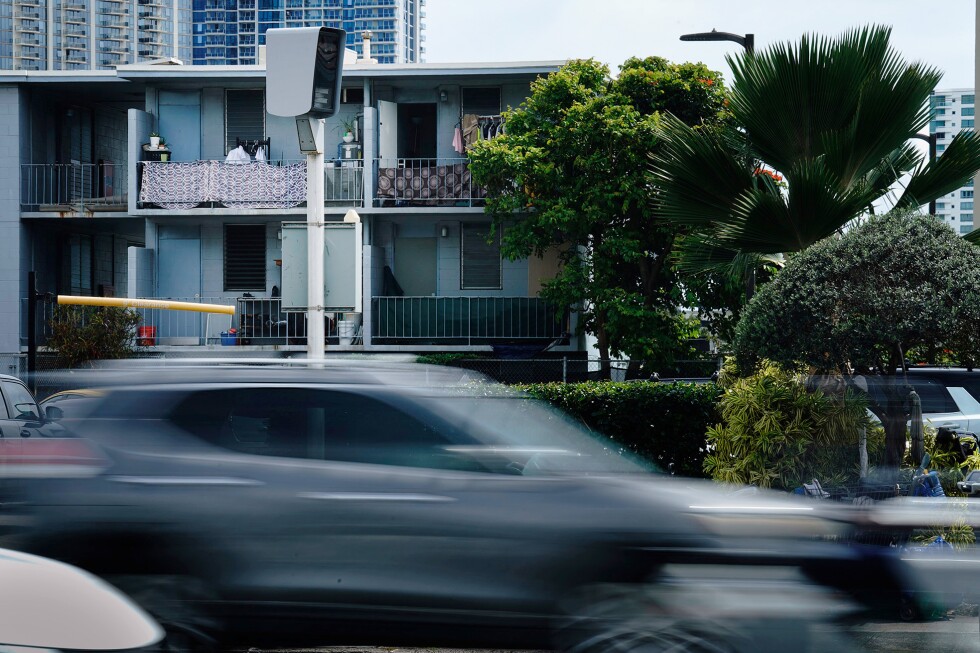
Despite recording over 500,000 speeding drivers during a five-month trial period last year, Hawaii’s newly implemented speed enforcement camera program has issued just 17 tickets in its first four months of formal operation. Of these citations, two were dismissed when motorists contested them in court.
The Hawaii Department of Transportation (HDOT) is deliberately targeting only the most egregious speeders—those traveling more than 20 mph above the posted limit—even though state law permits citations beginning at 11 mph over the limit. This cautious approach stems from concerns that the anticipated surge in tickets would overwhelm police, court staff, and judiciary information systems.
“We’ve worked with the judiciary so that we don’t blow up their systems,” State Transportation Director Ed Sniffen told the Senate Ways and Means Committee during a January budget briefing. Sniffen explained that the current threshold ensures only the “most dangerous drivers are targeted,” with plans to gradually lower that threshold as processing capacity expands.
The slow implementation creates a financial challenge for the program, which was designed to be self-sustaining with citation revenue covering operational costs. With ticket fees trickling in at a fraction of projected volumes, HDOT is now seeking $6.6 million in state funding for the next fiscal year to support camera upgrades and improvements to court information systems.
Despite these initial hurdles, HDOT is moving forward with ambitious expansion plans. In February, the department awarded a 10-year contract worth approximately $160 million to Arizona-based Verra Mobility to “expand, operate and maintain the camera program.” The department is requesting funding to install 177 cameras across Hawaii’s four major islands, with half located on Oahu.
Sniffen previously indicated that 17 cameras at 10 Honolulu intersections could generate over 60,000 speeding citations monthly when operating at full capacity—a staggering increase from the 3,000 to 4,000 speeding tickets normally issued by Honolulu police each month.
The Hawaii judiciary had forewarned about system capacity issues over a year ago, requesting that lawmakers delay implementation until 2027 to develop adequate handling procedures. Brooks Baehr, a judiciary spokesman, confirmed that courts have been working with HDOT to integrate camera citations more efficiently into their information systems—a process previously completed manually.
“To date, the Judiciary has been able to successfully process citations generated by the automated red light and speed camera systems. But it also recognizes that a significant increase in citation volume will present operational challenges that would need to be addressed,” Baehr said.
Alex Guirguis, co-founder of Off The Record, a company that connects drivers with traffic ticket attorneys, highlighted the fundamental mismatch between automated enforcement technology and court capacity. “Automated cameras generate citations at volumes that court systems just were not designed to handle,” he said. “A typical officer will issue 30 to 50 traffic tickets a day. An automated camera can issue hundreds of tickets a day.”
The red light component of the camera program has been more active. Between November 1 and February 24, authorities issued 2,041 citations for running red lights—about 17 offenses daily. Four Honolulu intersections accounted for over half of these citations, with the intersection of McCully Street and Algaroba Street in Mōʻiliʻi topping the list at 372 violations.
Safety data supports the efficacy of such programs. HDOT reports a 62% reduction in red-light violations since implementation began and a 70% decrease in major crashes at the 10 camera-equipped intersections in urban Honolulu. This aligns with national research showing red light cameras can reduce roadway fatalities and injuries by 20% to 37%.
Critics, including the American Civil Liberties Union, have raised concerns about disproportionate impacts on low-income households. With speeding tickets ranging from $177 to $317 and red light citations at $97, the financial burden can be significant for working-class communities. Senator Donna Kim noted that six of the ten active cameras are in her Kalihi district, a working-class residential area, prompting concerns from constituents who feel unfairly targeted.
As HDOT plans to roll out approximately ten new camera-equipped intersections annually, the department must balance safety objectives with system capacity and equity concerns while developing sustainable funding mechanisms for this expanding program.
Fact Checker
Verify the accuracy of this article using The Disinformation Commission analysis and real-time sources.

5 Comments
I’m curious to see how this plays out. Speed enforcement can be a controversial topic, so Hawaii’s careful implementation approach may help them avoid some of the backlash other programs have faced. Looking forward to seeing if they’re able to expand the system going forward.
The 20mph speed threshold for citations seems pretty high. I wonder if that’s the sweet spot for their system capacity, or if they could potentially lower it more over time. Either way, it’s an interesting pilot program to watch.
This is an interesting case study in how to responsibly roll out new traffic enforcement technology. Seems like Hawaii is taking a measured approach to avoid overburdening their systems. Curious to see if other states follow a similar playbook.
Interesting to see the cautious approach Hawaii is taking with their speed camera program. Seems like they’re trying to balance enforcement with not overwhelming the system. I wonder if they’ll be able to gradually ramp up the program over time.
It’s a tricky balance – on one hand, these cameras can be an effective way to improve road safety. But the system has to be able to handle the volume of citations. Kudos to Hawaii for trying to roll it out responsibly.