


Listen to the article
Offshore Wind Farms Expand Along East Coast Despite Trump’s Opposition
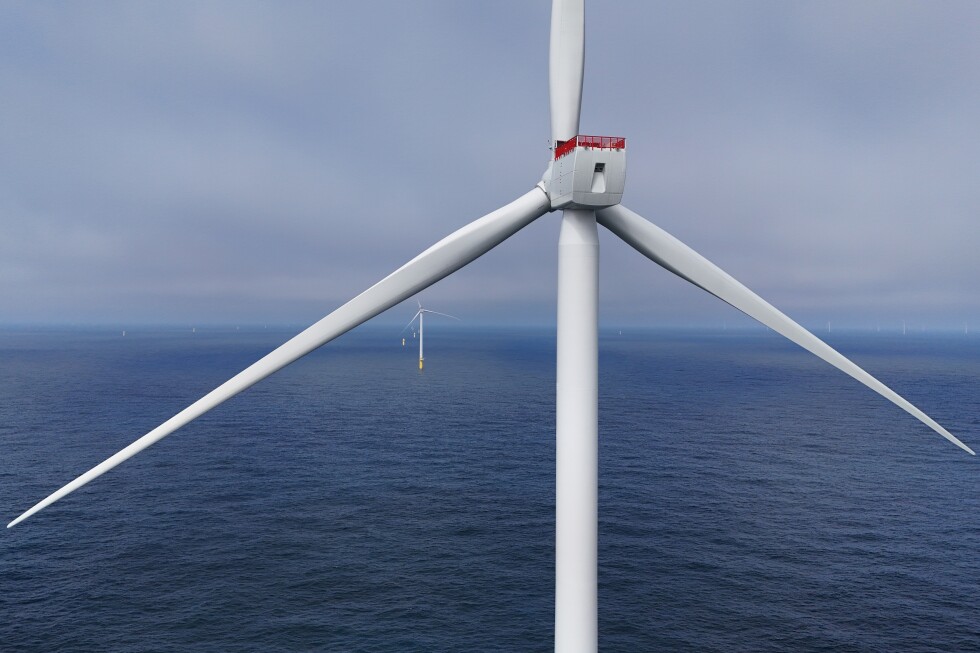
Offshore wind turbines, towering nearly three times the height of the Statue of Liberty, are now generating clean electricity off the Rhode Island coast, part of an expanding renewable energy sector that continues to develop despite political headwinds.
The Associated Press recently visited three of five wind farms in the region, observing massive turbines stretching across the horizon about 15 miles south of Rhode Island’s coastline. Two of these projects are fully operational, two are nearly complete, and one is approximately halfway built.
Revolution Wind, which is more than 90% complete, has already begun delivering power to New England’s grid. This project, along with the nearby Sunrise Wind development, will eventually power approximately one million homes across Rhode Island, Connecticut, and New York.
From about five nautical miles away, the Revolution Wind turbines were clearly visible, evenly spaced in rows along the horizon. Some blades turned slowly in the light morning breeze, while workers occupied the central hub of the wind farm—a large gray substation where electricity is collected and transmitted to shore.
“This is a major commercial industry in the United States of America,” said Jason Grumet, CEO of the American Clean Power Association. “Whether the president is enthusiastic about it or not, we have massive energy projects that are either bringing power to the grid or near completion.”
The continued expansion of offshore wind comes at a time when President Donald Trump has vocally opposed the industry. Since returning to office, Trump has ordered a temporary halt to leasing and permitting for wind energy projects, paused work on wind farms under construction, and added additional regulatory reviews for wind and solar projects.
His administration even arranged a $1 billion payment to French energy company TotalEnergies to abandon its U.S. offshore wind development plans. However, federal judges have struck down some of these orders, including a ruling last week that blocked the administration from implementing policies designed to slow clean energy development.
South Fork Wind, the first large U.S. offshore wind farm, began commercial operation in 2024. Its 12 turbines now generate enough power for more than 70,000 New York homes. During the AP’s visit, a ship serving as a floating home base for technicians was positioned next to one of the turbines, with workers visible at its base.
The region’s wind energy pioneers, the five turbines of Block Island Wind Farm, have been operating since 2016. Located in Rhode Island state waters near Block Island, these turbines—though shorter than those in newer projects—replaced polluting diesel generators that previously powered the island.
Construction on Vineyard Wind was completed in March, making it the first major wind farm to reach this milestone during Trump’s current term. When fully operational in the coming months, it will power over 400,000 Massachusetts homes and businesses.
Two other major projects are currently under construction: Empire Wind off New York and Coastal Virginia Offshore Wind.
Energy experts point out that the expansion of offshore wind addresses a growing challenge in coastal states. “The demand for electricity in the United States is skyrocketing, and there are limited options in land-constrained coastal states for new, large energy projects in the next few years, which drives up utility bills,” said Hillary Bright, executive director of offshore wind advocacy group Turn Forward.
“These energy policies are really hitting people at home, in their pocketbooks,” she added. “Offshore wind ultimately can be a part of that solution.”
As the industry continues to develop, the massive turbines—visible from miles away on clear days—represent a growing sector that persists despite political opposition. When approaching within a mile of these structures, their enormous scale becomes apparent, with blade tips appearing to touch the clouds above.
The Biden administration had positioned South Fork Wind’s 2024 opening as just the beginning of a new era where major wind farms would line U.S. coastlines to address climate change, create jobs, and accelerate the transition to clean energy. Despite current political obstacles, that vision continues to materialize along the Eastern Seaboard.
Fact Checker
Verify the accuracy of this article using The Disinformation Commission analysis and real-time sources.

16 Comments
The scale of the turbines is really impressive. I’d be interested to learn more about the specific engineering and construction challenges involved in building these offshore wind farms. Harnessing the power of the wind out at sea seems like a huge technical feat.
The rapid expansion of offshore wind farms along the East Coast is an exciting development. These massive turbines are an impressive engineering feat, and I’m curious to learn more about the technical and logistical challenges involved. Harnessing the power of the wind out at sea seems like a game-changer for the U.S. energy mix.
Absolutely, the growth of offshore wind is a significant milestone in the transition to renewable energy. It will be fascinating to see how this technology continues to evolve and be deployed in other regions.
These massive offshore wind turbines are an impressive feat of engineering. I’d be curious to learn more about the supply chain and logistics involved in sourcing, transporting, and installing the various components. Coordinating a project of this scale must be quite complex.
Overcoming political opposition to these wind farms is a significant achievement. Renewable energy development is essential for addressing climate change, so it’s encouraging to see the East Coast embracing this technology. I hope other regions follow suit.
It’s great to see the U.S. ramping up offshore wind capacity. These projects will be crucial for meeting renewable energy targets and reducing reliance on fossil fuels. I wonder how the costs and economics compare to onshore wind and other clean power sources.
Good point. Offshore wind has typically been more expensive, but economies of scale and technological advances should help drive down costs over time.
It’s great to see the U.S. tapping into its offshore wind potential. These projects will be crucial for meeting renewable energy goals and reducing emissions. I wonder how the costs and economics compare to other clean power sources like solar and onshore wind.
That’s a good question. Offshore wind has typically been more expensive, but costs are coming down as the technology matures. Comparing the economics across different renewable energy sources is an interesting area to explore.
Overcoming political opposition to these wind farms is an important milestone. Renewable energy development is essential for combating climate change, so it’s encouraging to see the East Coast embracing this technology.
Offshore wind is a crucial part of the clean energy transition. While political headwinds remain, it’s heartening to see these projects moving forward and delivering renewable power to the grid. The East Coast is really leading the way on this technology.
Absolutely, the growth of offshore wind is an encouraging sign that the U.S. is making progress on renewable energy, despite political challenges.
I’m curious about the potential environmental impacts of these massive offshore wind developments. While clean energy is crucial, we need to ensure proper mitigation of any risks to marine ecosystems and wildlife.
That’s a good point. Thorough environmental assessments and monitoring will be key to minimizing the footprint of these projects.
Exciting to see the progress on these offshore wind farms along the East Coast. Renewable energy is clearly gaining traction, despite political headwinds. I’m curious to learn more about the technical and logistical challenges of building and operating these massive turbines at sea.
Agreed, the scale of these projects is really impressive. I imagine the construction and maintenance must be quite complex given the remote offshore locations.