


Listen to the article
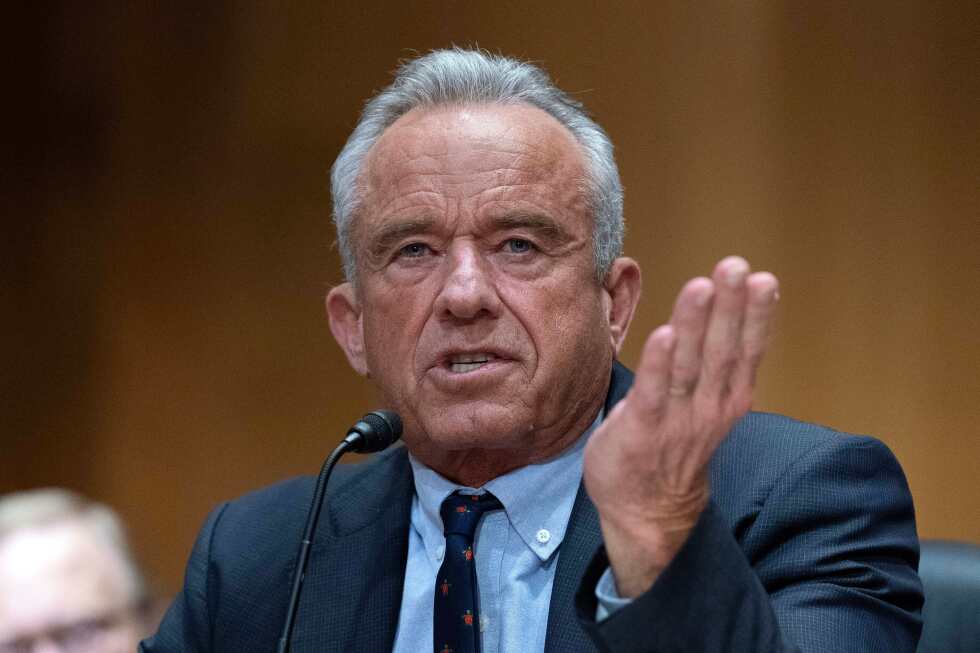
In a series of recent Congressional hearings, Health Secretary Robert F. Kennedy Jr. has repeatedly disputed lawmakers’ characterizations of Medicaid funding changes in President Donald Trump’s 2025 tax and spending legislation, creating confusion about the true impact of the law on the healthcare safety net program.
During multiple budget hearings, Democratic lawmakers raised alarms about potential effects on rural hospitals and vulnerable Americans who rely on Medicaid for healthcare coverage. Kennedy consistently interrupted these concerns, insisting that no cuts to Medicaid have occurred.
“There are no cuts to Medicaid,” Kennedy stated during one particularly contentious exchange. “We are increasing Medicaid spending by 47% over the next 10 years. Increasing spending by 47%. How is that a cut? That is only a cut in Washington, D.C.”
However, healthcare policy experts and Medicaid analysts challenge Kennedy’s characterization, describing it as misleading political rhetoric that obscures the reality of the legislation’s impact. The tax and spending bill enacted significant changes to Medicaid, including new work requirements and eligibility restrictions, which the Congressional Budget Office projects will reduce program spending by nearly $1 trillion over the next decade.
Kennedy’s defense rests on the fact that Medicaid spending will still increase in absolute dollar terms over the next ten years, citing a February Congressional Budget Office report showing 47% nominal growth over that period. His staff has pointed to these projections to support his claim that no cuts have occurred.
This argument fails to acknowledge that Medicaid spending would have grown more substantially without the new restrictions, experts say. The natural growth in spending results from factors including population changes, rising healthcare costs, and inflation – not from maintaining or enhancing current service levels.
“This is an old, sort of tired argument that’s been used by conservatives to justify spending cuts by saying, well, if spending is still growing in nominal terms, somehow there wasn’t a cut,” explained Edwin Park, a research professor at Georgetown University. “The federal government is spending nearly a trillion dollars less than it otherwise would have in the absence of the legislation.”
Sara Rosenbaum, professor emerita at George Washington University’s school of public health, was more blunt in her assessment of Kennedy’s rhetoric. Drawing on her 51-year career studying Medicaid, she called the secretary’s claims “absurd,” noting, “They cut a trillion dollars.”
The Trump administration and Republican lawmakers have defended these Medicaid reforms as necessary measures to eliminate fraud and improve program integrity. They position the changes as targeting individuals who shouldn’t qualify for benefits rather than affecting legitimately eligible beneficiaries.
“To be clear, HHS is taking steps to ensure Medicaid serves those it is intended to support,” said Department of Health and Human Services spokesman Andrew Nixon. “These actions are not cuts — they are focused on addressing waste, fraud, and abuse to better position the program for those who rely on it.”
Critics counter that the increased administrative hurdles and more stringent eligibility verification requirements will inevitably cause eligible Americans to lose coverage. Park warned that the changes would result in “many more uninsured people, and people going without needed care.”
The disagreement highlights the ongoing political battle over safety net programs and how government officials characterize policy changes that reduce projected spending. While Kennedy insists no cuts have occurred because overall spending continues to rise, healthcare experts maintain that reducing projected spending growth by $1 trillion represents a significant and consequential cut to the program that millions of vulnerable Americans rely on for healthcare access.
Fact Checker
Verify the accuracy of this article using The Disinformation Commission analysis and real-time sources.

7 Comments
Interesting take on the Medicaid funding changes. I can see both sides – the administration claims spending is increasing, but experts say new restrictions could still negatively impact coverage. Seems like an important issue with nuanced details that deserve scrutiny.
The administration’s claims about increasing Medicaid spending seem at odds with experts’ assessment of the legislation’s impact. I wonder if there are hidden details or caveats that could reconcile these conflicting views. It would be helpful to dig deeper into the policy specifics and projected outcomes.
This seems like a complex policy issue with valid arguments on both sides. I’m curious to learn more about the specific Medicaid changes, their projected effects, and how they align with the administration’s claims of increased spending. Balanced, evidence-based analysis will be key.
The conflicting narratives around Medicaid funding changes are concerning. I agree that it’s critical to carefully examine the policy details and their potential impacts, rather than relying on political spin. Objective analysis from subject matter experts will be crucial in this debate.
Hmm, this sounds like a classic case of political spin versus objective analysis. I appreciate the effort to unpack the nuances, as Medicaid is a critical healthcare program. It will be important to separate rhetoric from facts to understand the real-world implications of these Medicaid changes.
Sounds like a complex policy debate with differing perspectives. I’m curious to learn more about the specific Medicaid changes and their potential effects on rural hospitals and vulnerable populations. Factual analysis from objective sources would help inform this discussion.
Thanks for the detailed breakdown. It’s always concerning when there are discrepancies between official claims and independent analysis, especially on an issue as important as Medicaid. I’ll be interested to see how this debate plays out and what the ultimate impacts are.